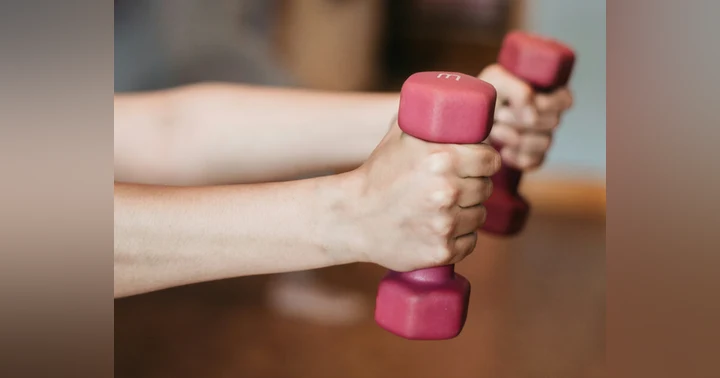
Can Exercise Actually Fight Cancer? The Science of Movement with JC Rodriguez

Can working out actually change what's happening inside your body during cancer treatment? Dr. Leah Sherman sits down with certified clinical exercise physiologist JC Rodriguez to unpack the real science behind exercise and cancer—including how movement may redirect blood flow away from tumors, alter tumor metabolism, and boost immune surveillance. JC breaks down what this looks like in practice: how to move through severe fatigue with “mentally small” wins like a 5-minute walk or in-...


Can working out actually change what's happening inside your body during cancer treatment?
Dr. Leah Sherman sits down with certified clinical exercise physiologist JC Rodriguez to unpack the real science behind exercise and cancer—including how movement may redirect blood flow away from tumors, alter tumor metabolism, and boost immune surveillance.
JC breaks down what this looks like in practice: how to move through severe fatigue with “mentally small” wins like a 5-minute walk or in-bed stretches, why consistency matters more than intensity, and general targets for cardio and strength training (individualized to each person). He also covers managing joint pain from hormone therapy, exercising safely with a port, and where to find accessible, cancer-specific fitness support — from YMCA Livestrong to ACSM-certified specialists.
Visit JC’s website and learn more https://www.oncolofit.com/
Download JC’s FREE Get Stronger in 21 Days Guide: https://oncolofit.aweb.page/thriving-after-cancer-guide
Get his FREE Cancer Recovery Starter Kit: https://www.oncolofit.com/beat-cancer
Follow JC on social media:
Instagram https://www.instagram.com/oncolofit/
TikTok https://www.tiktok.com/@jc.oncolofit
YouTube https://youtube.com/@jc.oncolofit
00:41 Meet JC Rodriguez
01:28 What Is Cancer Exercise Science
03:15 How Exercise Fights Cancer
05:49 Starting With Fatigue
09:06 Low Impact Options
10:05 Inflammation And Movement
11:37 How Much Exercise Weekly
12:45 Strength Training Basics
14:00 Weight Gain And Muscle Loss
18:15 Radiation Fatigue Differences
19:45 Hormone Therapy Joint Pain
23:48 Exercising With A Port
31:01 How To Find A Cancer Exercise Program
34:41 Why J.C. Chose Oncology
37:16 Free Downloadable Guides And Tips
38:27 Final Advice And Wrap Up
Leave a message and let us know what you liked about the episode!
Become a member of The Cancer Pod Community! Support the podcast and gain access to exclusive content and more! Join today on Buy Me a Coffee or Patreon.
Check out thecancerpod.com! Looking for more information? The website has blogs, merch, and all of the episodes listed by season and category.
Shop the Bookshop! The shelves at Bookshop feature books by authors who have been on the show and other fav books.
Buy The Cancer Pod merch! Whether it’s a cozy hoody or a handy water bottle, we have something for everybody.
Have a comment or suggestion? Email info (at) thecancerpod (dot) com
Follow @TheCancerPod on social media:
Become a premium member.
Join the #cancerinsiders. Membership includes:
-
A monthly (or so) newsletter packed with links to new episodes, compelling research, seasonal recipes, and practical health tips you’ll actually use
-
Behind-the-scenes updates
-
Bonus content from the podcast
-
Yoga videos to support your body and mind
-
Downloadable cheat sheets for quick reference
Join today!
JC Rodriguez: When you start exercising, your body has to redistribute blood to the areas that are work. So when you're laying down, most of your blood flow is going through your kidneys and your stomach. When you start exercise, that blood flow is now redirected to the working muscles. So you're literally removing blood from the tumor and to the muscles, the working muscles. [music]
Voiceover: [Music] Welcome to the cancer pod.
Leah Sherman: Were you told by your oncologist to exercise after you finished treatment, but then you weren't really given any specifics and you're tired and you feel weak and you don't know where to start? So, what do you do? Meet JC Rodriguez, a certified clinical exercise physiologist and personal trainer whose specialty is cancer exercise science. JC helps people rebuild their strength after cancer through his one-on-one and group online coaching programs. You might already know him from Instagram as @Oncolofit. Today he is my guest on the Cancer Pod.
Hi JC, welcome.
JC Rodriguez: Thank you so much for having me. That's a wonderful introduction. I really appreciate it.
Leah: As I told you off camera, I'm really excited to talk to you. And I Oh, I forgot to mention this. I have some questions. I collected some questions from Instagram people as well. Instagram people, Instagram followers.
JC: I love it. The Instagram people, whoever they are, the people of Instagram, we're we're Yes, absolutely.
Leah: I want to start off by asking you like what exactly is cancer exercise science? How does this make how is this different from other exercise?
JC: Great question. So, the field of exercise as medicine really started in diabetes, right? And that's when we started first started learning on what the benefits of exercise really are. And from there then it started evolving from oh it helps people with diabetes but it also helps people with heart disease. And now within the past 30 to 40 years we've also started to see that it helps people with cancer. And what we find is that the benefits there's holistic benefits of exercise. You know it helps your mind your body your spirit. Um you know it helps with your blood pressure, it helps with your blood sugar. But when we look at cancer, cancer is more cellular-based, genetic based, and we weren't necessarily sure if exercise actually helped people with cancer. So within the past 30 to 40 years, we've started to dive deeper into that. And we started to see what are the benefits of exercise. Does it actually help with the side effects? Um what exercises should they be doing? And how can we help combat different side effects that come from cancer treatment itself, but also the cancer. So, it dives deeper into how exercise actually helps people feel better, but also how it helps them fight cancer, fight reoccurrence, fight metastasis, and it's a deeper dive into, okay, how can we actually make this practical for patients, which little side note, that's the part that we don't have as much information on, which is where the experience kicks in, but we know it's good for us. And now it's just the practical, okay, how can we actually make this happen to help people feel better through the process?
Leah: I know this is probably a lot longer of an explanation, but exactly like how does it help to reduce your risk of recurrence or you know actually like affect a cancer process? How does exercise do that?
JC: So, there's multiple different things which is great because it has lots of different benefits to it. So, there's the direct impact on the cancer itself. Then there's the secondary impact it has on your overall health and then there is the impact within your body. Right? So, the cancer itself, let's start there. When you start exercising, your body has to redistribute blood to the areas that are worked. So when you're laying down, you know, most of your blood flow is going to your kidneys and your stomach. When you start exercise, that blood flow is now redirected to the working muscles. So, you're literally removing blood from the tumor and to the muscles, the working muscles. The second thing it does is that it affects the metabolism within the tumor itself and it almost starts to asphyxiate essentially. And then the third thing it does against that cancer is that it boosts your body's ability to find cancer cells and also to attack them. So you have an immunity boost against cancer itself. So that's the cancer itself.
Now for prevention you have the epigenetics of changing your genetics, turning on and turning off different cancer genes. So you can turn off some genes or stop them from occurring. you can find cancer cells quicker and it also reduces the spread of cancer throughout the body because of that immunity effect. Now the secondary effect it's we know that cancer survivors are at higher risk of diabetes, heart disease, uh metastasis which I mentioned right but it also reduces your risk of heart disease and diabetes which are secondary diseases to cancer itself. So you have this all-encompassing effect against the cancer, your improvement of your uh immunity and against other diseases as well. And that's what exercise is attacking throughout the body.
Leah: When I did my training, which was over 10 years ago, we learned about energy conservation and the best thing you can do is rest. And now it's kind of shifting. I mean energy conservation obviously is important, but I mean and having gone through treatment I know that the cancer fatigue is like any, I mean, I had never experienced a fatigue like that. I mean it's really different than just like I can just take a nap and then I perk back up. So, when someone is that fatigued how do they start exercising? I mean that's kind of the last thing on your mind but to get them to understand that that's actually going to help them with the fatigue. Like how does that even start?
JC: Yeah, it it feels kind of like a catch 22, right? Cuz you need to exercise to feel better and have more energy, but you're too tired and you don't feel good to, you know, get the benefits and start exercising. So, it's like how do you even get that change? And what I always say is that you you want to start with something mentally small, mentally achievable to you. And everyone has a different journey in their cancer fatigue. Some people are just like, I can't even get out of bed. Some people are just like, "I'm just tired the whole day." Others are like, "Well, I just fight it and you know, as soon as I sit down, that's really when it all hits me." Everyone has different levels in fatigue. And there's different plans for that. And this is what I was saying earlier that the practice of it or how do you make it practical is going to be more kind of individualized to your needs and where you're at. But regardless of your situation and how you're feeling, start with the easiest mental uh hurdle that you can actually overcome.
And I always say the 10-minute rule, which you can even break that down further to 5 minutes, right? So, if you just set yourself up for 5 minutes of walking, let's say you walk to the mailbox, and then 5 minutes of walking back, that gives you enough momentum to either feel the same, feel better, or feel worse, right? And nine times out of 10, you're going to feel better or the same. But at the same time, even though you feel the same, you mentally and emotionally feel like you did something. And that encourages you to keep going because you've almost like mentally said, "I can do this for 5 minutes. I can go five more." And now it becomes almost like a mini challenge of success for yourself. And that helps the emotional and mental side of fatigue as well. So you have the physical benefits of the exercise, but you also have the mental benefits of the exercise.
And sometimes it just starts with the five or 10 minute rule of just trying to do something. Now for some people getting out of bed is just like I I just can't even get out of bed. That's a totally different plan where I'm actually just giving you something to feel good that you did. So that's maybe some glute bridges. That might be some arm raises in bed. That might be some lying bicep curls. It really depends on the individual and where they're at. Maybe some leg kicks in bed. And throughout that time period, it's just about getting something going.
Now, depends, like I said, everyone's extremely different. Levels of cancer fatigue are different. Some people's fatigue comes in cycles. Maybe they go for 7 days straight, then the next two weeks they're fine. Maybe they go for 3 days where they just can't move and then 5 days they're feeling better. By the fourth day, they start feeling better. And then you want to work within that cycle. For the three days that you feel terrible, you can do something in bed one of the the three days. Once you feel better, you can start doing a little bit more and you balance it out throughout the week. So, I like to set up exercise as a week, 7 days, maybe even 9 days depending on how you're feeling instead of I passed or failed today.
Leah: I mentioned I got some questions from Instagram and so somebody asked what is the best low impact exercise we can do when we really don't feel like exercising.
JC: If you're in bed, can't get out of bed, the best thing you can do is some glute bridges. that's fine to do. It's not going to change anything in in the exercise. You don't have to do it in a hard surface. Some glute bridges, clamshells are fine. Some superman's or superwoman's where you're laying on your on your belly and you're raising the arms. Even some chest presses with two lb weights. You don't have to get out of bed. You can do that on the couch, in bed, on the floor, wherever you feel comfortable. That's if you can't get out of bed. The second step out of that if you can move throughout the day is going for a walk, 10-minute walk. I like to recommend outside because then you also get that ”green exercise” effect. Basically, you're in nature and then that just feels mentally better for you. You're getting out of the house, clearing your mind, thinking about other things. So, you have that added benefit. But if you can't, even just walking the treadmill inside or doing something inside can also be helpful.
Leah: You had a few posts about fatigue and inflammation. Can you talk a little bit about that?
JC: Yeah. So, there's a lot of inflammation that comes from cancer treatment itself. It's it's literally a toxic. And when people say they'll say, oh, you know, I don't want that in my body. And we kind of freak out and it's like, well, you have to kill the cell. So, it has to be toxic for for the cells, you know, and unfortunately, we can't determine which cells it kills, which is why you get also side effects because then it starts affecting the healthy cells. Now with that inflammation, the cancer fatigue has the inflammation, and it has the mental and emotional effects. Basically, for the inflammation side of things, the exercise, so every time we move, we have a anti-inflammatory effect. Now this is why exercising and movement throughout the day is important because movement itself has that anti-inflammatory effect to help reduce some of that inflammation that comes from the cancer fatigue. Now, a lot of people think like, oh, if I exercise, do high intensity work, I'm going to get more anti-inflammatory effect. That's not necessarily the case. We actually see that just so some low volume, low intensity exercise can still be beneficial to help reduce some of that inflammation and some of that cancer fatigue. And in many cases, that is the most helpful to just start with something low intensity that you can kind of continue to do. And we see that the more consistent you are with it, the more benefit you're actually going to get in reducing that inflammation.
Leah: So overall, how much exercise is recommended a week for somebody going through treatment or even for cancer survivors?
JC: So the number is always you're always going to hear the 150 minutes. So, think of that as the general recommendation for everyone. But whenever you have a general population, some people are going to get benefits earlier than that. Some people are going to get benefits with more exercise than that. We've seen it as low as 60 to 90 minutes in some people and we've seen it as high as 190 minutes in certain people. That's what they need to. So, it's very individualized to what the person needs.
But you can start seeing benefits in reducing cancer fatigue with just 10 minutes. I hear it all the time from my online coaching clients. I did my 105-minute walk and it actually helped me feel better. Did it cure it? No. Did it make it go away 100%? you know, but the fatigue dropped and they were able to get through their day a little bit better, right? But you can get anywhere between 60 to 90 on the low end for some people, not everyone, and up to 90, even 200 minutes for some people, you might need a little bit more.
Leah: And then if you add in like weight training, like how much weight training or strength training do people need as part of that 60 to 190 minutes?
JC: So it's kind of interesting because the weight training doesn't technically count as your minutes within that because they they count that as only as cardiovascular exercise. So it's 150 minutes. Let's just follow all of that to make it simple, right? From what they hear for the recommendations, 150 minutes of cardiovascular exercise and then at least 2 days of weightlifting. Now for those two days, you would do a full body exercise two days as an exam, right? because you're looking to fight off the sarcopenia.
So, the muscle loss, the muscle atrophy, the weakness that comes from treatment. So, you need a minimum of two days. However, even though I say these numbers, we've seen as little as one time a week of exercise in breast cancer survivors can actually help maintain muscle mass. So, it's very easy to maintain muscle mass. It's a lot harder to gain it. If you're looking to gain weight or to gain, yeah, gain weight or gain muscle, you're going to need more than two days. If you want to just maintain, even one or two days is is more than enough with a good program.
Leah: One thing that I think women aren't really familiar with when they're going to go into treatment for breast cancer is that there is more likely weight gain than weight loss. How would you talk with a patient who is starting treatment for breast cancer? I've had patients say to me like, "Oh, I'm hoping to lose some weight from the treatment." And we're always like, "No, no, no, no. don't want to lose weight, you don't you know, right? So, like how how would you talk to a patient about what their goals should be in terms of weight management during treatment?
JC: Yeah, that's a good point because usually when I introduce myself like, yeah, you know, I help cancer survivors exercise, you know, build some muscle, lose weight and everyone's like, "Lose weight? Don't you mean like gain weight?" And it's like, yeah, but not everyone loses weight. In breast cancer survivors, particularly with hormone treatments, they tend to gain fat. Now the biggest point in the conversation is that whether you lose or gain weight, it depends on the treatment, the cancer type, etc. But everyone loses muscles and that's what you want to maintain because the conversation is a little bit different simply because everyone loses muscle. So you're automatically taking a shot to your metabolism.
So if you're not maintaining your muscle mass or increasing your muscle mass, you're making it you're making an uphill battle a lot harder. either now or later on down the road to lose fat because you're lowering your metabolism every single time. So, the amount of calories that you can eat is a lot less. The amount of exercise you're going to be able to do is a lot less. The amount of energy you're going to have to you're going to have to use up is a lot less. And it becomes really, really hard if you're not really focusing on maintaining muscle mass at the very least or building muscle mass. So, I focus on exercise and fat loss in different phases. Think of it like four to eight week phases of like, okay, right now we're only going to focus on building
Leah: Do you just tell your clients, don't even look at the scale?
JC: Sometimes it depends on the person. It really depends on where they are at. You know, I have an online coaching client who it was it was kind of hard to let her know like, "Hey, right now this is not the time." And I do a lot of one-on-one coaching, so it's a lot of explaining and saying, you know, uh why this is the reason, why this might not be the best for you right now. And if somebody is really on board of just like, “No, I want to lose fat,” then it's like, Okay, we'll get there, but you got to achieve these things first. give me this one, two, three, and then we can do that. And that motivates people to know like, okay, everything that I'm doing is going to help me to achieve fat loss. Maybe not right now, but it's going to help me get to that end goal faster. And we can set that up, too. You know, are you getting 6 to 7,000 steps a day? If you're not, then right now is not the time to lose fat because you're not even using your body enough to to burn that much energy.
So, there's different steps to achieve, you know, are you getting enough protein? If you're not, then cutting your calories, you're never going to reach enough protein. Are you getting in enough fiber, which we know helps reduce metastasis, helps with cancer fatigue, are you hydrating enough? Those are kind of my four pillars. So now the fat loss just becomes even easier. And many times it doesn't even feel like a fat loss phase, you know. And the same client actually, she lost 10 lbs. She's in radiation right now. Different than chemotherapy. So I wanted her finish chemotherapy first. She's in radiation, she lost 10 lbs. Like I I didn't even think it felt like a fat loss phase, but she had built up the right habits to achieve that and make it easier.
Leah: Are you seeing patients who are going through radiation? Are you seeing differences in their fatigue levels when they are working out versus not working out?
JC: Yes. Oh, versus working out versus not. Oh, for sure. I mean, it's a night and day difference. There's only been one person I've ever met in my life who um got cancer and he's like, I didn't feel anything. and he was like a 6’2”, 70-year-old veteran. He's the only person in my life. And I was like, "Did you eat? Did you change your diet?" He said, "No." "Did did you exercise? "No." And he's just the only person that I've ever met. But he had a significant amount of muscle mass on him. Even after treatment, I could tell that he had if he had significant amount of muscle mass after treatment, I can tell he was very muscular before, which we know that muscle is what metabolizes most of the cancer treatment anyways. So, it would make sense from that perspective.
Leah: So, he felt no fatigue from the radiation, you mean?
JC: No, no fatigue from the radiation or chemo.
Leah: Wow.
JC: I've never heard of that in my life. I believe him, but he's the only person. In everyone else, I can see a difference between if you exercise during during chemo or during radiation versus when you don't. It's it's a night and day difference, especially especially if you have radiation after chemo because it's a cumulative effect.
Leah: Yeah, for sure. This is actually one of the questions that I received on Instagram, but it's also something that I'm sure you hear all the time from clients because I sure heard it from patients is when you're on hormone deprivation, you start to experience muscle and joint pain. And so, how do you even approach exercise when those lack of hormones, you know, is causing this this chronic pain?
JC: Yeah. So, the approach to it and the science of it are two different things. Because the approach is my role and my responsibility is always to reduce the amount of barriers to get somebody to move and experience success. Once you experience success, you're going to be more likely to take that next step and then the next step forward. And now I got you exactly what you need to experience the fullness of the exercise.
For 90% of people, I can give them two to three stretches, and your joint pain's going to go down. It's not severe. If for example, if it's in the knees, hamstring stretch, leg extensions where you're laying down and you're just kicking, moving the joint, and sometimes doing a hip flexor stretch on the ground where you're kneeling and you're just stretching the hip flexor. Those three things around the knee is just enough pull on the joint. So, you have the muscle, the muscle pulls on the bone, which is within the joint, and that pull helps alleviate some of those aches and pains. So, just with a couple stretches, I can help reduce a little bit of the aches and discomforts that you feel. And now you're like, "Oh my gosh, this actually works." And it's much easier to get you, okay, let's squat now. Let me get you doing some TKES, which is basically kind of like a single leg quarter squat, for example.
Leah: Well, yeah. I mean stretching, right? Like don't dive into an exercise because one of the things that I heard a lot was, you know, a patient would say, "Well, I hurt too much to exercise." And I'm like, "Well, what makes you feel better?" Oh, after I go for a walk, but it's getting walking that hurts. So, they say that movement helps the pain, but it's moving in the first place. So yeah, doing those stretches like you said, being in like before you even get out of bed, doing some of the exercises that you mentioned because that was what again that was something that I remember experiencing and I still do it. I still do specific exercises before I get out of bed. But having a little routine while you're still laying down, even just wiggling your feet and your ankles and getting those joints like kind of moving like it was very helpful for me.
JC: Oh, and it makes a big difference. It makes a big difference because think about it that we talked about the treatment being an inflammatory and it affects some of your weakest areas. Well, what are some of the weakest areas? Your hands, your knees, you’re the bottom of your feet. So, a lot of planter fasciitis can come up. Um, a lot of knee pain. If somebody even if they're not necessarily someone who has arthritis, sometimes that arthritic pain can also come. And if somebody does have arthritis, it can make the arthritis feel worse. So, and what do you do for arthritis? It's the same thing. moving the joints, stretching the joints, strengthening the muscles around it. So, having like a mini routine, you don't have to, you know, spend three hours stretching your toes, you know, but just having a mini routine that you can feel comfortable doing either in a morning right before bed can all help.
Leah: Another post you recently did was exercising with a port. That was another question that I would get like how, you know, can I exercise with a port? And at that point, I was like, I'm going to refer you to someone else to, you know, physical or occupational therapy and have you talk to them about it because I wasn't really familiar other than what my own experience was, but I wasn't really exercising. So, I didn't worry about that. But, yeah, you have this port. You have this new thing in you and there's a tendency to not want to use that side. I found myself kind of hunching over and like protecting myself, which I'm sure didn't do, you know, any favors to my back, but yeah. So what are recommendations for if someone has a port placed and they're nervous about doing maybe they had a exercise regimen before?
JC: Yeah. And this is one of the areas where I think the field of exercise oncology has really expanded but I don't think the information access has. So, when I first got into exercise oncology, I thought you could not exercise with the poor. Basically, my early recommendations were like, “Okay, well, if you have the port on your chest or your arms, you know, do core and leg exercises only.” And then I would get the question, "Well, can I do a goblet squat?" And I'm like, "Well, I don't know if you can do a goblet squat, you know." Uh, and then I would have to dive deeper into the research and, you know, even a Google search and I didn't find anything. I I the information was, you know, do light intensity exercise, you know, to be gentle. It was very just not helpful at all. But as I worked more with patients and as I read a little bit more into the research, a lot of the studies, they don't give exactly the exercises they're doing.
Some of them do, but the overall consensus is that you're not going to damage the port. You're not really going to be you're not going to damage the port unless you're hitting it. So, if I'm benching and I'm hitting the fort, which most people aren't doing, and if you are hitting the port, then you're probably not benching properly because the bench has to be lower than where the fort would go anyways, unless you're building a ton of muscle, which nobody is because you would need to exercise 4 days a week on your chest only to build that much muscle. You're not going to move the port either. And the third thing is that the ports are being built now to last. So, it's going to be very hard to damage or to break the port itself. The reason I say that first is to give the person some freedom and some peace of mind that those three things that we technically fear a lot that I hear a lot aren't really possible or viable that much, right?
As long as you're taking proper precautions, which is, you know, you're not putting unweight exactly onto the port like hitting it with a barbell as an example. And during the time that your oncologist said do not exercise, you're not adding any weight to it. So, no 10 lb goblet squats, as an example, because your oncologist is worried about the skin healing and avoiding infections. If you sweat too much, that increases risk of bacteria and then increases risk of infection. So doing high intensity exercises, that's something you should not be doing while your skin is healing. Once it's healed, you can bench press, you can squat, you can deadlift. as long as you feel mentally comfortable doing those extra sets, which is the big difference.
You know, it is safe to do it, but many people don't feel mentally comfortable with doing those exercises just yet. And that's okay. You can still work your way around different exercises. You can still shoulder press. You can still do rows. That won't affect the board at all. A lot of times, if I just walk somebody through different exercises, they feel a lot more comfortable doing those exercises.
Leah: I had a patient who was getting FOLFOX and so she was attached. She had the 48 hour, you know, infusion pack on her and she used to go for really long bicycle rides and at the time we were like, I don't know if you can do that, but she felt great, you know, and so she actually was like receiving chemo as she was going on these long bike rides.
JC: Yeah. I and I actually this is not proven but I actually have a theory that that would probably make the chemotherapy more effective and reduce the side effects. That's not proven. I can't prove that but I actually do think that would be more effective in many ways again mechanisms and all that but I do think that would be more effective. I don't think doing it outside and an uncontrolled environment is necessarily wise. But I think think it could be beneficial.
But to that point that you're saying about the port, I had a client who was a powerlifter. Now mind you, I don't work with many powerlifters, right? But she was a powerlifter and her oncologist said, "You can do as much weight as you need to." And she's like, "Are you sure? Like I'm a powerlifter. I lift like 230 lbs." And her oncologist said, "Yes, that's fine." So, we worked within the recommendations her oncologist gave her and she was fine. It didn't have any effect.
Leah: Do you mostly work with breast cancer survivors or do you work with everybody?
JC: I work with everyone. I would say breast cancer is very unique in the sense that from my experience most breast cancer survivors are looking for healthy lifestyle, exercise, want to feel good and and do everything that they can. Broad brush um for many different reasons, but I work with everyone. A lot of my experience uh when I was in the hospital system, I mean I I worked with brain cancer survivors, lymphoma, leukemias, uh pediatrics, breast, gyn, uh prostate, almost anything that you know you can think of. I've probably worked with somebody who's had it.
So I work with everyone, but most people I would say that are looking for exercise are mostly women and breast cancer or uh gyn.
Leah: That was one thing when I was working in Indiana and we were doing the referral program was we had a gyn onc who was very interested in looking at the benefits of exercise on endometrial cancer patients. So, um yeah if you if you are interested in doing a study at any point an informal study yeah that would be really interesting to to find out exactly like how patients fared once they started an exercise program.
JC: Yeah and funny but like I I would honestly personally love to help out with any type of cancer study. So when I worked in the hospital, I uh designed a couple protocols for Yale University and then the University of Miami, one in lymphoma, one in uh ovarian cancer. Uh and for me, my heart is working with people and then doing research because it it fulfills that, you know, empathy and that desire to help working with people. And then research is just my nerdy side. I'm just way too geeky and nerdy about different things. So like I love research. I'll spend a Friday night reading research. That's how nerdy I am. [laughter] But no, I I would love to, you know, look at different things. I'm always thinking about if I can do it. But, uh, I do find it interesting.
Leah: I mean, that's the beauty of research, right? You're helping even more people. You know, you're able to reach more people that you would never be able to reach otherwise.
If somebody was looking for an exercise program, I know that you have your online training that you offer, but locally like how do people find exercise programs in the like how available are they in hospitals like in cancer centers?
JC: Yeah. So, part of the reason why I started what I started is because I saw that cancer survivors don't really have access to the same form of care that most people do. and the limitations that they had. So, I worked for um a hospital in Miami basically and they only helped patients at the hospital. So, if you weren't part of their system, you could not get any help at all, which I understand, right? But throughout that process, I also learned about what different hospital systems did. and very well-known hospital systems only allowed you in their exercise program if you did research. So now if you're not doing research, you can't be part of their exercise program. And the limitation to patients having access is just so severe that I needed to just do something about it and that's why I started with my program.
Now I've looked more into okay, so what resources do people have? Some YMCA's have a Livestrong program. That's one avenue that you can get. I would recommend talking to your oncologist and asking them if they do have a program for you, but more specifically, I would check if your hospital has what's called a cancer support center. And they're going to have access to, you know, exercise, some classes here and there that you can take. And then outside of the hospital, other than research opportunities, there are different nonprofits that offer classes as well. So, for example, I know of Gilda's Club, they have a yoga teacher and they have some online group classes and some in-person classes. I know United Her has some exercise programs that they provide. Uh, generally these are just group classes that you can attend either in person or online, but that's better than not having any access at all. A lot of what I do too is I try to partner up with different nonprofits and either give them webinars or Q&As's or um do like a six-week group coaching for them or teach like six weeks group classes for them just so people can have more access to exercise in a way that's free for them. So those are the different resources that I would share.
Leah: Is there any sort of certification that people should look for?
JC: Great question actually. So the gold standard in our field is the Cancer Exercise Specialist by the American College of Sports Medicine. Funny story. So that was actually kind of created by Melinda Irwin and then I actually had the privilege of working with her on research. She's from Yale University. That is the gold standard. Now there's also CETI C-E-T-I. I know that one's pretty well known. I've never taken it. This is just I've only taken the American College of Sports Medicine and that was that's what we recognize as the gold stand and usually to have that certification you either need to be certified as a personal trainer or certified as a clinical exercise physiologist. Okay, which basically means that you're certified to train people who have any type of disease.
Leah: How did you choose this specific field? How did you choose cancer as your focus?
JC: It kind of starts back a little bit, so excuse me for the long answer here. Uh, but my mom actually had a lot of different health conditions. Uh, none of them were were cancer related, but she had a lot of different health conditions. And um, I was very disappointed with the medical system here in the States for many different reasons. So, I actually wanted to go to medical school. And, I realized I really love learning about exercise and nutrition. And I'm not going to say that exercise and nutrition can cure things because I I don't believe that there's a room and area for conventional medicine as well as lifestyle medicine in conjunction.
So, my goal going into medical school was to study and learn as much as I can about what medical school had to offer me. And I realized it missed the exercise and the nutrition part. So, then I was like, okay, I'm going to study everything about exercise and nutrition before going to medical school, which led me into a clinical exercise physiology degree, which is basically how exercise acts as medicine. And I learned how it impacted cardiac, diabetes, cancer. I worked in cardiac rehab. I did diabetes prevention. I helped people in many ways reverse diabetes in many cases.
But what interested me most about oncology and my passions is that I love helping people want. So if you are motivated to get better, if you are willing to do the work, if you are taking the steps forward and maybe you might be frustrated with your progress, I'm excited to help. And I found that cancer survivors are the most motivated people I've ever met and willing to do the work which my job is to make it simple for them that that's just a group that I naturally well wanted to help. I I was shocked and um I got to see people do incredible things. You know, I had somebody who her goal was to do a handstand after chemo, which to anybody that sounds crazy, but to her it doesn't sound crazy. And I'm like, "All right, I can help you get there." you know, people want to accomplish things that they never thought they could before, and I'm excited to help. So, that's kind of how I went into the oncology route.
Leah: Love that. So, could she do a handstand before?
JC: Oh, uh, yes, before she knew. Yes. Not after. Not after. So, it took some time of training and Oh, I thought this was like a brand new thing. I was like, "Wow, that's amazing."
Leah: I'm sure you could also help somebody who's never done a handstand before do one afterwards. [laughter]
You have a couple of guides that are available for download.
JC: Yeah. Yeah. So, it's two different free guides. And the best way I like to explain it is we've seen in the research that getting some form of tips consistently, help you stay motivated and stay on track with your progress. Because it's almost like you're driving down the road and you see the sign says, "Okay, take a left here." And then you take a left and then you're like, "Okay, 2 miles to your next exit." and you're like, "Okay, I can keep going." So, imagine having a complete guide of you want to get stronger, here's the guide to get you there without having to waste the extra time of what exercises should I be doing. Well, I give those to you. How many reps should you be doing? I give those to you. You know, what exercises should you avoid? I give those to you. So, every day you're getting one small little tip that helps you stay consistent and keeps you focused on that goal. That's for the 21 days building strength. So, it's 21 ways to build strength in 21 days, right? And then the recovery is more generally focused on like, okay, overall health, tips to improve your sleep, tips to get stronger, how to stay hydrated, just little hacks that I've learned throughout the way of how can I help somebody improve their overall.
Leah: Is there anything else that you want to share? Anything that I didn't cover that we didn't cover in the conversation?
JC: Yeah, I think the most important thing that I want people to understand is, you know, you have a fitness goal in mind and that's different from somebody else's. Maybe you have a certain way that you want to look. Maybe you want to reduce fatigue. Maybe you want to improve your mental health. Maybe you want to lose fat. You want to build muscle. The more specific that goal is, the more it's going to require an individualized plan.
So, if you have aches and pains, the biggest mistake I see cancer survivors do is they go to a general fitness class. That general fitness class is not made for your aches and pains. Nine times out of 10, I see people get hurt, discouraged, demotivated, and end up in more pain because that class is general fitness. I do group classes and my job as an instructor is to make sure you get sweaty and the workout's hard because if you get sweaty and the workout is hard then you are going to feel like you did a good job. That does not translate to pain relief exercise. That is very different. So a lot of times that creates more aches and pains. Right?
If you want to build muscle, the generalized fitness classes are not going to be your answer either because you want longer rest periods because you need to recover more so you can push yourself a little bit more. The short rest periods aren't going to do it. So the more specific your goal, the more individualized the approach needs to be and you can't hope for a generalized fitness class to help with that. Now, if you're looking for community, maybe you're looking just to move your body to just feel better. That's great. That that's going to achieve that. But for more specific help, like pains, build muscle, lose fat, you're going to have to have more individualized guidance for that.
Leah: I will have all of the links in the show notes and ways for people to contact you. And I want to thank you so much for joining me. Like I told you before we started, I'm a huge advocate for exercise in cancer patients and survivors. And so, yeah, I'm really glad that we got to talk today.
JC: Oh, thank you so much for having me. It's been a blast. I appreciate everything that you're doing just um sharing more information to cancer survivors. I think it's incredible. And if anybody has any questions, please feel free to send me a DM, ask me a question. I'm always happy to answer any questions at all.
Voiceover: Thanks for listening to The Cancer Pod. Support the show by following wherever you stream podcasts. Remember to leave a review and share this episode with someone you love. Join our Patreon community for bonus episodes, free downloads, and behind the-scenes conversations. Follow the Cancer Pod on social media for more integrative wellness insights between episodes. This podcast is for entertainment purposes only and is not medical advice. Always talk to your health care team before making any changes to your treatment plan. And on that note, I'm Dr. Leah Sherman. Music is by Kevin MacLeod.
Post-production by Auphinic.com.
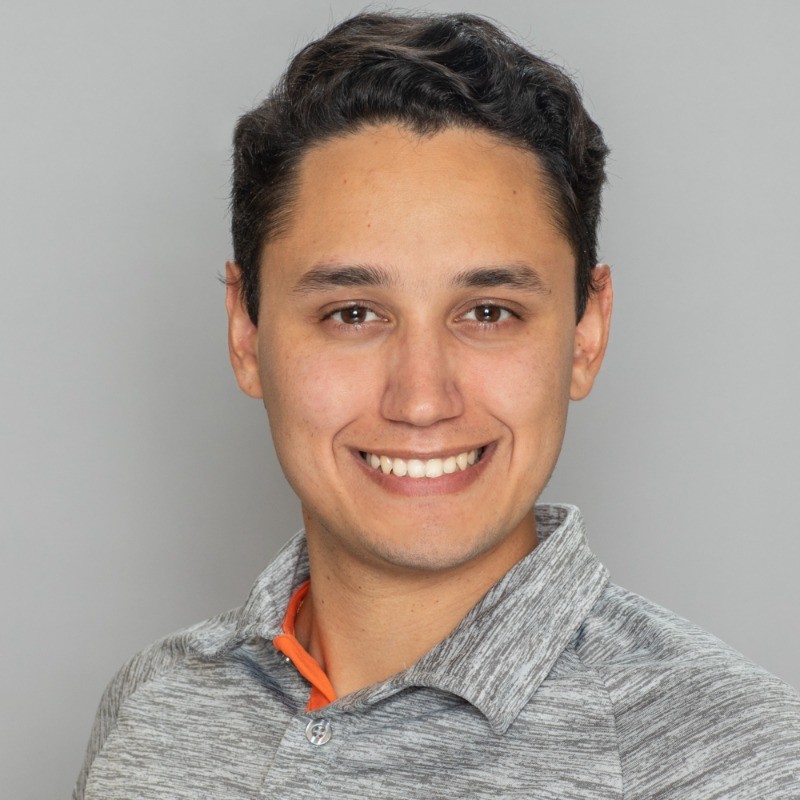
Cancer Exercise Specialist
JC Rodriguez earned his Master's degree from Ball State University and is a Certified Clinical Exercise Physiologist and Personal Trainer. He specializes in cancer exercise science and helps cancer survivors rebuild muscle, regain strength, and feel better through online coaching.