
Inherited: A Life Without a Cure with Melanie Ezell
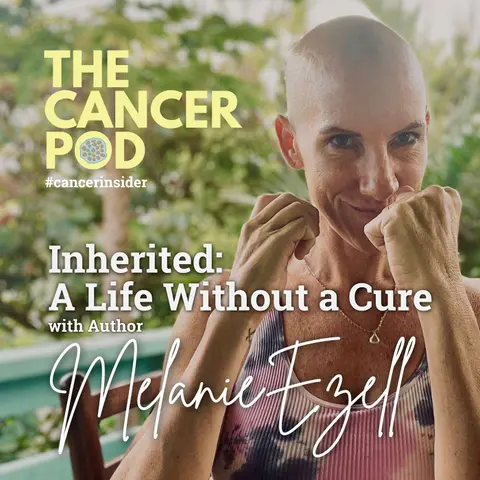


When faced with a Stage IV terminal cancer diagnosis at age 37, how do you keep living, surfing big waves, and raising a child?
In this powerful episode, author and big-wave surfer Melanie Ezell joins Leah to share her unfiltered story of surviving Stage IV ovarian cancer, navigating recurrences, and finding profound joy despite an incurable diagnosis.
Melanie, author of the memoir Inherited: A Life Without a Cure and writer behind the popular Substack An Incurable Life, opens up about using big-wave surfing to mirror her mental health, taking ownership of her healing, and building a life fully lived alongside mortality.
In this episode:
- Surfing as a Mirror: Melanie’s journey from Michigan to riding big waves in Hawaii and Mexico—and how the ocean reflects her inner emotional state.
- The Diagnosis: Her BRCA1 genetic mutation background, subtle ovarian cancer symptoms, and receiving a Stage IV diagnosis in 2022.
- Integrative & Alternative Cancer Care: Navigating ketogenic and Gerson diets, fasting, supplements, Dr. Joe Dispenza meditation, and plant medicine (Ayahuasca and Psilocybin) in search of the “root” cause of her cancer.
- Addressing Emotional Roots: How tackling codependency, resentment, setting firm boundaries, and writing her memoir became crucial parts of her healing journey.
(Note: Brief mention of past eating disorders).
- Subscribe to Melanie on Substack: https://substack.com/@melanieezell
- Visit her website http://www.melanieezell.com
- Follow her on Instagram @yogasurfmel
and Facebook https://www.facebook.com/melanie.malski - Buy her book, Inherited: A Life Without a Cure
Leave a message with your thoughts about the episode!
Become a member of The Cancer Pod Community! Support the podcast and gain access to exclusive content and more! Join today on Buy Me a Coffee or Patreon.
Check out thecancerpod.com! Looking for more information? The website has blogs, merch, and all of the episodes listed by season and category.
Shop the Bookshop! The shelves at Bookshop feature books by authors who have been on the show and other fav books.
Buy The Cancer Pod merch! Whether it’s a cozy hoody or a handy water bottle, we have something for everybody.
Have a comment or suggestion? Email info (at) thecancerpod (dot) com
Follow @TheCancerPod on social media:
Become a premium member.
Join the #cancerinsiders. Membership includes:
-
A monthly (or so) newsletter packed with links to new episodes, compelling research, seasonal recipes, and practical health tips you’ll actually use
-
Behind-the-scenes updates
-
Bonus content from the podcast
-
Yoga videos to support your body and mind
-
Downloadable cheat sheets for quick reference
Join today!
Melanie: surfing is the microcosm that reflects the macrocosm. when you're out there surfing, if you're in a bad place mentally, you're surfing terrible. And the... It's just, it's a mirror. The ocean is a mirror, and it holds up all your own problems to you, and it says, "Hey, you need to face this."
Voiceover: In this conversation, Melanie and I discuss her history with eating disorders. We don't go in depth, but I wanted to give a heads up in case it might be triggering
Leah: Melanie Ezell is a writer, surfer, and storyteller who spent over a decade immersed in the culture of big wave surfing. At 37, she was diagnosed with stage four ovarian cancer that she discovered was tied to a genetic mutation that runs in her family. Rather than retreat, she kept surfing and traveling with her young son through treatment, recurrences, and the unraveling of her marriage. her debut memoir, Inherited: A Life Without a Cure, is the result. Hi, Melanie. Welcome to the podcast.
Melanie: Hi, thanks for having me
Leah: before we talk about your book, how does somebody from Michigan get into big wave surfing?
Melanie: Yeah, that's a good question, actually. I grew up really, interested in surf culture. I was a snowboarder and, skateboarder, and I just loved that kind of board sports, extreme sports culture. So when I, went to graduate school in Southern California, I started surfing there, and I really just fell in love with it.
And sometimes, uh, this happens to a lot of people, you just-- the surf bug bites you, and then that's all you wanna do with your life. So luckily, I discovered it right after I finished graduate school, or I don't think I would've ever finished anything. But that sort of, yeah, that became a passion.
Leah: So, you ended up in Hawaii, and then you got into big wave surfing. So that's like, that's not your everyday off the coast of, you know, I mean, that's, that's, that's hardcor
Melanie: Yeah, it kind of evolved naturally. When I was in California and learning to surf, I was longboarding small waves, very gentle. I remember it was still learning the ocean, like there's a lot to learn about h- the way the ocean behaves, and I-- It takes years to learn the wave knowledge, the currents, the rips, the conditions, the crowd factor.
And so I was very novice, but, um, was really struggling with my life in California at the time. I had an eating disorder. I was going through a devastating breakup. I was-- I had started a yoga studio right kind of when the yoga boom started in So Ca-- Well, yoga was already booming, but it was, um, getting saturated, and so my business was failing, and everything about my life was falling apart except for surfing.
And so I decided to kind of just end that life and just go surf. So, I packed all of my surfboards and whatever I could fit into a little Honda SUV, and I just drove to Mexico and let that whole life go. And it was such a beautiful, scary, um, healing experience for me. Uh, there was one point where my car broke down, like my worst nightmare, uh, materialized because I was so scared that being on a road trip alone, like I wasn't, I wasn't scared of the unknown.
I was scared that I would break down, and there would be a language barrier, and I would have no one to rely on, and that exact thing happened. And it happened in this town called Puerto Escondido, which is kinda known as the big wave surfing capital.
Leah: I’ve been there!
Melanie: Okay.
Leah: been there. Yeah
Melanie: yeah, the waves are massive. It's got an amazing, um, like expat culture and kind of backpacker culture.
It's a super fun town. Um, but I, I was n- I had no place to surf because I couldn't surf those waves. They were too big for me, above my skill level. And I was getting really depressed and just feeling like, "What have I done? I've thrown my life away, and now I'm stuck here." And I couldn't find a mechanic who could help me, and I couldn't speak the language.
And, um, one day I went down to the beach with my camera just to photograph the waves, and I saw this person on a pink surfboard on like the biggest wave I had ever seen in person. And I was like, "Who's riding a pink surfboard?" You know, that's kinda weird. So I zoomed up on my LCD screen, and it was a woman.
And I was just-- I sat there. Like I knew that women surf big waves, and I knew about people over in Portugal that were doing it, but I had never had a close encounter with it. And I just sat there thinking like, "I could do that." And all of my insecurities and fears and all the other things that were keeping me small in life were like You take responsibility for your own life now, Melanie.
Like, if she can do that, you can do that. You can get yourself unstuck. You can surf these waves. You can get your car fixed. You could get a job here. Like, you're, you're in charge of your life." It was like this clear download that happened in that moment. So I did get a job there, and I did end up learning the language and did end up, um, eventually paddling out there, and I just was like, "I'm gonna do this.
I'm gonna surf big waves." And by the next year, um, the next surf season, then I was, you know, working my way up to that. I had my big wave board, and I was getting waves that felt terrifying, and they felt significant in size to me. So just sort of worked my way from there. And all of the people that I met while I was traveling, there's, um, there's two different surf seasons.
There's like the south swell season and the north swell season, and, and Puerto Escondido is south swells. And so I was like, "Well, where do we go for the north swell season?" And everyone said Hawaii. So I ended up, um, doing that for several years, bouncing back between Mexico and Hawaii, just kind of chasing swells.
Leah: You just said something that, ugh, and I should've written it down, but it was, it, your attitude towards taking on big wave surfing is, your attitude towards taking on everything it seems at this point, where just do it. Like y- that, that kinda carries through into your book. Your book, um, as we talked about before we started recording, you have a lot of these surfing metaphors that w- as you're reading it, for somebody who's been through treatment, it's just, i- I could relate to it.
I've never been on a surfboard in my life, but it just, it all made sense. Besides the whole, like, zen aspect of surfing and just being in the water, when you're underwater, you know, you don't know which way is up or
down, and just all, e- the way that you wrote, it's just so beautifully descriptive. And for a book that talks about all of your experiences and going through the eating disorders and your relationships and all of that, it, it just works
Melanie: Yeah. There-- I mean, that's, that's because that's what surfing is. Like, it, surfing is the microcosm that reflects the macrocosm. Like, when you, when you're out there surfing, if you're in a bad place mentally, uh, you're surfing terrible. And the... It's just, it's a mirror. The ocean is a mirror, and it holds up all your own problems to you, and it says, "Hey, you need to face this."
And, and you're right. There-- Like with treatment, there's times when you're making really tough calls, like life and death calls. Like, should I do this chemo now? Should I wait? Should I do different chemo? Um, should I do, should I work with this hospital? Should I go on this trial? And there's something I often say to myself, it's a bit crude, but I go, "Just put your big girl panties on and do it."
And, and no one else can make those decisions for you. Um, you can get input, and you can ask experts, but i-in the end, you know, I don't care how supportive your partner is, how supportive your parents are, how supportive your friends are, like, you are the one who makes that call in the end. And it's really scary, and it would be nice to just be like, "Well, I'll just give my autonomy over to somebody else and let them do it for me," but that's, that's not how it works.
And there's something about being out in the ocean and being in these survival situations where there's no thinking anymore. There's just doing, and you're relying on yourself alone. Um, no-no one's gonna come... I mean, maybe if you have like a lifeguard tower, but like pretty much no one's gonna come to save you.
So you've, you've gotta figure it out, and you've gotta figure it out quickly. Uh, and you cannot panic. You have to rely on your training. You have to rely on your equipment, and you have to rely on your physicality, and you're acting on instinct at that point. Um, and I think a lot of cancering, actively cancering is, is pretty similar, where you just have to do it one foot in front of the other, uh, make the next right call, and then relax into the consequences.
Because sometimes we do make the wrong call, you know, esp- in surfing, in life, in cancer. Uh, y-you do make a wrong call, and then you know that you have what it takes to get yourself out of that. So, and, and that was like that, you know, when I was broken down in Puerto Escondido, it was like, "Okay, this isn't, this didn't go as planned.
In fact, this went exactly as I had hoped it would not. And in this moment, what is the next right move?" And that's, um, been very helpful for me in my life to take on life with that attitude of like, "I'm gonna make a call, and I'm gonna relax into the consequences of that call, and I will handle those consequences as they come at me."
Leah: I wanna talk to you about how you found out that you had cancer, because, um, as people m- may or may not know, ovarian cancer is very sneaky. It presents itself as vague symptoms, and at your age, I'm sure the last thing you thought of was ovarian cancer?
Melanie: Yeah. So, um, ovarian cancer is, it, it generally doesn't show up as like one tumor like we think of as cancer. It's like a plaque or like a mold that sort of creeps around in your body, and there can be quite a lot of it before it causes any real problems. So by the time it's actually causing problems, usually that plaque has gotten quite thick in a lot of areas in the body in order for it to cause any issues.
Because my grandmother and my aunt both had breast cancer, And, and we knew that my aunt had a genetic mutation, so my dad was tested as well when I was a kid, and we knew that he was a carrier. So in my early 30s, my sister and I were both tested and found out that we were both carriers as well of the BRCA1 genetic mutation, which is kind of that, that mutation that Angelina Jolie made famous 'cause she went and got a preventative mastectomy and hysterectomy.
And, um, it's, you know, it's a controversial thing to go and remove healthy body parts. And my sister and I are both very, um... Like, I'm a yoga teacher, I'm a massage therapist, and we're-- we both live extremely healthy lifestyles. We eat healthy. Like, we've both been dairy-free, gluten-free, um, eating mostly organic.
Uh, we were raised, you know, eating food from the garden and meat that was hunted from the, the back woods. So we both were like, “Nope, we're not doing that. We're not having any preventative surgeries. We're just gonna do the screenings." And it was every six months we were doing, breast screenings as well as pelvic ultrasounds and CA 125 tests.
And every six months everything would come back clean, and I was scanned in March of 2022. Everything was perfect, and I just went on with my life. My doctor had warned me, I had been warned by multiple oncologists, that I should have my babies and have my ovaries removed as soon as I was finished having children.
I started having children late in life. I, I never really wanted children, and then at 35 all of a sudden the, the baby fever hit, and I was like, “Okay, we're doing this.” So I had my son, um, in 2020, and wasn't sure if I wanted another one, but I wanted to leave that door open. And my oncologist said, “Y- you better hurry because, uh, the screenings for ovarian cancer are a bit like wearing your seatbelt in a plane crash. That's about how effective they are.”
I still disregarded it thinking I was super healthy, like this will never happen to me. And then I was on a surf trip. My son was two years old, and I was with my husband, and we were surfing through Central America. We had taken three months off, and we had subleased our place, and we were, you know, living the dream, cruising through Central America with a baby strapped to my back.
And I felt terrible. Like, I just... I couldn't breathe well, I couldn't catch my breath. My... I was like, “My cardio sucks. What's up with this?” But it was also, you know, during the pandemic. I had had COVID not that long before, so I was not concerned. And then these digestive issues started where I was like, I'd eat anything, and it felt like the worst gas cramps of my life.
Um, I just heard another ovarian cancer s- say-- another woman say, you know, what she thought was a stomach bug turned into a stomach anaconda. And I thought like, “Yeah, that's, that's exactly how it feels.” Just like, “Oh my God, this is really painful.” And I remember thinking, “I probably have a parasite ‘cause I'm in Central America.”
You know, you get parasites there. But we did decide it was ti... I mean, it was time to come home either way, and I was scheduled for a screening in September, and we were coming home September 1st. I think it was like September 7th. I already had the s- the screening scheduled, and I thought, “You know, I'm just gonna Google just for the heck of it, like symptoms of ovarian cancer.”
And so I Googled it, and there was a list of about 12 symptoms, and I had every single one of them. Um, and I was also like really hormonal. Like my-- I just, I didn't recognize the person that I was. I was treating people differently, and it was like this weird version of myself that I didn't-- It was very unkind version of myself was coming out
Leah: Like a PMS type of a thing?
Melanie: yes, yes, I just felt angry at everybody. Like, I just wanted to bite everyone's head o- off. I so, uh, and the, the opening scene in my book is like one of those PMS-y scenes where I was just like, "Who is this woman?" I just didn't recognize her. Um, so y- I did-- We went home, I had my screening, and I, I just remember the, the ultrasound technician, she was like, " Um, I think I'm gonna go get the doctor."
Leah: Ohh!
Melanie: I'm like, "Oh, shoot. That has never happened before." So she came back in with the doctor, and they were whispering, and that's never good. And the doctor finally said, "You know, you have a lot of fluid buildup in your abdomen, and I think this is related to your BRCA1 diagnosis, and we'll be sending this over to your oncologist."
And then my oncologist called like an hour later, and I pretty much knew at that point.
Leah: So you underwent chemotherapy and surgery
Melanie: Ja It was, um, it wasn't that much of a decision, surprisingly. Like, I had always thought if I got cancer, I would, um, try Gerson therapy or, you know, I, I wanted... There were many things I wanted to try. Uh, and the doubling time of ovarian cancer is 28 days, and I was already stage four. It was already in my lungs.
It was affecting my breathing. And I knew that for me, because I had a two-year-old, that I didn't want to take a lot of time trying things, that I wanted to do chemo right away so that I could buy myself some time to figure out... ' m- a-and my oncologist told me, like, the chemo is not the answer.
He said, "We're very good at putting cancer into remission. We're just not good at curing it." So I was very clear from the beginning, like, this is not the solution, but it might be the Band-Aid that I need or the tourniquet that I need to get to the solution. So for me, that was the right call. Um, and I did four cycles of chemotherapy, lost my hair, and then I did surgery where they removed, uh, it was a radical hysterectomy, and they removed, um, tumor parts as well.
And then I did four more cycles of chemotherapy, and I got, um, I was no evidence of disease at that point, and they wanted to put me on essentially a chemo pill, um, with really, really promising results. Like, they were saying that women were having all of these extra years chemo-free, but in the end, they weren't actually living any longer.
So they were-- Their life expectancy was the same, but it was maybe a better quality of life. And I deliberated on that decision for two months. I actually sat there with the, um, $17,000 pill bottle in my hand, muscle testing it over. I can't tell you how many times I muscle tested that pill bottle. Um, and, uh, in the end, I decided not to do it because my, my gut was telling me that if I really wanted to treat the root cause, that taking those pills was going to suppress the problem to the point where I wouldn't be able to feel the root cause.
I wouldn't be able to intuitively know which way to go, and it would also, uh, it just, it suppresses your bone marrow, your immune system. You know, it's still chemo, even though it's maybe more manageable. Um, so I decided not to do that, and I went down the rabbit hole. Um, just I had already done so much research, and I, I had a game plan in my back pocket by the time I finished chemo By the time I finished, you know, was, it was no evidence of disease, and I just went for it, just trying to treat the whole terrain.
Um, and that was quite the exploration.
Leah: Yeah, you said that you hired and fired more than one naturopathic oncologist. Like, you just kind of, you... And I mean, the list of things that you tried, you did IVs, you did diets, you did fasting. M- I mean, you just off-label pharmaceuticals. Like, you did everything that's out there
Melanie: Yeah, and some of it, like I began with Gerson therapy because I knew that I had been really depleted from the chemo, and I thought, "Okay, I just need like lots of micronutrients." So Gerson therapy, for me, the way that I-- the protocol that I followed was 11 cups of fresh-pressed juice a day. So every morning, the first hour of my day was making juice.
Like I, I, I can't remember the exact poundage of vegetables that I went through, but several pounds of vegetables every single day, um, coffee enemas twice a day, and a very specific, um, very simple diet in addition to the juices, and, um, also began a really strict meditation protocol at the same time. And, uh, um, I loved it.
I loved how my vitality came back so quickly. But at the same time, I was studying Dr. Nasha Winters' work of, um, the terrain protocol, and there was... Her whole work is based on the, um, findings of Dr. Warburg, whi-which says that cancer can only run on fermentable fuels, which is specifically carbohydrates.
And so when I was juicing all of these vegetables with a lot of sugar, and I noticed I w- I got a lot of candida during that time. I was really struggling with candida symptoms, and I thought, "Okay, I am really gonna listen to my body," because I'd already gone through an eating disorder and had already healed from that.
And the way that I healed from that eating disorder was intuitive eating, which just was if I wanna eat it, I'm gonna eat it, and I'm gonna eat as much of it as I want to. And of course, for a while, I just went crazy and binge ate cookies. But then my body came to this like homeostasis where it was like, "You know what?
I want a little bit of junk food, but I mostly want healthy food." And my body lost all of the weight that it gained when I was in my binge eating phase. So I really trusted that my body, if it was getting candida, then this was not the right for me. You know, I had done enough, and it was time to cut that protocol.
So I did it for about, um, 11 weeks, I think. It was almost 12 weeks. And then I, and I was working with a naturopath during that time, and I said, "You know, I think I'm gonna pivot," and I, I pivoted to another naturopath after going through a couple others. I pivoted, I think the third one was one who, um, had been trained by Nasha Winters, and we were running, oh gosh, close to 30 different laboratory tests every month, and we would go through and look at every single marker on those labs, and she would say, "Okay, you need this supplement for that marker, and you need to do, um, infrared sauna for that marker, and this month these markers are low, so I want you to go get six high-dose vitamin C IVs."
And we would just every month we'd tweak it. It was super scientific, so I loved it because it was like she really knew those labs and she could really guide me. And so there were different protocols that I was bringing in to help all of these markers and all of my blood work balance out. Um, and I also did some, uh, genetic testing which showed like, okay, really what, what are the best foods based on what my genes are telling me, um, and really dialed in Really dialed in the diet.
So that was... I loved that. I loved working with her. In the end, it was a low carbohydrate diet that, uh, we were working with, and, um, a very low ketogenic diet, and there was a lot of fasting involved. And the ketogenic diet, I don't know if it's because I have a h- eating disorder history or not, but, um, my body never adjusted well to that diet.
I was always thinking about food, and it was constantly... I always felt hungry. It was like all the food noise was crazy in my head. And every few months, I'd be perfect. I mean, I was militant. If there's one thing I have, it's willpower. So I was so perfect, and I was logging all my food, and I was testing my ketones with a blood ketone meter, and I was doing my, um, 14-hour fast a day, 24-hour fast once a week, 72-hour fast, um, every month, and getting my, you know, getting into apoptosis, where the, um, the T cells, uh, the natural killer cells are, uh, they're really strong then, and they're going after the cancer, and able to test all of that.
Like it was, it was pretty cool to measure all of that. But every couple months, my body would just rebel, and it was just like I was back in my eating disorder. Like my body was moving without my consent to the cupboard. My hands were grabbing food without my consent and putting it in my body. And I'm like: How am I eating dried mangoes right now?
Like, I don't understand how I'm doing this. But then I would reach for the cookies or whatever it was that came next, and I realized, like if you trust your body, if you trust your intuition, like I would never say, "Oh, I have to pee right now, but I shouldn't have to pee. I didn't drink enough water.
There's no reason for me to have to pee, so I'm just not gonna let myself pee." Like that doesn't make any sense. But I was doing that with food. Like I'm hungry for an apple, but, mm, that apple might feed my cancer, so I'm not gonna let myself do that. So in the end, that, that wasn't right for me either. I did stick with those protocols for 14-- Uh, well, it was ended up being about a year that I stuck with that.
And then when the cancer came back the second time, I said, "You know what? I think I'm missing something here." Um, I was so focused on getting the physicality of it right. Um, being perfect, feeling like I needed to h- I needed to fix myself. I was so focused on all of that, that I realized there might be something even deeper.
Maybe cancer is actually coming from that exact same energy, the energy of I'm not okay and I need to fix myself. There is something wrong with me. As I am right now, I am broken. That was the energy that I was swallowing the supplements with. That was the energy that I was, you know, in the 105-degree bathtub raising my body temperature to a fever temperature for as long as I could, doing hyperthermia.
Um, it was all of this energy of I'm broken and I need to be fixed. And when cancer came back, I go, "I think, I think I missed something even deeper."
Leah: one of the things that I was always concerned with was when I did have a patient who had a history of eating disorder and they wanted to fast, they wanted to do either intermittent fasting or some sort of fasting or some sort of special diet. Like, that was always like, I would refer them to the dieticians because that is such... I mean, it could be, you know, it could be triggering
Melanie: It, it is. It absolutely
Leah: And uh, like I'm, I'm that that was, you know, part of your protocol that, that history
Melanie: Yeah. I, I h- my naturopath was aware of that, and I did do two or three different consults with, um, a oncology dietician because of that, and they were... We were mostly making sure that I didn't lose a significant percentage of my body weight, and I think I, I couldn't lose more than 4%. And I was, um, tracking my calories.
She-- I mean, obviously, I had to track my macros because I had to make sure that I was in ketosis, but she wanted me to track my calories to be sure that I was above a certain amount. So we were, again, tackling it from this very, um, scientific, um, concrete, maybe like masculine energy of like, "I'm doing all the right things."
But we had missed this feminine energy of like trust, slowness, um, going inward, following intuition. And yeah, it was triggering, but I was also like really, um, willing to play by the rules. Like she saw that like, okay, I was gonna keep my weight up and I was gonna eat enough calories. And so as long as that was okay, then we were all okay with it.
But I... A-and, and I didn't. I didn't lose weight. Um, yeah, th-there was a moment though where I remember like stepping on a scale and-- 'cause I had to... I normally don't ever weigh myself. Um, I had to give that up, you know, in during the eating disorder recovery. But I remember having to weigh myself and stepping on a scale, and I had actually gained weight, and it was like, "Screw this.
I don't wanna do this protocol. This sucks. This is making me fat," you know? And I'm going... I, I was aware enough to go, "Whoa, I'm triggered." Like, um, there were many moments where I was triggered, and I think that's why when cancer came back and I said like, "There's no way this is good for me. There's no way that this is what's gonna heal my cancer."
Like, I just knew that that was unhealthy for me.
Leah: so then what were the next steps that you took to address the part that you felt was missing?
Melanie: Yeah. So, um, one of the first things, there were... I would say there were two big things that I changed. One was, um, I started doing-- I started following the work of Dr. Joe Dispenza and started doing, um, meditations that involve, um shifting your mindset and shifting the way that you think. So the meditations are specifically designed for you to release, uh, those thoughts that keep you stuck, that keep you in a lower energy state.
So that was really powerful, and then I did psychedelic medication with a, um, a trained practitioner in... Yeah, I did both psilocybin and ayahuasca.
Leah: Okay.
Melanie: and both were really powerful. So when, when I was nearing the end of my eating disorder, when I had done a lot of good work, like with therapists, in meetings, like I had done a lot of internal work, um, then after I had done all that, then I did a psilocybin journey, uh, which I think is the right timing.
I don't think you just, like jump into a psilocybin journey. I think you need to do the p- the steps before that. Um, and it-- that was the end. Like that day of that psilocybin journey was the last day that I was craving food. That, like I just woke up the next morning and was like, "I just wanna eat a moderate meal."
Um, so it was really life-changing. So then that, when I got to that point where cancer came back, I said, "You know, I really wanna explore ayahuasca," because it wasn't something that I had tried before. So I did that, and I saw during that journey that there is an emotional root. Uh, because my cancer is from a genetic mutation, I kind of suspected that there was something in my family history, that there was an energy that had been passed down through my family history, not just a j- a gene, but an energy.
And I read Bruce Lipton's "The Biology of Belief," and it showed me that the gene does not determine your destiny. The, the gene is like a, if you will, like a gun, but the environment pulls the trigger. And there was something in my environment that had caused the trigger to be pulled, and I wanted to know what that was.
And so I, I really had my eyes opened during that ayahuasca ceremony to some of the roots of what that might be, and I saw a lot of resentment in my life. And, um, I wa- really was confronted with the way that I was living was probably the biggest contributing factor that I had any control over. It wasn't getting the right supplement stack, and it wasn't another protocol that I needed.
It was like the toxins that were lodged in my heart that needed to be purged. And I was never given the feeling of like If you do this, then you'll be healed. Like, if you forgive these people, then your cancer will go away. It never felt like that to me. It felt like that's not even the point anymore.
Like, healing from cancer is, is great, but having a life free of resentment and having a life that all that space that resentment was taking up is now filled with joy and, and the ability to be present and to be filled with gratitude, that was the trade-off that I was making, and I was ready to do whatever work that it took to be in the place of love and joy and gratitude.
You know, I always thought I had forgiven everyone, but I really saw w- those places that really I, I needed to sweep out, and I, I went to work on that, and that's kind of what led to the book because I knew that I needed to do some excavation. I wasn't sure... It's easy to just be like, "Oh yeah, I need to forgive that person," but how do you actually, how do you actually forgive somebody?
Um Yeah, and that, that was the work of the book was figuring out what is it that is in my environment that is driving me to these behaviors that are hurting me? Um, and that was very beneficial work. I think everyone should write. Should, I mean, just in a journal or whatever. But when you write... I mean, I wrote the book first as if no one was ever gonna read it.
It was just like, I'm just gonna, uh, you know, write about all these people that have wronged me and institutions that have wronged me, and I'm gonna write my resentment down. And then I knew I wanted to publish it one day, so then I went back and I was like, "Okay, these people and institutions, like the people from these institutions and the people I wrote about, they're gonna read this book."
And it wasn't that I wanted to modify what I wrote because I didn't wanna hurt their feelings. It was because I was like, "Am I really being fair to them?" Like, it-- this is my perspective of like these ways that I was hurt, but if I look at it from their perspective, there's a lot more to this story.
There's a lot more going on. And all of a sudden, like putting myself in someone else's shoes and going, "Oh my gosh, they did the best they could. That was the best that person had to give me. They didn't know any better. That was what their capacity was in that moment," that changed everything for me
Leah: Do you feel like that insight came from the ayahuasca?
Melanie: It began. I think the ayahuasca opened my eyes to the fact that I needed to do that work. Yeah, I
Leah: Okay
Melanie: Psychedelic medication is so popular right now, and so many people are just jumping into it, like trying to be healed, and it's powerful if you are willing to do the work to integrate the l- the messages that you receive.
It's just messages. It's just information. That's all it is. So what are you gonna do with that information? And that's like a lifelong process. Um, and for me, like I don't ever feel, and I... this might change, but at this point in my life, I don't ever feel the need to be, um, on any psychedelic medication ever again.
It's, it's a lot of work. It's really hard. It's really hard. Um, I just feel like I got the messages that I needed, and now I'm doing the work that I need to do from that
Leah: Yeah, from what I remember from your book and what I've heard from people that I know who have done ayahuasca, it's not a pretty treatment. Like,
Melanie: Oh my gosh
Leah: nothing there's nothing romantic or, or magic. I mean, magical perhaps, but it's, it's really ... You're, you're, you're, you're purging literally
Melanie: Yeah. From the depths of your being. And I also, I, I suffered a back injury while surfing in 2019, 2018, and that has given me chronic pain. And one of the things that happens specifically with ayahuasca is any pain in your body is magnified and, like, like tenfold, twentyfold, thirtyfold. And I just remember being in the most excruciating pain of my life while vomiting from the depths of my being and just thinking, like, "If there's a way to turn this off right now, I would kill myself to turn this off."
Like, that's how terrible that experience was.
Leah: Oh
Melanie: I don't... I tell everyone I do not recommend it. Like, if you're trying to save your life because you might be dying of cancer, go ahead. But other than that, like, I do not recommend
Leah: Don’t do it.
Melanie: Yeah.
Leah: Wow. You had mentioned how everybody should write, but not all of us are writers, and you have a background as you're a, a surfing journalist. I mean, you, y- your background is writing. And so how would you recommend for somebody to start writing if it's not, if it's not your strong point, if it's not something that comes natural
Melanie: Yeah. I mean, there's, there's a couple things that come to mind. One thing that I like to do is I take out a sheet of paper and I just don't let my pen stop moving. And it's like anything, any of my-- 'cause our thoughts are running constantly, and I think that's, that's one of the, the problems that causes all the problems is like we're thinking instead of being.
So if you can just sort of stream of consciousness, just on a sheet of paper, write down everything that's popping up in your head. And then I-- as soon as I fill the paper, I go back to the top of the paper and I start writing over what I've just written, and I do that two or three times until it's completely illegible.
Like you, there's, there's nothing that can be read. And in the process of doing that, I'm not worried that anyone's gonna read that ever. I don't even... I'm not gonna remember it because I can't go back and read it. It's just getting honest with yourself. Like, there's so many things we don't want to admit that our subconscious already knows, and if you can force yourself to say out loud, because you could do this exercise by just saying out loud, um, but I like writing it because then it's kind of, and then writing over it 'cause then it's kind of gone.
But all of a sudden you go, "Oh my goodness, that's what was under that." Like and if you-- for me, writing about, um, a situation that triggered me or a situation, especially when I feel I've been wronged, I write about that and then something will come out in the writing and I'll go, "Wait a sec. Is that really authentic?
Is that really my truth? Or is there something deeper underneath that?" And it makes me face the rawest, ugliest version of myself, and when I look at that ugly version of myself, it's like when you wake up in the morning and like you j- you know, the bags are under your eyes and you've got new wrinkles from sleeping on the pillow wrong and your hair is...
And you look at that ugly version of yourself and you go, "Those are my wrinkles. That's my gray hair. Th-this is my face." And you accept that. When you can accept that ugly version of yourself, you can do something with it. But if you're gonna live in denial and never look at that ugly version of yourself, you're never gonna get beyond it.
And so I think that, that way is a really powerful way of writing, that you're not ever gonna do anything specifically with the writing. No one's ever gonna see it. But you're able to get into those dark corners a lot more easily.
Leah: when you were writing your book, not intending for it to be a book, but just to write all of your feelings, all of your experiences, all of that, when did you weave in the surfing metaphors? Like, how did that come about?
Melanie: So the writing process of writing a book for me is very easy. Like, I just sit down and write it. It's the editing process that took most of the time. Um, so having to go back and shape a bunch of random thoughts into something that has structure and form and, and is interesting to someone other than me, that took a lot of time.
I probably rewrote, uh, five, six times the whole manuscript, and at some point I just had to be like, "Okay, I gotta publish this thing, otherwise I'm just gonna..." Like right now I would, 'cause it's been out since April of this year, I'd go back and rewrite the whole thing again. But, but I had to just, I had to let it go, you know, maybe I'll just write another one or something.
But, um, yeah, it, it's the editing process where a lot of that came in. Now because I like to write and I have a background in writing, I enjoy using words as a form of art. So I think some of those surfing metaphors and some of those, um, stories that are not quite so deep, that are just like I'm out there surfing, um, I think those were coming out all along just 'cause it's, it's a creative expression.
It's a form of art for me. So I was doing it also just like as art therapy.
Leah: what I remember, there was one story where you were talking about where, and I'm sure there were, uh, there may have been multiple situations in which you almost died surfing, and just sort of pulling yourself out of it, and just, uh, way that you described it, I mean, you're just right there.
Like, you're right there as you're describing this harrowing situation, and you're in water. I mean, you're like, and the waves are coming, and then, you know, you're orienting yourself and just, you know, like, "Where's my board?" Where, you know, and just, it felt like I was entering the same state that you were in, where it's this harrowing experience, and then you're like focused.
Like, I don't know, it- it's incredible the way that you describe your surfing, 'cause you're right there.
Melanie: Thank you.
Leah: you're right, you're right there
Melanie: I think that was one of my goals, um, with the writing, was that I could bring the reader into the emotional experience of the whole thing, surfing, cancer, um, divorce, all of it. And, um, when I write, especially, especially during, you know, those high emotional scenes, I go back there in my mind and, and I...
Before my hands ever hit the keyboard, I am smelling the ocean. You know, I'm hearing the roar of those waves. I'm there again in my mind. So I've recreated the whole situation, and then my fingers just start moving, and the words just start coming out on, on the screen in front of me as I'm reliving that situation.
And one of the things that I, for better or for worse, I'm very quick at making meaning out of hard things. And so it'll happen, like, e- even sometimes as it's happening, a situation will be unfolding, and I'm in my head already thinking about, like, the meaning of that situation and how I wanna write about it.
which is sometimes you just need to be there and feel it, um, and, and let the emotions run their course. But a lot of times I'm already writing something in my head and, and knowing like, "Okay, I gotta hang onto this feeling 'cause I need to put it on a page somewhere."
Leah: you've done conventional medicine, you've done integrative medicine, and you've done alternative medicine. what are the things that you have carried with you in terms of the more integrative alternative, um, modalities? I'm assuming you're still doing yoga
Melanie: Yeah. So I, actually, my yoga practice has changed recently because I have, um, a pleural effusion that needs to get drained every week. So it, it's recurring fast enough that, um, a lot of positions, like I can't twist, I can't bend over, I can't lay flat. So yoga's very challenging. Um, and I ha- I'm really short on breath, so any physical...
Right now this is, this is actually a crazy time in my life because I've been so physically active my entire life, and being physically active is a form of therapy for me, and I don't have that available to me. But I did-- So exercise is something that I have really powerfully believed in, and even now it's like my parents, I just moved back in with my parents so I could get treatment in my hometown
Leah: moved back, yeah, you moved back to the mainland.
Melanie: And they were like, they were like, "Let's change bedrooms. You can have our bedroom on the main floor," um, instead of the bedroom that I grew up in, um, in the upstairs. And I was like, "No, I need to walk up and down stairs." Like, "Yes, I know that it's hard, but I need to do that a few times a day even though I, I do-- I stop at the to- top of the stairs and I catch my breath."
so I'm getting exercise in the best way that I can. So exercise is key. During all of my remissions, I made a point to gain as much weight as possible, um, but muscle, and I was swimming open ocean races of one mile and longer during remissions. Actually, even, even during Temo, um, a couple times, doing, um, high intensity interval training, running sprints, and continuing to surf, continuing to get in the ocean.
I just feel like, um, one of the things if you are gonna do conventional treatment is that it's, it's a lot of collateral damage on the body. So an integrative approach to support you through that is to really support your body as much as possible. So exercise supports the body in a big way by keeping your muscle tone up so you don't get cachexia, muscle wasting.
Um, there are certain supplements that I have just... I just know those supplements are right for me. I know that they help me. And so I have whittled that down to maybe four different supplements that I'm taking. Uh, there was a time when I was taking 30 different supplements.
and at this point, there's about four that I know are really supportive for me, so I continue to take those.
Um, I do, um, eat an organic diet as much as possible, organic whole foods diet. Um, that being said, like, I have lost weight recently 'cause it's just things have been... It's been really challenging recently. This is the sickest that I have ever been. And so I had ice cream with dinner tonight. And so I, I have been on a low sugar, um, low-ish carbs.
Like the carbs are coming from like potatoes and beans and not things like grains. Um, and right now I'm just... I'm eating what I can just to try and keep some body fat percentage up. Um, so yeah, exercise, organic eating, some supplements, and I do feel like fasting is... Uh, strangely with my eating disorder, fasting is one thing that has stayed with me.
Um, the intermittent fasting feels really good in my body. It feels really good to have like a 13 to 14-hour fasted window and just, just push break-breakfast back a little bit. If I go 15 hours, I don't feel good. So again, it's, it's... I've been really a little bit more intuitive about that. I do some IV therapy specifically when I have s- any kind of a bug, like a, a flu or a cold.
Um, so for my immune system, I do these, um, just immunity boosting IVs that have been really helpful. Have someone come out to my house, a mobile IV person, and just give me a cocktail of, I, I don't even know, glutathione and vitamin C and magnesium and who knows what all is in there. Um, but those... So IV therapy has continued to be helpful for me Um, let's see.
Meditation. Meditation is a huge one. Um, that's been such a game changer for me because, uh, instead of my life being doom and gloom and I'm gonna die and the statistics say, and I accept all of that, um, but I'm just, like, not living in that, in that reality. Like, I'm living in this other reality where today I sat with my son in the sunshine while he, like, sorted through a bunch of empty bullet shells that he found in the yard from my, my, uh...
One of my uncles is, like, a big target practicer, loves to shoot at targets, so he went and collected all these bullet shells. So, like, I- I'm able to sit there and watch him sort these things and, and laugh and make jokes with him even while my treatment plan is really uncertain. Like, an hour before we did that, I was on a call with an, a nurse from a clinical trial who basically said, "I don't think you're gonna qualify for this clinical trial," that I had put so much hope and effort into getting into.
She's like, "Yeah, we'll present it to the doctors, but, uh, you probably, you probably don't qualify." And that was nowhere in my mind at the time that I was sitting with my son. Like, I was just sitting with my son, just enjoying my six-year-old as he does this silly thing. And, um, that is a result of my meditation practice, where cancer is a part of my life, but it is not my life, and just, it- it's just a chronic condition that I'm dealing with, and when I have flare-ups, I, I deal with them.
I put my gr- big girl panties on and I deal with them. And when I'm not having a flare-up, I'm living. Yeah, I think that's probably... Those are the biggest things. I attended a Joe Dispenza meditation retreat, a seven-day retreat, which was one of the single most transformational things I've ever done. It was, uh, definitely more powerful than any psychedelic medication I've ever been on.
Um, to go to seven days of meditation five hours a day, plus another six or seven hours of lecture, um, that was pretty game changer for me.
Leah: Is there anything else you wanna add before we sign off?
Melanie: I will just add that, um, you know, one of the bigger toxins that I had to purge was my codependence. I really had to look in the mirror and see how boundaryless I had become, especially in my intimate relationships. And it's one of the things that I explore in the book a lot was that I had been, I, I had been married three times to essentially the same man in three different bodies.
Um, three times, three addicts, three occurrences of cancer. And, um, it-- that has been a huge part of my journey is looking in the mirror and going, " Where am I allowing myself to be in these situations?" Rather than like, "Why is this person doing these things to me?" why did I stay? Why did I not say anything? And why when I did say something did I accept that he didn't change and stayed? Um, that was a big part of, of getting through the cancer diagnosis was putting myself in situations that were supportive to me. I almost see that as like an integrative therapy is like having boundaries and learning to speak those boundaries aloud.
Last week when I was moving, and I'm really struggling physically, but I had to close up shop on a life that I had had for eight years, uh, six and a half years in the same house. You know, raising my child since he was born in that house, there was a lot of stuff to go through in about three days. And a lot of people, I've made a lot of amazing relationships in Hawaii, thank God.
And these beautiful people were coming by to say goodbye to me And I wanted to sit down and talk to every single one of them. And at some point, I asked my friend, I said, "Will you just go downstairs and put a note on the door that says, 'I would love to say goodbye to you. Please come up and give me a hug.
Please don't stay for longer than 15 minutes.'" And that is a boundary, right? A boundary is something that, that I make, and it has nothing to do with the other person. I don't ask the other person to do anything. It's like I'm holding this boundary for me. Um, and that's one thing that it-- I think as a cancer patient, um, we gotta have good boundaries, and I am really grateful for the journey for, for my teachers, for these husbands and other people in my life that have taught me if you don't have boundaries, you're not gonna make it.
Leah: Melanie, thank you so much for being on the podcast. Thank you so much for sharing your story, and thank you so much for writing this book.
Melanie: I am so stoked. This was an awesome conversation. It was so lovely to speak with you, and thank you so much for having me
Voiceover: Subscribe to Melanie's Substack, An Incurable Life, at substack.com@melanieezell. Visit her website, melanieezell.com. You can follow her on Instagram at @yogasurfmel, And head to the show notes for the link to buy her book, Inherited: A Life Without a Cure
Thanks for listening to The Cancer Pod. Support the show by following wherever you stream podcasts. Remember to leave a review and share this episode with someone you love. Join our Patreon community for bonus episodes, free downloads, and behind-the-scenes conversations. Follow The Cancer Pod on social media for more integrative wellness insights between episodes.
This podcast is for entertainment purposes only and is not medical advice. Always talk to your healthcare team before making any changes to your treatment plan. And on that note, I'm Dr. Leah Sherman. Music is by Kevin MacLeod.
Post-production audio by auphonic.com


