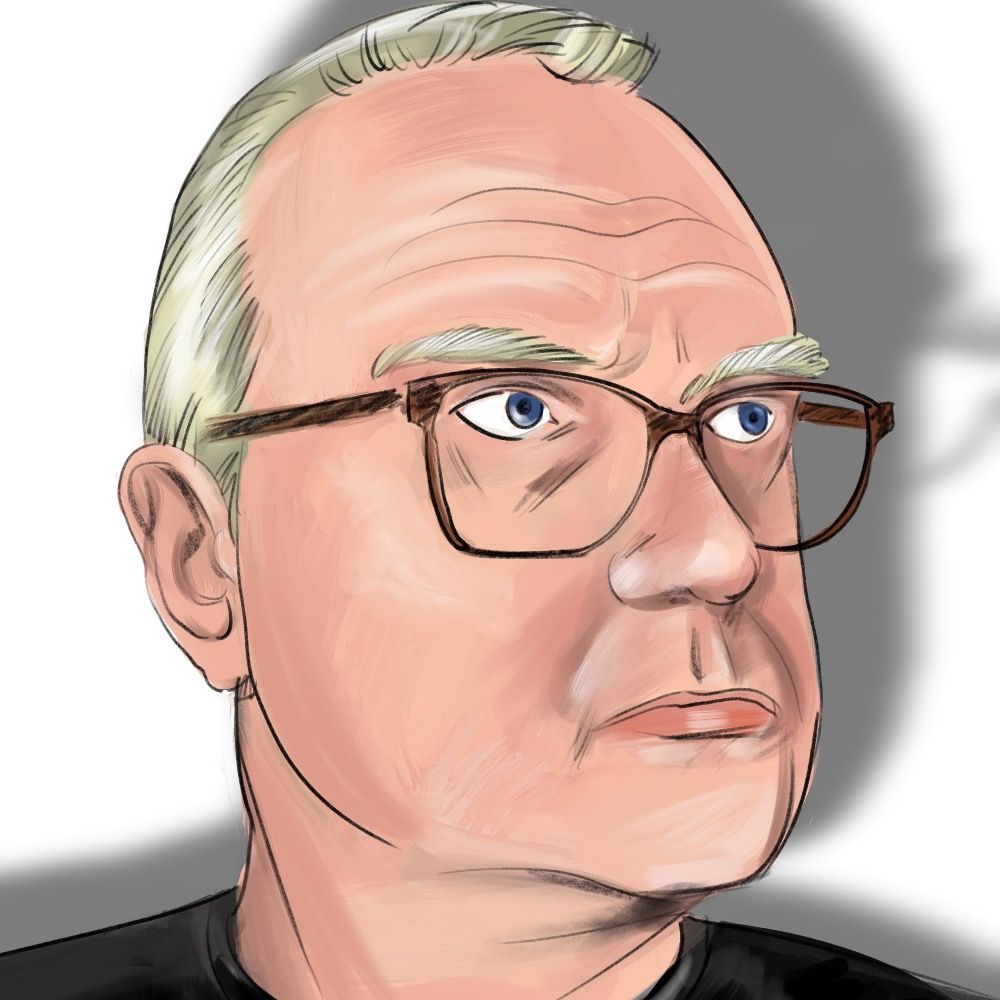
Life, Illustrated with James Burns, Artist and Prostate Cancer Advocate

Georgia-based artist and prostate cancer education advocate James Burns joins Leah to talk about his autobiographical medical graphic novels “The Death of Me” and “The Half-Life,” which chronicle his stage 4A prostate cancer diagnosis, treatment, and life after.


What happens when a graphic designer decides to document his own cancer diagnosis in a comic, panel by panel?
Georgia-based artist and prostate cancer education advocate James Burns joins Leah to talk about his autobiographical medical graphic novels “The Death of Me” and “The Half-Life,” which chronicle his stage 4A prostate cancer diagnosis, treatment, and life after.
James shares why he posted his diagnosis publicly on Instagram and how he pushes back on the expectation that men need to stay stoic through illness. He talks about his earlier comics that documented the time he had treatment for detached retinas, losing his voice following thyroid surgery, and a fall that lead to a completely unrelated surgery.
He also gives specifics of this diagnosis and treatment, from an elevated PSA to MRIs, biopsy, and PMSA PET scans to 28 fractions of radiation therapy. James talks candidly about ADT side effects including brain fog and hot flashes, and how he uses exercise and weightlifting to combat the muscle loss from taking hormone blocking medication.
Head to his website https://burnscomics.com/ to download PDFs of his comics.
Follow him on Instagram: https://www.instagram.com/jpburns
and on BlueSky: https://bsky.app/profile/jpburns.bsky.social
September is Prostate Cancer Awareness Month. Learn more about prostate cancer at malecare.org
Leave a message and let us know what you liked about the episode!
Become a member of The Cancer Pod Community! Support the podcast and gain access to exclusive content and more! Join today on Buy Me a Coffee or Patreon.
Check out thecancerpod.com! Looking for more information? The website has blogs, merch, and all of the episodes listed by season and category.
Shop the Bookshop! The shelves at Bookshop feature books by authors who have been on the show and other fav books.
Buy The Cancer Pod merch! Whether it’s a cozy hoody or a handy water bottle, we have something for everybody.
Have a comment or suggestion? Email info (at) thecancerpod (dot) com
Follow @TheCancerPod on social media:
Become a premium member.
Join the #cancerinsiders. Membership includes:
-
A monthly (or so) newsletter packed with links to new episodes, compelling research, seasonal recipes, and practical health tips you’ll actually use
-
Behind-the-scenes updates
-
Bonus content from the podcast
-
Yoga videos to support your body and mind
-
Downloadable cheat sheets for quick reference
Join today!
James Burns: I feel like I've been very weirdly public about it or writing a comic about it and putting it on on Instagram, but I feel like putting it out there because I think it's better than being quiet and stoic, which is another thing that again, prostate cancer, which is a male cancer, a lot of men think you have to be tough and stoic and you can't show fear and you can't show pain and you can't show weakness. At this juncture, I would like to be able to show pain and fear and weakness. I think that's that's part of the experience.
Voiceover: [Music] Welcome to The Cancer Pod.
Leah Sherman: James Burns is a Georgia- based artist and retired [music] graphic designer who creates autobiographical comics, many that deal with his own personal health issues, including The Death of Me and The Half life, which document his diagnosis, treatment, and life after treatment for stage 4 prostate cancer
He uses his art as a tool for patient advocacy and prostate cancer education. Hi, James. Welcome to The Cancer Pod
James Burns: Hey there. Thanks for asking me.
Leah: Yeah. No, you you approached me. Was it like last year or so?
James: And yeah, when I when I first ran across your podcast.
Leah: Yeah. Well, I'm glad that we got to connect because I remember downloading and reading parts of The Death of Me when we first connected and experiencing like almost like the frustration that I'm sure you felt from the moment your PSA was found to be elevated to actual treatment time because you're really good at documenting all that transpired during that period.
James: Yeah, because I mean definitely when you get diagnosed you you really you focus on all that and nothing happens fast enough, you know, or you don't get answers quick enough and that's kind of part of what I was trying to trying to record was, you know, what what a patient goes through and you do it beautifully.
Leah: You really do. And then you also have explanations as to what you know the different you know tools like the you know the machines that are used for radiation. Did you go back to your radiation oncologist? Did you research online? Like how did you get all of the information as to like what those sort of medical details were in the in the comics
James: Well, when it came to the details of the actual device, which I I forget the name of it, it's in there and it's illustrated and it's uh it talks about what it what it does. You know, I had 28 um 28 sessions of radiation and every time I went in there, I would ask them questions about what was going on and, you know, what at was the process of it and then I researched it online as well to make sure I got my facts right. It's nice. I actually got treated at Emory and uh I had the same technicians every time. So I kind of built up a relationship with them and you know could joke with them and ask them about you know what was going on and how it was going.
Leah: Oh, that's great. That's great to be like that comfortable with the team because I'm sure it was I mean that's completely that's not something somebody experiences every day.
James: It's so strange. I mean something I've realized just I mean through this experience is that you know there's this whole other world that you have no idea is going on in a daily basis where people are getting treated in the basement in this case of Emory uh University Hospital and uh you know until I experienced it myself. I mean I guess I assumed people were being treated but I didn't know what the ritual was like that you that you go through.
Leah: You know, I want to quickly rewind because this these aren't your first medical graphic novels.
James: My very first comic was I was in Indianapolis. We were just about to move back to Atlanta and I suddenly had something go wrong with my eyes and it turns out that it was a detached retina and I had to have both of my eyes operated on at the same time which is terrifying as a graphic designer. It's kind of like, you know, what's going to happen? Will I see again?
Uh, so all that fear, at least it gave me a story where I knew the beginning and the middle and the end of it. And obviously since I did the comic about it, you know, obviously it worked out okay. They can do some amazing things with, you know, fixing your eyes.
And then since then, you know, just getting older, things would happen like I had uh I had a scare about thyroid cancer and they actually removed one of my thyroid glands, you know, because that's the only way they can actually do a biopsy of of your thyroid to see if it's actually cancer or whether it's something else, something benign. And it turned out it was benign. But uh I did another comic called Speechless because when they removed it, I was I was unable to talk above a whisper for uh for weeks on end. So, all these all these things that happen to you uh you know I had maybe like three years ago four years ago I I was just walking in the neighborhood and I had a fall and I dislocated my shoulder and really really messed myself up and then recovering from that I suddenly had to have gallbladder surgery. So, all these medical things there, you know, I'm not sure, you know, how much other people enjoy these, but for me, I enjoy sort of writing down what happens and and explaining, you know, what someone goes through when these things happen.
Leah: Do you find it kind of cathartic just kind of working your way through what has transpired? I mean, are you doing this real time?
James: Yeah. Well, for instance, with with The Death of Me, uh it was done pretty much real time. So I started it I started at least writing it down right after I got diagnosed and then I started doing pages at a time and where I was actually in being treated in Atlanta I would be you know I would go back from treatment and I'd go into, I got to stay at the uh the American Cancer Society has uh these Hope Lodges in different places around the country and it was nice that I could stay there so that I could literally walk to treatment and then walk back and not have to you know deal with staying in Atlanta because I I live in Athens, Georgia. You know, when you're when you're getting radiation, you have to drink a certain amount of water and…
Leah: Right.
James: Yeah. The the phrase they use is full bladder empty bowels. You know, that's kind of the the prep that you have to do for this.
Leah: So, did they give you a cup? Did they give you a cup that was like you had to drink or a bottle or something?
James: Well, I I had my own. It was kind of an incremented one so I could say, "Oh, yeah. I drank, you know, 2 liters of water. That should be enough." [laughter] And that's that's one of the first things they do when they put you, you know, in on this table and they have this machine and it scans you and it looks and sees like do you have enough fluid in your bladder or not, you know, uh for I mean part of it, I guess, is to sort of push your organs in the right place and the other part is to protect you against, you know, when you're doing radiation, there is always some healthy tissue that gets irradiated along with the cancerous uh ones. They're they're very accurate, but it's to make it, you know, the the best possible situation when they irradiate you. I've heard from patients that I mean other than the fatigue that they start to experience you know as treatment goes on is their well their big concern usually is that water being able to hold that water because with prostate cancer comes a lot of prostate symptoms like having to urinate and not being able to hold and all these kinds of things.
Leah: Were you experiencing that because from the comic it sounded like you were just having pain.
James: Yeah. And the back pain may have been totally unrelated. I've had back issues and I've had like back surgery. So, you know, I thought maybe it might have been that, but then it was it was different. It was kind of like lower back, but you know, they say it wasn't the cancer. It was, you know, it probably was just my back.
Leah: You went for your regular annual exam.
James: Mhm. But wasn't it kind of the back pain that kind of pushed more towards imaging or uh No, it was uh just the result of the PSA. So, you know, I had my first PSA and it was, you know, the number they worry about is anything over four. And my first one was 4.8, which is a sort of marginally over. And then they said, "Oh, well, we'll have to check this. Come back a month later." I came back a month later and did another test and it was 4.6. So, we got a similar number. uh but but low but he said you know if you get two of these tests you should see a urologist. So you know that next I saw a urologist and they recommended uh doing um uh doing imaging to do uh you know a DR a digital rectal exam. You know something I learned later and something I think they're aware of is that unless you're a very very skilled practitioner, they're not very accurate. you know, you can't really say like there's nothing there or there's something there just by field. Whereas the imaging actually shows uh lesions that that are in your body uh like a pelvic imaging pelvic MRI.
Leah: Yeah. And then there was the PSMA PET that you got.
James: Yeah, I've had several of those.
Leah: And that's really remarkable because it's so specific.
James: Yeah. Yeah. because you sit there and they inject you with this uh radioactive material that sort of seeks out prostate cancer cells and they emit some sort of prostate specific antigen, you know, that that that they can track and it shows up on the imaging as bright spots. So you actually see uh areas that light up and they do this after your biopsy to sort of say has the cancer spread throughout your body or is it you know local to the prostate. In my case, it was in my prostate and it was also my local uh lymph nodes, my pelvic lymph nodes, but nowhere else, which was good.
Leah: And so that's why they stage you as stage 4 A because that's confined to the lymph nodes and not anywhere else.
James: Yes. And you know, it's a serious diagnosis. Uh it's you know, it's a scary one. Uh and I think you know when people get diagnosed they started you know my first thought was like you know I'm going to die because that's what that's where my mind went to you know but when I had a plan and I had a treatment plan at least I feel like I'm doing something positive and when I finished up my sessions of radiation even I said like you know what's my prognosis and basically he said it's you know it's 50/50 that it works so you know so you know I'm still here you know in, I guess in November it will be 3 years after I got diagnosed. So, you know here's hoping you know.
Leah: Are you currently on any treatment right now?
James: Yeah. Yeah. Yeah. It's the strangest thing. I Well, so I I went through before and then during my radiation treatment and after for 18 months I did ADT, which is androgen deprivation therapy. basically takes your uh testosterone, knocks it down to as low as they can get it. Uh for me, it was like under I think it was like under 30, whatever those units are. Uh which really messes up your body and you know makes you makes you depressive. It uh does uh makes you tired, it makes you achy, it makes you u forget things. Uh but you know, so I put up with that for 18 months. Uh I stopped that almost a year ago in August. I stopped that last August.
Since then, I've been experiencing some I think some side effects from the radiation. So, uh there's this is something that can happen. I think I have radiation cystitis; you know which means that you know some of the some of the tissue got damaged from the radiation. It can show up apparently years later. So, I'm doing this thing right now. This morning I did it. I'm doing 40 sessions of uh hyperbaric treatment.
Leah: Oh wow.
James: So they stick you into it's like a lucite a you know a glass tube and they put you in there with 100% oxygen at two atmospheres. So you just sit there and like breathe this in this highly oxygenated uh chamber for takes about 10 minutes to bring you up to pressure and then you sit in there for 90 minutes and then 10 minutes to bring you back down.
Leah: So and are you doing that locally or are you going to Emory for that?
James: Yeah, I'm doing that locally. doing that here here in Athens, you know.
Leah: Okay.
James: But uh so every every weekday I go in there and I and I do that. So that's you know I'm trying to think it's you know my comics are very much I mean they're personal and they're about medical things. So my demographics and my readership is really you know it's probably fairly limited you know to people who are interested in such things. But I I was thinking like, oh, should I do a comic about going through this hyper berry treatment and you know I I it's still to be determined. I really wanted to after I finished these two comics, The Halflife and The Death of Me, I really wanted to like the next one to be funny or be, you know, slice of life that didn't have to do with illness. But uh but since I'm still going through treatment, I'm considering doing something about going going through this treatment. So, it's supposed to help promote healing of tissue basically is the idea of hyperbaric uh you know treatment.
Leah: What I thought was so cool about the comics is that it's it's specific to prostate cancer, but it's kind of universal in terms of what every patient goes through. I mean, I found that I could relate to different aspects of it, whether it was something that I experienced myself or something that I saw patients experiencing. And you know, we all have loved ones who've been diagnosed with cancer. And so I the thing about your comics is that they are so educational. There was one part that I really liked which was in The Death of Me where you're talking about basically you reframed intimacy with your wife because everyone had this concern with you getting yourbtreatments. you know, this is going to affect, you know, erections. And everyone seemed to be obsessed with that, but you were just like
James: well, it's the least of my concerns, I guess. [laughter]
Leah: But which is unusual. It really is unusual.
James: Yeah. because, you know, I frequent prostate cancer forums like, you know, the Reddit forum on on advanced prostate cancer and uh there's this other website that's uh it's it's advanced prostate cancer, but it's through malecare.org. Uh they're the people who uh were distributing my comic for a while. But a lot of people's concerns are about, you know, hey, what'll happen to my sex life? What'll happen to my erections?
And again, you know, I I was more concerned, you know, hey, will I survive this? Cuz I figured I figured that my wife and I have a great relationship and we've always been close and I think this has done nothing but bring us closer. Uh just, you know, it's not a sexual thing.
It's not [laughter] it's not as much of a sexual thing. Uh certainly not when I was doing ADT, which reduces your Uh um um what's that?
Here's here's where I'm forgetting my words here.
Leah: Libido
James: Yes, thank you. That's that's what I was looking for, you know, to zero. It just really like takes away all interest whatsoever. I've you know, I've recovered some of that when my testosterone has come back up. But, during that time, I mean, I think, you know, hopefully your relationship has more to do with sex. you know, it has to do with uh you know, my wife and I have been together for you know, 37 years or something like that. So hopefully there's something more real that holds us together than just the sexual part of it.
Leah: That was something that I would talk to patients about a lot was talking to men about learning to reframe intimacy, that intimacy or women looks a little different. And so doing things like, and I've mentioned this on episodes before, but doing things like taking a dance class. You talk about, you know, holding your wife before you go to bed and then, you know, waking up and you know, hugging each other. Like there are other ways of being intimate without actually having sexual intercourse. And I just thought that was so it was beautiful that you you expressed that in the comic because that is such a big concern.
James: And I may be different in some senses because you know I mean again it is a big concern for people that uh especially people who go through the surgery route you know when you've actually had surgery which to me well first of all it didn't make sense in my case because I had the spread. So, you know, even if I had had surgery, they would probably have to go in with radiation later anyway. So, I just sort of said, well, let's just do the radiation. But the people who do surgery, you know, they experience things like uh, you know, like incontinence and experience things like, sexual dysfunction and, you know, literally you're shortening that that length of that length of tubing, you know, that goes from your bladder, you know, to your penis. You're shortening it. and they're all concerned because you know it means that that uh they've become shorter you know right so uh you know and this is a big concern for people I just I guess I just haven't focused you know that much on the sexuality part of it for me I and part of it is you know when you get diagnosed the first thing like I said is you think I'm going to die.
I had an experience of oh gosh in 1986 my mom died from lung cancer and she got diagnosed and then she had like a year and a half of really bad getting worse getting worse sort of stuff and lots of trips to the hospital and that's what the first thing that went through my mind is oh that's going to happen to me and I'm going to inflict this on my family uh because uh it was a difficult time for me and my sister who lived at home at that time because my mom went through lung cancer and died kind of a long, you know, ex extended time. I was worried that that is what would happen to me and that, you know, my daughter who's, you know, she's 34 now. I I didn't want her to have to put up with a dying parent because I thought it was difficult for me at at 25. And I, you know, she's got her own life. I don't want her to have to worry about what's happening to her dad at this point.
Leah: Yeah. Uh, no, that's a I mean that is a a huge concern.
Other things that you cover in the comic in the first one in the death of me which I you're so candid. I mean obviously you're talking about you know erectile dysfunction in your comic you're very open but you talk and you talk about how all of the other experiences that you had the side effects from the ADT with the hot flashes and the night sweats and what did you call them? You called them hot sweats.
James: Yeah. [laughter] which is again, you know, you're I have problems when I was on ADT, I had problems, you know, remembering nouns and and so, you know, that was the closest I could come was to come up with. Yeah.
Leah: Was your wife able to like um interpret like I found my husband did that too for me. It was just being able to like mind read.
James: She said, "Well, now you're sympathetic with, you know, what I've gone through recently." So,
Leah: Oh, right.
James: We kind of we kind of shared some of that.
Leah: So, you shared menopause. Manopause.
James: Yeah.
Leah: And yeah, you talk about like you had the mood swings and obviously the brain fog, which we both touched on before we even started recording, how it's a commonality um amongst those of us who have endocrine therapy.
James: My my daughter always jokes, you know, that she just says, "Oh, you're just that way anyway." But it's, you know, I can tell I could tell it's, you know, the meds made it much worse, you know, that I would forget things and find myself in the middle of a sentence and not know how to finish a sentence, which was really frustrating.
Leah: Yeah. No, completely. And I yeah I find that even though I am well I stopped my tamoxifen last year but even though you know I'm 11 years out from chemotherapy if I'm fatigued you know if I'm not hydrated or there's all these different things that will just bring on the brain farts if you notice that with yourself as well like if you're just like you're worse at certain times.
James: Plus, I'm 67 at this point, so that I'm sure that has something to do with it.
Leah: Another thing that I found amazing is that you started exercising and lifting weights and your experience at the gym I thought was really funny because I'm actually experiencing that now at the gym where I go where there's these younger people who may not you're there and you're serious and you're trying to go machine to machine and they're younger people who aren't quite, you know, into the working out aspect. I like that
James: Some of them are there I think just to you know just to just to to pick up dates or something [laughter] or to or to catch up on social media because you know they'll I'll be there and I want to do I I never used to exercise so exercise for me is a new thing so I want to get through it as quickly as possible so you know I do my reps and I get to the next machine and I do my reps but these people are and again I'm sure it's just a generational things but you know they'll sit there on a piece of equipment and just you stare at their phone like this or they'll you know go through things and you know I just want to say like you know do you mind if I just exercise on this piece of equipment [laughter] because you know I'm in a college town I'm you know the University of Georgia is in Athens uh so there are lots of lots of twentysomethings out there.
Leah: You're still weightlifting.
James: Yeah. Yeah, I still am just because uh you know the the ABT actually, you know, it it would literally melt any muscle that I had before, which I, you know, I I never had much to begin with. I've always had a very sedentary lifestyle. I've been a graphic designer sitting at a computer doing things. So, I uh besides walking, I never really had much exercise. Uh, but I'm doing it now just because I I think it makes me healthier and I think it's it's a good thing to do on probably every other day I go to the gym.
Leah: Well, I just recorded an episode yesterday which I think I'm going to release around this episode as well with an exercise physiologist who talks about all of the benefits of exercise both during treatment as well as after. So, keep doing it. Keep working out.
James: It's it's very important when you're doing ADT because again, you know, mentally you get kind of down and depressed, and it helps to to exercise. Physically it you can't really gain muscle weight or anything, but you can help maintain it if you if you do some sort of strenuous weightbearing exercise at that point.
Leah: I had a patient who every time he would come for his treatment, he had a or for his follow-ups, he had a t-shirt that said Body by Lupron. [laughter] Lupron, for those who don't know, Lupron is one of the medications that is used for androgen deprivation.
So, yeah, that was funny. Every like, you know, when he'd come for his three months or whatever it was, like yeah, he had his Body by Lupron.
James: Well, and the other thing, one of the things I mentioned in the comics that, you know, talking about that treatment, I get very upset about the state of health care. In some ways, I'm very impressed with what they can do and the science, you know, and what they, you know, how they could treat me. But on the other hand, for instance, I was taking a pill called Orgovyx. Each of those pills was $82. So, you take one daily for, you know, you know, for for 30 days and it's, you know, 2,000 some dollars, you know, what, 2,400 or something like that. [sighs] Uh, I was very lucky that there are some systems that can discount it for you or I even got some free meds from the manufacturer, which is great. But I count myself as very lucky and very privileged that I found these systems that would help me pay for you know really expensive medicine. And I know that you know even the medicine I had was cheap compared to other meds that that cancer patients have to pay for in this day and age. I'm glad they've done things like have a $2,000 cap on meds that you have to pay for, you know, out of pocket before Medicare starts picking up on these things. One of the benefits of being over 65 is just is getting into that system. That seems to help.
Leah: You literally present receipts. I mean, in your comic, you show how expensive cancer treatment is. I mean, the detail that you put into that comic, it's really it's it is such a great resource. And you have resources at the end of the at the end of the book. You have a glossary. You have resources for people. Not that you would do it about every single cancer, but if somebody could do that for every cancer, it makes it more tangible almost.
James: Well, well, because medical lingo is so hard to parse and doctors may be good at treating patients, but they're not always good at explaining what some of these things mean. And they throw all these acronyms or initialisms at you and you have no idea what they are until you look them up. So, it's good to have, you know, to start have a place to start understanding, you know, what ADT is or what PSMA is or what PSA is. So something I do and this is as a graphic designer I am very much against AI. I really hate that the way they train it and the way they steal other people's uh creative output bugs me. However, I did use chatGPT when I would get medical reports like when I got my results from my MRI or my PSNA PET scan. I would take that medical gobbledygook that you would get, you know, that on my chart or whatever, you know, web-based portal you have and I would just dump it into chatGPT and say, "Explain this to me in simple human terms." And that seemed to help a lot. So, I mean, that's I think that's kind of a good hopefully benign use of of AI, you know
Leah: As long as you're not putting in personal information, right? You're just putting and
James: You know I at this point y'all could care less about my personal information but I don't want to you know I don't want to enrich some mega corporation with my personal information. you know, I'd rather not, you know, but uh I found it very useful to be able to explain and I wish, you know, I wish the medical industry would learn to explain things in clearer terms for patients because it can be really confusing and scary when you get results from a test like you know, what does it mean when I have, you know, a Gleason score of seven or I have a Gleason score of nine? Uh, you know, what does that mean in real terms?
So I was I was very happy that again my comic got distributed by um that malecare.org and I think they said it was like I don't I forget 5,000 6,000 copies digital copies that they distributed and uh people would email me and say thank you for doing this because you made it very understandable and clearcut and I that I found that very satisfying.
Leah: That's how I found it. Like if I were still seeing patients, I would definitely recommend for them to download. I think I downloaded I did I I downloaded it from Amazon. I got it through Kindle. But yeah, so
James: Yeah, it's it's for free on if you have, you know, Kindle Unlimited, which is the way I read books.
Leah: I paid the $2.99, but I mean it's it was well worth it. And it's kind of nice how you continue it with The HalfLife. It's just kind of like this is what happens when treatment's over. But it's I don't want to I don't want to give away too much of it.
James: Well, the point is kind of when people say and you probably experienced this as well, when you get diagnosed with cancer, everyone is very concerned when they hear about it. And I'm digital forward enough. I actually announced my diagnosis on Instagram. So I actually said, you know, like, hey, this is what I'm going through with a comic. And yeah. Well, no. Well, yeah, through a comic. you know, a couple page comic, but it's actually, you know, pinned on top of my Instagram account.
And people would, they'd say, "Oh, that's terrible." You know, they, you know, what could I do? And things like that, but eventually after you get treated, they go like, "Oh, well, you're treated. You know, are are you in remission?" And it's prostate cancer is weird. I I don't know about breast cancer if it's the same thing, but you get tested every 3 months and you get a blood test and you sort of live and die by that number, that PSA number. And you're never, no, no one ever says like, I mean, you're cured. They just say like, oh, well, it's, you know, it's not it's not going up or it is going up. Uh, depending on what that blood test says. I'm going to get one in uh in about a month now. I'm going to have my my most recent one. And I'm very happy. For a while there after I stopped ADT, it went up incrementally and I was like, uhoh, here here it [laughter] goes. But then it's gone back down. So, which is something that can happen after treatment. It can it can go up and down. But, you know, I'll never be I don't I don't feel like I'd ever be just like, you know, I'm all I'm all done with that and move on to the next thing.
Leah: You know, you're not living for the next three-month appointment. You're going out, you're doing things, you're kind of I'm not going to say bucket list, but like you had a a dream of traveling, and you and your wife have done that. I mean, you're just kind of
James: Well, and we traveled before the diagnosis, and it's something we like doing. We're trying to plan something uh you know, in the uh in the winter, talking about maybe going to Nice or something, but we like going to France. We're big Francophiles. kind of like the lifestyle there and um hopefully we can travel again. That’s something that that we really enjoy.
Leah: So for anyone who's listening who maybe they want to kind of explore creating their own illustrated cancer experience, what would you suggest for them?
James: Um I mean I was kind of in a unique position where I was an artist and I'm also fairly verbal and can write a story as well. So, it sort of depends on what their skill sets are. They could tell it to someone and have someone else do the story for them. It doesn't have to be a comic. I mean, I think there are lots of ways that you can express what you're going through that might be something different than a comic. You might be able to do a video or you might be able to write an article about it. You might do a podcast. Uh but you know it's for me comics made sense because that's kind of how I explain my life and explain my view of you know uh of the world I think.
Leah: But you do on your website you do break down the process in terms of
James: Oh I do. Yeah. I talk about the technique because I'm very I'm one of those people who's kind of I I have a fine art degree and I'm kind of split between fine art and technology. I kind of like both things. So, I like to share that information so other people can try to do that. But, you know, it it helps to be able to draw to do a comic. Uh, because it's a way of doing storytelling, but you really have to sort of, you know, figure out how to do that in a bunch of panels on a on a on a page.
Leah: Did you grow up reading comics?
James: Oh, yeah. Yeah. I really did. Uh, I always enjoyed them. I always wanted to do comics, but like like a lot of artists, I think I would draw like one fancy, you know, page of, you know, someone leaping across the page or something, but I never had a story until this thing that happened to my eyes, you know. Uh I had to I had to wait until I had a story I could tell.
Leah: There's one part in your comic where you talk about like you wish you had a cancer card. I know someone who sells them on Etsy.
James: Oh, really?
Well, you you know, I I have I have pulled it out metaphorically a couple times in my life where someone, you know, where someone bugs me. It's like it's like, you know, don't bother me. I I'm dealing with having cancer right now, you know. Just, you know, leave me alone. Let me have my way here. Just you know, because you ought to get something positive from, you know, what what is generally a negative uh experience.
Leah: And I mean, it never expires. That's the thing with a cancer card is you can always pull it out.
James: And this is I, you know, I actually got a disabled placard from my from my physician and sometimes I need it, sometimes I don't need it, but I'm very happy to have it. You know, it's very useful to have when, you know, maybe I'm not moving around as well as I might be. And part of it is my back and part of it is you know the things I'm experiencing uh side effects from the cancer from the treatment more than the cancer really. Uh that you know I sometimes I'm glad to be able to park somewhere in downtown worry about uh you know uh not worry about the meter in the case of Athens.
Leah: So you can have your placard and you can have your actual physical cancer card and then you're set. [laughter]
James: Yeah. I try not to use it too often. I'm uh I I I feel like I've been very weirdly public about it, you know, writing a comic about it and putting it on on Instagram. But I think that's the way I wanted to deal with it rather than uh I sort of wanted to tell people what I was going through, I guess. And uh you know, whether they're interested or not uh depends, you know, whether they pick it up and read it is really up to them. But I feel like putting it out there because I think it's better than being quiet and stoic which is another thing that again prostate cancer which is a male cancer a lot of men think you have to be tough and stoic and you can't show you know you can't show fear and you can't show pain and you can't show weakness and at this juncture I would like to be able to show pain and fear and weakness. I think that's that's part of the experience.
Leah: Well, you you are very open and very vulnerable in the comic, and I think that's part of what I really enjoyed about reading it is that you're just you're just real. You're not putting on a facade. And I do think it makes an incredible resource to anyone who is also diagnosed with prostate cancer, to people who work in the medical field to use as a a resource for their patients. I just think it's I'm glad that you you reached out again and gave me a little nudge so that we could, you know, have this conversation and I went back and I finished the comics.
James: I'm very proud of it and I think it is a good resource. I've actually tried to reach out to the American Cancer Society and I haven't been able to reach a human being to say like, "Hey, I'd like to just give this to you if you would, you know, like to distribute it because I don't want to make money off of it. I just want to, you know, share that information with this." But you it it's I think it's impossible to get a hold of a human being. I've tried a couple PR people associated with them and I just never get any response from them. So, if you know anyone
Leah: I don't I don't but maybe a listener knows somebody because. Yeah, I'm definitely going to hold on to my virtual copy. I hope I can hold on to my virtual copy. You never know with Amazon.
James: Well, again, go to my website. Uh there are free PDFs of two comics there. Okay. And they're uh you know, as long as my website exists, they will be there.
Leah: I think I I think I got The HalfLife from your website, but I didn't get um The Death of Me. So, yeah, there they're links for both of them there.
James: So, I'm not trying to make money off of this. I've always described doing comics as as my midlife crisis, you know, since I was 45 when my first one came out.
Leah: Well, I will have all of the links that you provided. If there's anything else that you want me to share, just send me a link and I will put that as well. But like I said, your comic has a lot in the back. It has a lot of resources for people who are going through prostate cancer and so it really is valuable information.
James: Well, thank you.
Leah: So yeah, thanks again for being on the podcast.
James: Thank you.
Voiceover: Thanks for listening to the Cancer Pod.
Support the show by following wherever you stream podcasts. Remember to leave a review and share this episode with someone you love. Join our Patreon community for bonus episodes, free downloads, and behindthe-scenes conversations. Follow the Cancer Pod on social media for more integrative wellness insights between episodes. This podcast is for entertainment purposes only and is not medical advice. Always talk to your healthcare team before making any changes to your treatment plan.
And on that note, I'm Dr. Leah Sherman. Music is by Kevin MacLeod.
Post-production audio by Auphonic.com.