
Life After Breast Cancer: Finding Your Way with Author and Survivorship Mentor, Kia Lee
Author and breast cancer survivorship mentor Kia Lee sits down with Leah to explore the hidden emotional weight of life after cancer.


When treatment ends and the world moves on, cancer survivors are often left alone with a flood of unprocessed emotions. Author and breast cancer survivorship mentor Kia Lee sits down with Leah to explore the hidden emotional weight of life after cancer—and why healing isn’t about returning to the past.
In this conversation, Kia shares:
• Her diagnosis with stage III breast cancer at 38 and how it became a portal to a new way of living
• Why she wrote Lighthouse: The Path Through Cancer while undergoing chemo and how it started as a private reckoning with mortality
• The difference between survival mode during treatment and the inner work of healing afterward
• Practical tools for survivors: journaling, life audits, and reflection questions
• How to grieve the person you were before cancer and make space for who you’ve become
• Why Kia mentors exclusively women and the importance of lived experience in support
Follow Kia on Instagram
and on TikTok
Subscribe to her YouTube channel
Download Kia’s free reflection questions available on her website
Lighthouse: The Path Through Cancer available on Amazon
https://a.co/d/0aqr4dWc
Leave a message with your thoughts about the episode!
Become a member of The Cancer Pod Community! Support the podcast and gain access to exclusive content and more! Join today on Patreon.
Buy Me a Coffee and support the podcast!
Check out thecancerpod.com! Looking for more information? The website has blogs, merch, and all of the episodes listed by season and category.
Shop the Bookshop! The shelves at Bookshop feature books by authors who have been on the show and other fav books.
Buy The Cancer Pod merch! Whether it’s a cozy hoody or a handy water bottle, we have something for everybody.
Have a comment or suggestion? Email info (at) thecancerpod (dot) com
Follow @TheCancerPod on social media:
Become a premium member.
Join the #cancerinsiders. Membership includes:
-
A monthly (or so) newsletter packed with links to new episodes, compelling research, seasonal recipes, and practical health tips you’ll actually use
-
Behind-the-scenes updates
-
Bonus content from the podcast
-
Yoga videos to support your body and mind
-
Downloadable cheat sheets for quick reference
Join today!
Life After Breast Cancer: Finding Your Way with Author and Survivorship Mentor, Kia Lee
Kia Lee: How do I feel that I may never have the body that I had ever again because of all the hormones and, and things that are changing? you’re focused on pure survival. So when you get to the other side and the phone calls stop, the doctor's appointments become every six months, every year, and people stop checking in on you, you start to have all of these emotions come up.
Welcome to The Cancer Pod
Leah Sherman, ND: When treatment ends, the world often expects us to pick up where we left off. But do we really want to go back to the person we were before cancer? Today, we're exploring why healing isn't about returning to the past. it’s about understanding who you are right now and letting go parts of your life in order to create space for a more honest relationship with yourself.
Joining me is author and survivorship mentor Kia Lee. Drawing from her own experience with stage III breast cancer and documented in her book Lighthouse: The Path Through Cancer, Kia serves as a mentor for women navigating the hidden emotional weight of diagnosis and helping them step into who they've truly become.
Hi, Kia. Thanks for joining me
Kia: Hi, thank you for having me on. I really appreciate you sharing your platform with me
Leah: I wanna start by asking about, the title of your book, which is actually kind of shared with the title of your other book, Lighthouse
Kia: Yes.
Yes. Yeah, so growing up and, and all
things, I always felt like there was a focus on the light. And when I was going through these traumatic situations, my first one is about surviving narcissistic abuse, which in that situation had domestic violence, and then the cancer came not shortly thereafter.
I felt like me sharing my story was a way to hopefully help other people through their storm or maybe not even get to the storm. So it turned into this literal and metaphysical, you know, word of, you know, I can be the light, but also, I don't rescue anyone. I just lead by example.
Leah: I love that. I, I love that. So what brought you to write another book? Like, what was, what was the, the catalyst for writing the second book?
Kia: Yeah, the first one definitely came from a place of needing to understand. I needed to process and understand what happened to me, how I contributed it happening to me, and, like, what did I miss? So that was an exercise of going backwards and m- and connecting all the dots. The second one came out of me not knowing that if I, I was gonna survive.
Like, being diagnosed at stage three, it’s cancer, I'm doing chemo, all of the treatments I'm opting into have the possibility of, you know, ending me. So when I was doing this, I guess, facing my own mortality, I said, "You know, if, if this is all that I've done in my life up until this point at 38, what have I done?
What am I leaving behind? You know, I have two godchildren. I have, you know, my sisters and my mother." It became more about legacy, so I just started writing. It also helped me process what I was going through. It helped me process the emotions that would come up, you know, when one is facing their own mortality. And I think some people don't look at it that way because it can be too real and too deep and too raw, and I just said, "You know what? Let's grab the bull by the horns, and let's go through this." So I would do chemo walks, and I would record, you know, my thoughts into, my voice notes. I would journal and, you know, I was hoping that it would be something.
I didn't know that it would be an exact whole [00:04:00] book, but it ended up being that. So I'm, I'm glad that I just went with it and, you know, kept records of everything.
Leah: But you didn't intend for it to be sort of a survivorship guide for other people. It was more for yourself.
Kia: Correct. Yeah, neither book was the plan. Like, I don't think... I think way when I was a child, I, like, read an Agatha Christie book, and I was like, "I wanna be an author," but never in my adult life did I ever think that that would be part of my plan, and it surely wasn't. And, Idon't know that either book is a guide, it’s more of like, "This is what I went through. These are my learnings." So I'm sure they can help people through. Um, I'm working on a third that is more of a guide and, you know, helps people prompt their own self through their journey, wherever they are in that journey. But yeah, the second one is more of a, you know, "This is me.
This is, this is my journey, and you walk along it with me." And for sure, you can have those questions that I ask myself to yourself as well
Leah: Yeah, I, I kind of found when reading your book that the questions you are asking yourself, I did, I did ask myself as well, and then you do have the prompts at the end.
Kia: Yeah. Yeah
Leah: I like it how it is written. I'm gonna show your book. Here's-
Kia: Thank you.
Leah: Here's her book. Uh, the cover's so evocative, too. it’s like this sort of... I love water.
Kia: Yes, same
Leah: when I went through treatment, we had a pool. I was living in Arizona. And so just floating-
Kia: Yeah
Leah: was my, that was like my therapy
Kia: I love that ...
Leah: i, that's what I love about your cover, is it’s just, it just reminds me of my floating. So,
Kia: Yeah
Leah: yeah, so you, the way that it’s written is it, it truly is a journey from, you start with, like, the unraveling and then the descent and the reckoning, and then, you know, then you, you shift, and then it’s like, as you’re, you’re cleansing and i- it’s, it’s really w- like, so well-written and-
Kia: Thank you.
Leah: you can see I have my little I have-
Kia: That makes me so happy.
Leah: I have my little Post-its for parts that I wanted to go back to. but one of the big, topics in your book, and one, something that you. you do talk about, and I mentioned in the intro, is that we might not necessarily wanna return to our life that we had before we had cancer.
Kia: Yeah. Yeah.
I don't, I don't know that it’s possible to. You know, when, when you really think about it, we're not the same person physically, energetically, spiritually, emotionally, and anything that one was keeping under wraps before cancer and, you know, suppressing or ignoring, our capacity changes very much so.
You know, during diagnosis, during treatment, and then after all of that, you know, things come to the surface and in my experience and other people, it just, come on, we're, we're having it now. You know, we're gonna have it out. So I, don't know that it’s possible to, to go back. Like, obviously, if you’re a mom, you’re, you’re still gonna be a mom, but I do believe that you’re gonna be a mom in a different, a different way, a different capacity, and I don't think that it’s a bad thing.
I think it’s good, 'cause, I was able to understand that I'd been living 99% of my life up until, you know, completing treatment in survival mode, and the impact of that on my immune system, on, on holistically everything. You know, I was doing everything in, in survival mode. Even in, in the moments that I thought I was resting, I wasn't really resting.
So cancer became a portal to a world that I wasn't even aware of, Even myself.
Leah: you even talk about in the book how the person that you are as you’re going through treatment isn't who you are when you’re done with treatment. And you Don't want it to be because of, I'm assuming, because of that survival mode that, that we're in.
Kia: Right.
And, and we're, we're constantly bracing for everything, and our agency is taken away. We don't have many choices, and it doesn't matter if you go, you know, the Western route of chemo and radiation or you choose to do a more holistic route. You still have to follow, you know, standard of care and procedures and show up every day because there is, number one, there is no cure, and there's no treatment that's just like an overnight thing.
Everything takes participation and showing up again and again and again. And during treatment, we are just saying yes to whatever it is we agree to, and we're showing up, and we don't have time to process what we're going through. We just have enough time to have the s- the strength, the energy to show up, to do the treatment, to rest, to do what we have to do, and then keep moving and pressing on.
Like, we just wanna get to the finish line. And then as you go through the treatment and, and the phases, you realize that once you start this journey, you’re never not on this journey, and there is no true finish line, right? And, you know, at the end of the day, we, we all will pass on, and our energy will do an exchange, and we will live in a different plane, right?
But, you know, so no one's exempt from that, right? I always say taxes and death is 100% guaranteed no matter what. But cancer just makes everything a little more real because you think that part is way down the line, you know? Not, you know, when you’re in your 30s or 20s or 40s or 50s or 60s even, right? You know, so it, it’s just a really, like, discombobulating, you know, journey [00:10:00] to be on.
So when you’re on it, your, your head is spinning with everything that I just said and then some. So you’re not really present to, you know, you’re short, you’re, you’re tired, you’re fatigued, you have no patience, you... I couldn't listen to someone complain about something that was so not important because it, it’s all relative, right?
Like, when you’re fighting for your life or you don't know if you’re gonna exist in a year, to hear someone complain about something where before I had the space to, and I'd be like, "Yeah, no, I totally understand. It, it sucks he didn't call you back," or, "Yeah, really, you know, that person at work's really annoying."
I just didn't have the capacity 'cause I was like, "Listen," like, "if this is my last Friday on Earth, this isn't what I want to be talking about." And I still keep that even now where I'm just super intentional about my time, who I'm spending it with, what I'm doing with my time, and it, it, it’s not morbid. It sounds morbid maybe for someone that's not in it or maybe doesn't understand, but it just keeps me super intentional and very present
Leah: what would be, like, the, the basic skill set that one would need in, healing as compared to, like, when you are in treatment?
Kia: Yeah. So yeah, when you’re in treatment, you’re just fully present doing what is being asked of you, sleeping, healing, getting your nutrients to keep your body strong. Afterwards, it’s a lot because You have to process what you just lived through, right? Because when you’re diagnosed, everything goes out the window and it’s what do I need to do to get more time, right?
You can't buy more time. You can't ma- what do I need to do to get more time? So you’re not focused on do I feel after hearing the doctor tell me that? How do I feel about being in chemo? How do I feel about my breast being amputated? How do I feel about my scars? How do I feel about the medication and the side effects?
And will I, how do I feel that I may never have the body that I had ever again because of all the hormones and, and things that are changing? You- you’re, you’re focused on pure survival. So when you get to the other side and the phone calls stop, the doctor's appointments become every six months, every year, and people stop checking in on you, you start to have all of these emotions come up.
Like, there'll be moments where I have profound sadness or I have rage and anger where I'm like, "This isn't fair. I, I did all the right things. I took care of myself. I'm a good person." So you have all of these stages at any given time happening, and it makes sense because your body couldn't process it then.
It was focused on survival. Now it’s like, oh, you’re good? You have some time? Here, here's an emotion. Here's an emotion. So what I try to get others to understand and do is that's the time that we have to start doing our inner work, and I know it’s a lot, and we just did a lot of work to get to where we are.
And sometimes it’s like, can I just have a break? And sure, you can have a break, but the point is the work always had to be done even before diagnosis, right? But the diagnosis just made everything bubble up and come to the surface. 'Cause I was a people pleaser, high achiever. I would put everyone before me no matter what, you know?
I cared about what people thought. I, I needed to, you know, prove it to myself, you know, my worth and everything, and that all spilled in. And there's no room for any of that, but I still have to acknowledge it and then trace back to the little girl was in the moment that made those decisions of how to operate in the world, and then slowly chip away and do, do the work so I can be fully emotionally healed.
And there's no day where you wake up and you’re like, "I'm healed," right? No, it doesn't work that way, but you’re, it’s a constant journey. So now what would trigger me a year ago doesn't have the same effect on me, and I'm aware of, you know, where I'm short and where I'm like, wow, I'm actually pretty solid here, you know?
last two weeks I've been having this profound sense of loneliness And the old me would grasp at anything. I'd go buy something, I'd go plan a trip, anything externally to ignore or numb that feeling. But I just chose to sit with it and journal with it and, and truly say, "Are, are you alone?
No. So, so what is that?" And I broke it down to fear, right? Fear of never realizing certain things that I hope to have for myself. So I said, you know, I worked through it. it’s like, okay, well, what if you never meet that person, or you never have the child or have these things? What does that mean? And what does it really mean?
And I realized it’s like, it’s all gonna be okay. Like, I don't need to have that to be a human being in the world. I don't need to have certain things to be worthy of anything, and maybe I'm here to just be who I am, and the other parts aren't a part of it. And maybe it is, but the cool thing about life is I'm just here to experience it.
So it took a lot of pressure off of myself, and then the feelings were able to come up, express themselves like the weather, and then dissipate. And like, I'm good. I, it didn't have to be anything more than that
Leah: So how do you work with women who are coming through treatment? It is such a natural thing to... You wanna put it behind you. You wanna return to normal. And so how do you work as a mentor with these women to help them- you know, realize that maybe that life isn't, you know- it, it’s not fitting with their life after cancer, to, to use your own words?
Kia: Right, yeah. it’s meeting people where they are, right? And, and my first call and my first meeting with people is really just sussing out who they are, where they are in their journey, right? There are some people who just aren't there yet to ask those questions. Yeah. You know, maybe right before their diagnosis they suffered a divorce or a miscarriage or Yeah ...something else that they didn't even process,
So i- it’s really getting down and figuring out where they are and, and, and all the parts that need to be addressed. So if someone had a, a, a major loss before their, right before their diagnosis, it may be working through that loss first, right? Because I don't know how we can talk about the cancer if you haven't even grieved something that came right before it.
And, you know, like me, I had the domestic violence going on before mine, and then six months later I was diagnosed with, with cancer. Like, in that moment I looked at my mom and I said, like I feel like I'm under attack, like is cr- like crazy. One situation would be enough to break any person, let alone two.
So it’s really meeting women where they are and, and holding space for them,
don't have the answers. I'm just here like a lighthouse, a guide to, to hold you and show you all of the options, to listen to you, right? Because when you’re in this space, we may say some things that someone else may hear and go, " she, she's a little off."
And it’s like, no, I'm not off, and I, when I say... 'Cause sometimes I say, like I say to my mom, I'm like, "Nothing matters." And she gets a little worried and I'm like, "I don't mean nothing matters like I'm gonna go do something crazy like jump off a bridge." I just say, like it’s a very grounding thing for me to say like, "This doesn't matter, so I'm not gonna get upset.
Leah: In the, big scheme of, of the world.
Kia: Exactly, in the big scheme of everything, am I gonna remember this in five months? In five years? And you know, and it g- you know, and when you expand it out that much, like sometimes people get so upset over something and I'm like, "This time next year, are you going to remember this?"
And if the answer is no, then let's spend 90 seconds on it let it go, Um, so I, I meet women where they are, and everyone is different. There's no script to it. I do have prompts in like my third book that'll be coming out this fall, you know. Um, that, that's, supposed to be knocking on wood, but you know, my hands aren't wood.
Um, you know, I, I lay everything out because the work is very delicate, and there's no timeline for the work, So, there could be one week where you’re really into it, and the next week you’re like, "This is heavy and I, I need a break." And things come up, right? And, and, and it’s real, it’s real work.
So I, I I meet people where they are, and then we go from there. Some people wanna dive right in. Some people just wanna discuss a very specific time, and then they move on and they're good, you know? I have some friends that never discuss their journey, and they block it away somewhere, and that's it. They just wanted to continue and move on with their life and, and do that.
And there's nothing wrong with that, you know? But I do think that there is value in, in self, inquiries and, and, and growing from there if, if you want to do that, right? I always say everyone should do what’s best for them. And what’s best for you can change and flow all the time
Leah: So what are things that people can reflect on themselves to see if maybe their old life just isn't, isn't working for them once they've been through cancer?
Kia: Right. I, I think it’s important to just take a list, And, and write down all the things that you think you have to do, And then in the next column, write how they make you feel when you do them, right? So if you, you say, like, "I have to work this job," you know, you could say, "I'm a lawyer and I work, you know, 70 hours a week, and I have to do this and this and this and this."
And then you could write how it makes you feel. "I work 70 hours a week, but I feel depleted. I feel like I'm failing as a partner. I feel," and you X, Y, and Z. And then to me, that's an area to look at. Do you really love being a lawyer? If the answer is yes, okay, so then changes can you make to make that better for all the things that you feel that you’re failing at?
Do you need to work 70 hours a week? Can you scale back? You know what I mean? And can ... How can you be a better partner? How can you be more present? And it’s really about taking control and then being intentional. And instead of thinking like, "I have to do these things, and all of this is happening to me," it’s like no, everything in our life we're choosing.
it’s a choice. And sometimes, most of the time, it’s a subconscious choice, but all the time it’s a choice. So it’s about going down and taking a life audit, you know? I feel like crap. Okay. Well, let's look at it. How, how are you eating? Are you eating three meals a day? Are you forgetting to eat and not eating at all?
Are you eating nutrient-dense food, or is everything you’re eating, you know, ultra processed? All of these things come into play. And then, like, how is your home environment, you know? Which turns into who are you dating, who are you married to. All of that affects us, and we don't think it does because we're trained to be so separate from everything.
Like, even the doctor, if you have a stomach problem, you go to w- that specialist, and if you have another thing, you go to that specialist. Meanwhile, everything is, is a whole,
Leah: it’s interconnected,
Kia: yeah. it’s all interconnected, you know,
right?
people think that, that something's wrong with their skin, that they need to go to a dermatologist. it’s like, yeah, you can do that, but also you need to figure out what’s going on in your gut because that is connected, and then choosing the right thing, not the quick thing, the right thing to truly build it up to be correct.
Leah: And when you’re releasing your old self there, there's a huge element of grief, which, you know, I mean, and that's the thing. it’s like I know I definitely have gone through it and, you know, still on occasion do go through it where I'm grieving my old life. I'm grieving, you know, the what, like you said, what could've been, and we've talked about this.
I've talked with other guests about, you know, the, the grief process, and it’s huge, and I don't think we talk about it enough.
Kia: No, we don't
Leah: and so I love this whole idea of figuring out who you are now. But is there any sort of like, I, I don't wanna say ritual, but is there anything that you... 'Cause I do love a ritual.
Is there something that you recommend for people who are going through this, this process of, of grieving who they were prior to treatment? You know, it’s, it’s like, you know, we were so naive. Yeah.
Kia: Yeah,
Leah: this wasn't gonna happen to us, you know? And-
Kia: Our innocence was ripped from us,
torn from us, right? Mm-hmm. Because, you know, all of the changes that I have made and done, I would've likely never have done them, or most certainly not at this point, if I had never, if I hadn't gotten cancer. And grief is the major part of it because you’re grieving your life, things that could have been that were That you hoped to have been, and you’re grieving the woman who still wants those things.
You know? She's let you go, and you’re grasping to hold onto her. And, and that, in it of itself, is so hard because you’re looking in the mirror, and yes, parts of you look different and are not the same, but you’re looking in your eyes and you’re like, "But I'm still me. And, and why isn't everything that I chose around me feel like home anymore?"
And, and it’s simply because, like, we're, we're different, and we have to grieve all of the things, right? When someone tells you, "Oh, you can do this, but you may not be able to have children," and you’re suddenly faced with the, the impossible decision of, you know, do I do this or do I do that? And either way, it’s, it’s a lose-lose for me in this situation.
And, and, and to that I also say, like, no one can speak over you. I've known several people that have gone through treatment and were told that they would never be able to have children, and they made other plans, and then they ended up getting pregnant naturally.
So, God or whoever you believe in is good, and amazing things happen all the time.
So, like don't lose hope, and don't let people speak over you. I've had doctors say things to me, and I would literally say, "I rebuke that, and I do not accept what, the words that you’re speaking, because you won't speak over me. You, you don't know. You, you know maybe statistics, but statistics based on what?"
Everything is so generalized, and everyone's thrown into this same bucket when everything is different. You know, they're like, you know, everyone's treated the same, standard of care is the same, but everyone's cancer is different. Every single thing is different,
No one can say that for certain that this will have that effect or, you know, or, or not.
So getting back to your question, what, what can women do, or people, is, is I would say, I would start with journaling or, or walking and doing a voice dictated note, like if you can't write fast enough, and just dictating into your phone, into your iPad, into the notes, and just saying how you feel.
Being honest with yourself about what are you afraid of, what are you fearful of, what are you angry about, what have you lost, what are you hoping to have? All of those things, and, and as you do that, it, the flow happens and starts doing and taking care of everything itself. And, and you become lighter because usually all of these things are just hiding inside of us.
And sometimes we don't even know how we feel because we're not asking ourselves, right? Like me sitting with the loneliness, and I was like, "Oh, I, I'm afraid. I'm afraid. I'm afraid to be alone. I don't want to be alone." And I'm like it’s okay. I came into the world alone and I will leave the world alone, and I'm not alone.
I have friends, I have family. So it’s, it’s always about being aware and looking and listening to the stories we're telling ourselves and the thoughts that are happening, and then saying, "Is that true? Is that helpful?" You know? And, and if, if it is true or, you know, or, whatever, how can I make it to my benefit, you know?
And, and then it just constantly questioning and inquiries and, and doing the work that comes up that needs to be done
Leah: I have been saying women a lot, but it’s not just women who have breast cancer. But is it women who you mostly work with? I mean, are you working with, with men who've been through cancer as well?
Kia: No, I just, I'm a woman, so I only wanna work with women because I think that just a perspective and an understanding thing. Like, I'm not a mom, so I can't understand necessarily what that would feel like. I have godchildren, and I was deathly afraid of leaving them, but I don't think it’s the same thing as a mother's love.
So I acknowledge my capacity and of understanding, and everything that I talk about is based on my lived experience. So sure, I can talk to women, and I do talk to women that are moms, but there are certain things that I just have to listen to, right? Because I don't know, right? Like, I've never given birth, so I, I couldn't tell someone, "Oh yeah, this or that."
Like, I don't know. So that's how I feel about men. I, I don't know what it’s like to exist and be a man in this world.
I wouldn't be able to connect and understand, I don't think, you know, what their fears are, right? And their fears may be very much the same as a woman's fear, but I just feel that I lack a perspective that I just can't possibly have because of biology.
So I, I don't know that I would turn someone down if they reached out for help, but you know, I'd be very honest with them that, you know, there may come a time that I wouldn't know what to say. Maybe I would. I don't know. But I don't think my prompts or anything are just to women. I just prefer and understand my lived experience, so I would just prefer to just stay in what I understand and know because I just really wanna help people, and I wouldn't want to work with someone and them feel that they weren't seen because that's also what a lot of us feel like, right?
I've had therapists, but if they haven't had cancer, there are certain things that they just don't get, and they know what to say because they went to school and there's theory, but theory only goes but so far when someone's literally ripping their heart out and leaving it on the table and asking you for help.
Like I, like when I talk to people, I like to speak to people who have been in the trenches and, and know, and know that heartbreak and aren't, you know, basing it off of five clients they know or a book or, you know, their, you know, Psychology 101 class. And, and I don't belittle or begrudge any of that.
I think there's a time and a place for all things, and I think sometimes we just need to look at someone who looks like us and has lived what we have lived and are living. So that's a very long answer to I have not worked with men. I don't think that I would. I don't know, again, that I would turn someone down if someone came to me and said, "I really need help."
Um, but, like, my specialty is lived experience for women because that's who and what I am
Leah: You, you do have a download on, on your website, um, the five questions, they're reflections. And those reflections, like you said, I do believe that those apply to everybody. So if there are men listening to this podcast-if they've gotten this far in the podcast, I want them to know that, that your reflections aren't, like you said, they're not specific to anybody. They're not specific to any cancer either. Um, but they are great questions to ponder, and they are hard. The- that's not like, it’s not like a Cosmo, "Ooh, fill out these five questions and find out your personality type."
They are sit down, step away, come back. Really difficult questions to ask yourself.
Kia: Yeah. it’s, it’s reflective of the work, right? I think we live in a society where everyone just wants the quick comment, download, I'll send it to you for free, and just do this, and this, and you'll, you know, make six figures a month, or do this, this, and this, and you'll be cancer-free.
You know, and it’s just like, that's, that, that's not how anything works. Nothing works that fast, and if it does work, right, like, it’s not lasting, and there's no substitute for the work. Like, the, the, the course of life is a requirement, right? The time in which you take it is up to you, but you have to do the work, right?
And, there's plenty of examples of people who don't do the work, and, you know, life is hard. Life is hard
Leah: So when is your book coming out, your third book?
Kia: The third book, I'm, I just finished, the, the last draft. I met with a book designer. My goal is by October or November, um, but I never like to say 'cause there's always something that comes up.
But hopefully, you know, definitely by Christmas, you know, you, you will definitely know
Leah: Yes. Definitely keep me posted. And it'll be on your website.
Kia: It'll definitely be on my website. It'll be on Amazon. I believe it'll be available everywhere just like my, my current two.
I'm gonna self-publish this one just because I feel, um, that I can, you know, better invest my money by doing that versus the other route. The other two books are with a publisher.
This one I just feel like I, I'm being told to do it this way internally, so I'm going to listen to myself.
Leah: Is there anything else you wanna add before we go?
Kia: Yeah, no, I just want everyone to know that you’re not alone, and everything you’re feeling is normal and okay, and that, I don't need to sell myself, but reach out to someone and talk to someone. And, and search until you find that someone that you connect with, and, and really please, please, please just do the work.
Like, it’s so, so important, and you don't need to ho- that's my whole point of writing this third book is it just gives you the tools, and you can do it in your own time. You could work with a therapist with it. Um, my goal is hopefully that this becomes some kind of, you know, gold standard of helping us help each other.
Um, so just you’re not alone, and to please reach out and, and don't suffer and keep isolating yourself. So many women reach out to me, and that's where they are, and it, like, breaks my heart
Leah: Well, Thank you so much for joining me, and again, I'm going to promote your book, "Lighthouse."
Kia: Thank you.
Leah: "Lighthouse: The Path Through Cancer," because you do have two books with the same title.
Kia: Yes
Leah: Thank you so much. I've really enjoyed speaking with you.
Kia: Likewise, thank you so much.
Thanks for listening to the Cancer Pod.
Support the show by following wherever you stream podcasts. Remember to leave a review and share this episode with someone you love. Join our Patreon community for bonus episodes, free downloads, and behind-the-scenes conversations. Follow the Cancer Pod on social media for more integrative wellness insights between episodes. This podcast is for entertainment purposes only and is not medical advice. Always talk to your healthcare team before making any changes to your treatment plan.
And on that note, I'm Dr. Leah Sherman. Music is by Kevin MacLeod.
Post-production audio by Auphonic.com.
Author, Speaker, and Survivorship Mentor
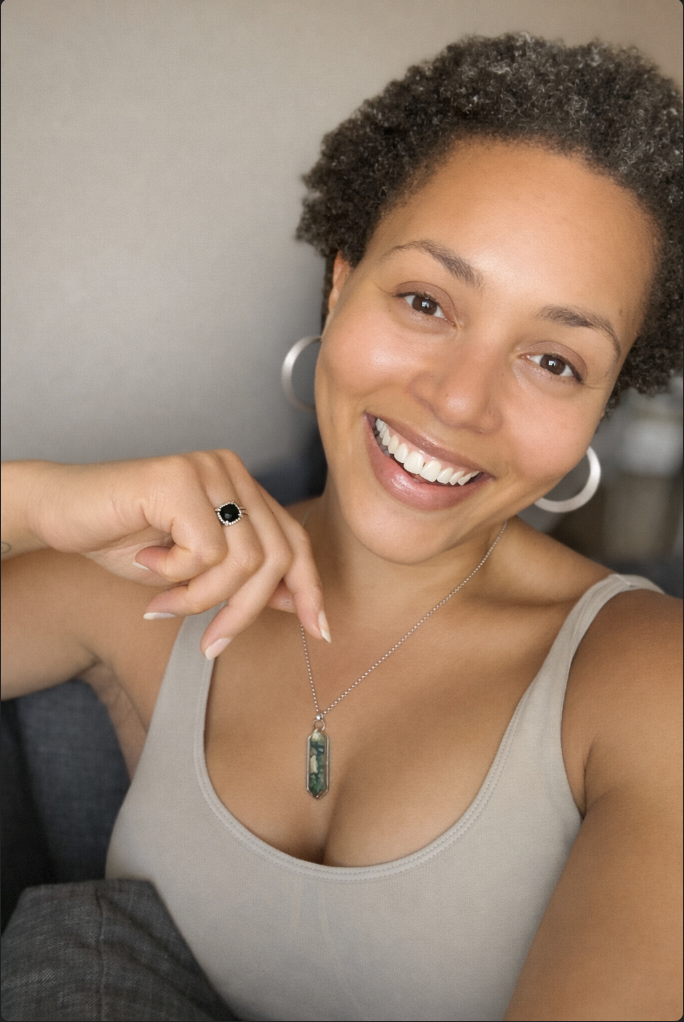
Kia Lee is a Stage III breast cancer survivor, author, speaker, and survivorship mentor dedicated to helping women navigate the emotional and psychological realities of life during and after cancer. She is the author of Lighth⊙use: Surviving Narcissistic Abuse and Lighth⊙use: The Path Through Cancer, The Power of Becoming. Through her writing, speaking, and advocacy, Kia helps women reconnect with themselves after life-changing experiences, exploring identity, healing, and what it means to rebuild a life that reflects who they've become. She is passionate about helping women feel seen, understood, and less alone as they navigate the often-unspoken "after" of survivorship.


