
Breast Cancer Survivorship & the 5 Pillars of Lifestyle Medicine with Dr. Caroline Cook
Dr. Caroline Cook, an emergency physician, lifestyle medicine specialist, and Menopause Society certified practitioner, explains how lifestyle medicine can help close the survivorship gap.


What can breast cancer survivors do after treatment to improve their long-term health? Dr. Caroline Cook, an emergency physician, lifestyle medicine specialist, and Menopause Society certified practitioner, explains how lifestyle medicine can help close the survivorship gap.
Diagnosed with triple positive breast cancer at 37, Caroline found during her own treatment there wasn’t much guidance on menopause and long-term health for young women after breast cancer, so she created it: The Marigold Survivorship Medical Clinic. In this episode, she walks Leah through the six pillars of lifestyle medicine:
- Nutrition: whole-food, plant-predominant eating, plus practical add-ins like fiber and micronutrients
- Exercise: what we know about physical activity, cancer recurrence, and bone health
- Sleep: strategies for better sleep after cancer, including CBT-I (cognitive behavioral therapy for insomnia)
- Stress management: individualized tools, including limiting phone use with a “Brick”
- Social connection: why community matters after a cancer diagnosis
- Risky substances: alcohol, marijuana, tobacco, and environmental toxins
This episode is for breast cancer survivors, cancer patients, caregivers, family members, and anyone focused on cancer prevention.
Mentioned in this episode:
- Follow Dr. Caroline Cook on Instagram
- Dr. Cook practices telehealth in Oregon, California, and Washington and is currently accepting new patients at The Marigold Survivorship Medical Clinic
- Structured Exercise after Adjuvant Chemotherapy for Colon Cancer (research summary)
- Check out the Brick
- Dr. Vivek Murthy’s book on the loneliness epidemic
Leave a message with your thoughts about the episode!
Become a member of The Cancer Pod Community! Support the podcast and gain access to exclusive content and more! Join today on Patreon.
Buy Me a Coffee and support the podcast!
Check out thecancerpod.com! Looking for more information? The website has blogs, merch, and all of the episodes listed by season and category.
Shop the Bookshop! The shelves at Bookshop feature books by authors who have been on the show and other fav books.
Buy The Cancer Pod merch! Whether it’s a cozy hoody or a handy water bottle, we have something for everybody.
Have a comment or suggestion? Email info (at) thecancerpod (dot) com
Follow @TheCancerPod on social media:
Become a premium member.
Join the #cancerinsiders. Membership includes:
-
A monthly (or so) newsletter packed with links to new episodes, compelling research, seasonal recipes, and practical health tips you’ll actually use
-
Behind-the-scenes updates
-
Bonus content from the podcast
-
Yoga videos to support your body and mind
-
Downloadable cheat sheets for quick reference
Join today!
Caroline Cook, DO: One small step can be so meaningful, and then one small step can lead to another. And also, these become habits, and they just become built into a lifestyle such that it doesn't become in your head, "Well, I have to do this to reduce my risk of cancer." more like, "I get to do this, and as this becomes a habit, like I probably feel better."
Intro Music: Welcome to The Cancer Pod
Leah Sherman, ND: Dr. Caroline was 37 years old and working as an emergency room doctor when she was diagnosed with triple positive breast cancer.
She underwent treatment which resulted in sudden premature menopause, and through this experience, she found there wasn't much guidance on menopause and long-term health for young women after breast cancer.
So she created it, the Marigold Clinic.
She is now board certified in lifestyle medicine and a Menopause Society certified practitioner. but most importantly, she is my guest today. Hello, Caroline.
Caroline Cook, DO: Hi, Leah. I'm so happy to be here
Leah: I mentioned that you are, you still work as an emergency room doctor.
Caroline: I sure do
Leah: And so what, what brought you... Did you, were you familiar with lifestyle medicine before that? before you pursued it?
Caroline: Yeah, that is, it’s a great question. So yes, I do still work clinically as an emergency physician, uh, and overall really enjoy it. But I had, I guess, a more of an individual interest in lifestyle medicine before ever kind of diving into using it professionally at this sort of turning point in my career. Uh, there, there's a board certification one can get in lifestyle medicine, and I pursued that about a year ago. And prior to cancer, I just never really knew how a true certification would serve me professionally outside of just my own interests. But then after my own health challenges, realized, uh, it is truly kind of key in survivorship. so started learning more and certified in it in order to help others with it, as well as just kind of gain my own knowledge for my own motiv-motivation in my own survivorship
Leah: there definitely is this survivorship gap that I think I've been talking with, with a lot of my guests. And, lifestyle medicine really can help fill that gap
Caroline: oh, without a doubt. Honestly, I think it’s probably one of the sort of key missing components. You know, we hear these statistics about how many million cancer survivors we have in the country. I mean, currently, gosh, I can never keep the numbers straight. My lens is always kind of a breast cancer lens, but I think we have like four and a half or four point eight-ish million women surviving breast cancer currently just in the United States.
We're not talking the country. In another ten years, that's looking to increase by a million, and lifestyle medicine is sort of this lever that we can pull to help these women, um, not just improve their long-term health and their breast health and breast cancer survivorship, but also their day-to-day just general well-being. and it’s something that they can do that gives them agency beyond just taking another pill that most of us don't wanna take.
Leah: what are the principles behind lifestyle medicine?
Caroline: Lifestyle medicine has six pillars. generally they are, a whole food plant-based diet. Um, then as number two, physical activity. number three, restorative sleep. Number four, stress management. Number five, social connection. And number six, uh, reducing risky substances. Really none of those in any specific order.
They actually kind of all end up complementing each other really well. then lifestyle medicine itself is the sort of medical subspecialty of utilizing these pillars in order to, sort of minimize risk of chronic disease as well as even treat chronic disease and sometimes create some reversal in it and, uh, with an evidence backing to it.
Leah: And you use a combination of these, lifestyle changes and medications
Caroline: Yes, indeed. I am a huge proponent of sort of both pulling the lifestyle lever as well as pharmaceuticals when sometimes lifestyle isn't enough, or even the pharmaceutical to get the woman, like, over the hump to kind of be able to optimize her lifestyle pillars for her. so sometimes it’s a combination, sometimes it’s one leading into the other, and sometimes it’s, it’s kind of a vice versa with them, for sure.
Leah: So going through each one of the pillars, just explain a little bit about, you know, what they are and what the evidence is behind them and all of that stuff. So starting with physical activity, um, let's talk about that
Caroline: Physical activity, I mean, I swear if there is like a lifestyle pill for cancer survivorship, it is, physical activity. I don't think there is a single cancer, that increased physical activity is not known to reduce. Um, questionably, I guess you could say like some skin cancers 'cause you're outside in the sun. But those aside, every other cancer seems to have a benefit from increased physical activity. And it’s easy to sit here, you know, and kind of quote recommendations and guidelines, and any woman or survivor of any cancer can go online and read those. And right, those are, to break them down real quick, they're a hundred fifty to three hundred minutes of moderate aerobic activity a day. So kind of like activity where you're out, and you could walk and talk with a friend, a little breathy, um, but you definitely couldn't sing. or seventy-five to a hundred fifty minutes of vigorous activity. So you're out there, you're moving, and you don't really wanna talk. really sort of the sweet spot is a combination of the two and adding strength training as well as some flexibility and mobility and balance work. and that's all very easy to read and say, like, "Hey, these are things we should be doing." when we look at cancer survivors specifically, especially through the lens of breast cancer survivorship, we have kind of even more specific needs those. we have higher risks of, say, osteopenia and osteoporosis, and then breaking our bones at a younger age. something that one can do for themselves, possibly the best thing you can do for yourself with that is weight-bearing exercise and really stressing those bones. So it’s really important to kinda talk about how we can kinda fit that into a woman's lifestyle. 'cause unfortunately, survivorship, it’s often more than just going for a walk with a cup of hot tea with your friend and your dog. it really takes a little bit more oomph that. and then when we look at what exercise can do in some studies as far as recurrence goes, uh, just a year or two ago, I mean, one of the largest exercise oncology studies, it’s called the Challenge Study, was published. and the Challenge Study w-was a huge kind of landmark study published in the big medical journals, not kind of on the fringe side, and this looked at colon cancer survivors were very high risk for, recurrence. In other words, all cancers-- these cancer survivors, they, they all had received chemotherapy. that were in a dedicated exercise program had a decreased risk of recurrence a decreased risk of death compared to just individuals being told, "Hey, get out and move a little bit." and, and that's huge when we see actual survivorship in a randomized trial
Leah: Are you referring patients to someone who is certified in oncology exercise? Are you providing them with exercises? Like how does, how does that work?
Caroline: On occasion, if I know somebody in their area, I practice kind of with a three-state sort of, sort of catch. I practice in California, Oregon, and Washington, so I don't know sort of an oncology trainer, I guess you could say, in each specific area that I could say I definitely trust this person. Um, and I'm not myself a personal trainer. Uh, interestingly, I actually wanted to get that certification, uh, but, maybe this is just like a little snobbish of me. I had to go back and get like a CPR certification in order to do it, and like my professional certifications are just far beyond a
Leah: Yeah, like so they say they didn't recognize your your certification?
Caroline: board certification in emergency medicine, which we know a lot about CPR.
Leah: And that's not recognized by
Caroline: Nope, it was not recognized by like the entry-level personal trainer.
Leah: Right.
Caroline: so maybe
Leah: Interesting.
Caroline: will go check off a CPR card. I mean, it’s like seventy-five bucks. Like I could go do it. it’s just honestly on principle,But like the long story short with it is like I am not a personal trainer, and also like when we're looking at some oncology patients with different stages of cancer or different bone disorders and everything, I do think that requires a specialist sort of for your specific exercises and what your post-surgical, um, restrictions and complications might be. I don't prescribe like a specific, specific exercise plan. I more so work on like how we can work this into lifestyle, how we can talk about the benefits of these things, and maybe like increase intensity a little bit where we can and increase, more specific activities that might be better for bone health. And the why behind it, because the why just matter so much. Like, I don't know, like right now, I had a little bit of a cold, and I was like, "I could just lay in bed today." But I was like, "You know what? No, cancer wants me to lay in bed today." And I'm like, "I'm gonna get out," and I ran some stairs this morning, and it was an abbreviated workout of something I would normally do, but I was like, I'm doing stairs. When I was going down 'em, it was kind of like extra force going down 'em, um, kinda jumping onto 'em a little bit. And I was like, "I am simply just mixed into this quick twenty-minute workout I was gonna do anyway. How can I like further like give myself a benefit and the why behind it?" And so I like to give women tools that they
Leah: Mhm.
Caroline: rather than a prescriptive, "You must follow this." Because I mean, that works well for a lot of people, but in the long term, when we're looking at lifestyle, a prescriptive regimen isn't going to carry a woman through her life
Leah: I love that, Cancer wants me to, to do nothing and lay around
Caroline: it
Leah: because
Caroline: I had chemo. It put me in bed for a lot of days.
Leah: Oh, absolutely. Yeah, no, I just, I think that's really funny. And I do that too. When I w- when I don't feel like exercising, whatever, I'll like hop down the last step to really have that impact. Like, I just add these little things into my life. I love that.
Caroline: Yeah, and it, it’s just sometimes, like, you know, you get out there and you, you do something and, and it really kind of gives you just, just a little something for the day
Leah: So then nutrition comes next
Caroline: Without a doubt. And I think nutrition, I mean, almost gets the most, I don't know what I call it, well, misinformation for sure online, as well as just like this neurosis that women build around nutrition. And I, I mean, I swear every woman at some point in her lifestyle has some neurosis around nutrition. Especially, I mean, I don't know, I'm a millennial. We grew up in that generation of just weird nutrition things. Um, but there are nutritional sort of, I don't wanna call them strict guidelines, but recommendations that can truly impact survivorship and impact how you're feeling. from a lifestyle perspective, we definitely focus on like a whole foods plant-predominant diet. this doesn't mean you have to have a vegan diet. This doesn't mean you get no added sugar. It doesn't mean that you can't slip up or I don't even call it a slip up, but you can't go get, Gosh, this isn't even something I really love, but like a frosty and some french fries sometimes, right? I had a patient talk to me about that the other day.
And I'm like, like, "If that's your thing, like, I don't want you doing that every day or even every week per se, but like you can still have those things." and so sometimes I think that nutrition creates this almost unhealthy spiral for women, the things like they must do,
Leah: Yeah, almo- like an orthorexia, right?
Caroline: Without a doubt. And then that creates extra stress and just it, it doesn't go well. so my approach to sort of looking at nutrition sort of in the survivorship sphere is like, what can we add rather than what can we restrict? so fiber is always a big discussion. Um, we know kind of across the country as a whole, most women in the United States get less than about fifteen grams of fiber a day. And, uh, I mean, the recommendation is for at least twenty-fiveish grams a day for women, and I encourage women to kinda slowly push higher than that. but then the question becomes how, and it- it’s sort of in like what foods even. But then also as you add those foods in, how fast do you add them in?
'Cause I'll meet these women that all of a sudden are like, "I started adding a can of beans to my diet, and I'm miserable." Well, I mean, if you have an average fiber intake and you all of a sudden add an entire can of kidney beans your life in one sitting, like it’s just, it’s not gonna go well. You are gonna
Leah: Right
Caroline: terrible, and chances are overnight your spouse is not going to appreciate you Um, you're not going to appreciate your life at that time either. So it, it’s kind of focusing, for me at least, on what we can add like already like preferences, whether those are cultural preferences, personal preferences, family preferences. How can we add things up that nutritional content, as well as sometimes focusing on some specific micronutrients that are important, especially in-- this is more breast cancer survivor specific, but like how can we get our dietary calcium? Um, and even like how can we boost, our dietary iron? how can we optimize when and how we eat these to actually have the nutrition that we're taking in benefit us? rather than, I mean, iron can be an easy example. If you had a bunch of iron with a breakfast that also includes a whole bunch of caffeine and a whole bunch of calcium, you're not gonna absorb the iron.
You can be sitting there and be like, "Why is my iron still low? Why is my iron still low?" And it can be as easy as how do we separate this out. and then thus like avoid an extra supplement or avoid an extra medication based on sort of nutritious add-ins. And that can even sometimes make cooking and nutrition fun
Leah: I think the next three are the hardest. In my world, they're the hardest, and that's, it’s sleep. Like, that is something that starting with, I think, the diagnosis, it’s just the mind is racing. it’s just really hard to get good restorative sleep.
And I mean, that is, you know, I wanna say that's foundational, but I mean, so is physical, physical activity and, you know, nutrition and everything else. But if you're not sleeping, like, you're not gonna eat he- yeah, you're not gonna eat healthfully. You're not gonna wanna work out. So talk about things, talk about sleep.
How do we, how do... You're gonna cure us all right now. How are we all gonna go to sleep?
Caroline: cure everyone of sleep problems. I do agree though that sleep, like, is the foundational pillar. Uh, 'cause without sleep, the rest falls apart. Your life falls apart. And sleep issues are so common in society as well, but in cancer survivors, that number is even higher. Um, breast cancer survivors, it’s reported over 60% of us report concerning sleep disruptions, a smaller number with a true clinical insomnia. And, Leah, like, like you said, when you don't sleep, don't eat well, and that's not even, like, your fault or a willpower. I mean, it affects different hormones, hormones that we actually s- still get to have.
Leah: Yay. Those, those few hormones that are left
Caroline: we... Well, there's quite a few, right? Just not the ones that are talked about.
but it affects, like, leptin and ghrelin levels, and sort of these things that tell you that you're hungry, that you're full. And then it also even affects insulin, and all of these things sort of then change your diet and make you reach for these things you don't want and make you overeat. And then sometimes that can trigger you not sleeping but when it comes to sleep and lifestyle, there are... There's quite a few we can pull. And I think sleep is probably my favorite pillar because it was sort of my biggest downfall after diagnosis. Sleep had always been a superpower for me. And then I was diagnosed with cancer, thrust into menopause, and, uh, I don't think I slept for months. and it was awful But there are different sleep hygiene hacks, and I know any woman who's not sleeping has gone online and searched sleep hygiene and what can I do? And it says, "Okay, you need a dark room. You need it to be temperatures. You need to drink chamomile tea before you go to bed. You need to take, like, a warm bath, and then your body temperature will cool down, and you will sleep just fine." I mean, we've all read these things. but then there are, like, other hacks that we can pull during the day that take some work, whether it’s light, which does truly help, whether it’s looking at timing of, when you're eating, when you're exercising, um, other things kind of going on in your life before bed. And while this isn't necessarily sort of a full-on lifestyle medicine hack, I really like to discuss, something called cognitive behavioral therapy for insomnia with the women that I am helping. While I am not a therapist trained in this, um, I do always like to offer some resources for women. There's some free online apps, actually one through the VA, which is pretty cool , and some great books that kind of discuss the psychology of sleep what is normal in nighttime awakenings, what is not, to handle those nighttime awakenings, how to decrease your stress before you go to bed, in ways women wouldn't think.
Like, even to-- you're noticing you're waking up, and you're ruminating about these things like an hour before you go to bed, to write those things down and just get them out of your head. and then some of these nighttime awakenings, realizing, can be normal as long as you're not perseverating and up for hours.
And sometimes just the knowing and understanding of the science of sleep can really help women But then when it comes to this cognitive behavioral therapy of insomnia, they also use this technique called sleep restriction or, or time in bed restriction, you're kind of keeping a sleep diary and, and looking at how long you're sleeping or how much you're not, or basically the efficiency of your time in bed, and you're shortening what's allowed until your sleep fills that. what's so interesting is when you look at cognitive behavioral therapy for insomnia, and in fairness, they have not been compared like directly head-to-head, um, but studies actually show it can be more beneficial hormone therapy for women. And I think that's really important for breast cancer survivors to understand. studies also show like it can be beneficial for hot flashes at night. but they are just remarkable tool in this realm that a woman can use, sort of it’s a lot of individual tweaking with it, and they can sleep, and they can sleep better
Leah: I think one of the, the hard things about that middle of the night waking is if it happens, like maybe it happens one night and then the next night, and then you start to panic. Like, as you're awake, you're like, "Am I gonna be up? Am I gonna be up for hours?" it’s that whole like your mind starts going, and so you're kind of sabotaging yourself to even going back to sleep.
Because it is normal. You know, we have these like, what is it, 90-minute sleep cycles and, you know, sometimes as you're coming out of it, you wake up and that's normal. But yeah, when you wake up and you're just like, "Don't look at the clock. Am I gonna go back to sleep?" Like, it becomes this horrible like cycle.
So yeah, doing something like cognitive behavioral therapy, sounds like a great solution
Caroline: what that works on. And then also in society, we just have this-- and I mean, I'm just as guilty as it. I sleep with my smartwatch on that gives me a score every night, right? And we get so dependent on it, then we're just so terrified, like, "Oh, I, I read if I don't sleep, I'm going to get dementia.
I read if I don't sleep, I'm going to get this." so sometimes even these sort of cultural anxieties that are put on sleep, um, kind of just need to be rewired in the brain a little bit. And for every woman, but I think-- and every man as well, um, but for survivors, I think that some additional assistance with sleep that's not just medication-driven, though there can be places for medication, um, I think is so important to be able to empower somebody to have some extra assistance there
Leah: I think for someone who's going to their doctor about sleep issues, really talking to them about, you know, it’s sometimes it’s because the dog sleeps in the room, and sometimes it’s because the spouse snores. You know, there are other reasons why people aren't sleeping, and that doesn't always come up in an appointment.
Caroline: And so, like, a sleeping pill isn't really the solution. Maybe it’s something else, And then
Leah: yeah
Caroline: some of those, there's this like societal thought that like, oh, you know, my partner snores, but it’s the right thing to do to continue to sleep in the same room as my partner. And you don't necessarily realize that it’s actually not uncommon for partners to sleep in separate rooms. Like it happens. I have one really good friend, and she has just like she has a wonderful marriage. The only time her and her husband sleep in the same room is when they're on vacation because they have to. and you know, it was interesting. A group of us were together and talking about this, I would say that over half of us said there are definitely times based on different schedules or different things that we do sleep in a separate room from our partner. And a lot of the women do describe better sleep even from that. And so understanding like it doesn't make you a bad partner
Leah: Right. Or it’s not a troubled marriage or, or troubled relationship. No, it’s actually better for you because you will be feeling better and yeah,
Caroline: You can still sit and have, like, your nice coffee in the morning together. You can still snuggle. Like, all the things, like... if your partner's snoring, like, get out of there.
Leah: Or kick, kick them out.
Caroline: her, him or her out, yeah.
Leah: Get them somewhere else. stress management, that's the other one that I think is, like, really hard because someone's been given a cancer diagnosis,
Caroline: Mhm
Leah: you know, they go through their treatment. Maybe they've been told that they are cancer-free, but you never really are because in the back of your brain it’s always there.
So, talk about stress management as one of the pillars.
Caroline: Stress management is so hard, um, especially with cancer. You've got the added stress, and then sometimes it’s like, "Well, I have cancer. I have the cancer card. I don't, I don't get the rest of the stress," Um, but no, those, those keep hitting you as well. And so I meet a lot of women who come to me and are kind of like, "How can I reduce my stress, And there's certainly ways you can do that, different time management and things. But the reality is, is stress management is more so how you react to your stressors and not necessarily eliminating them, because it's just not possible.
Leah: And with your profession, like that, that, I mean, emergency medicine,
Caroline: But you
Leah: no stress there. But so you actually, you know, have, uh, I'm assuming that you have all these tools that help you to manage stress because of your, you know, your profession
Caroline: I would argument that a lot of physicians are professional compartmentalizers, and I'm not sure that's the healthiest way
Leah: Okay, I, I recognize that too. But, but just, you know, when you're able to focus, you're able to,
Caroline: Yeah
Leah: yeah
Caroline: Um, but I mean, I get the same sort of cancer stressors as everyone else. Like, not too long ago, I slept wrong on my neck and it hurt on one side and I was like, " "Oh my God, cancer." And then that went away, but a week later, then I got a sore throat just on one side, and it was the same side that I had a pulled muscle on and I was like, "Oh my God, cancer. Like, that's what this is." I mean, it went away. It wasn't obviously or not obviously, I mean, I also am fully aware those can be symptoms of a recurrence if they don't go away. So I get those same stressors, and it’s kind of living in the present with it. But it’s what sometimes we can do that just helps us sort of clear our minds, disconnect, and get through the day, and that is different everybody.
Like, right, we often use the term sort of like mindfulness-based stress reduction, and that's something that has been studied and that can be as broad as, I mean, people hate when you just quote throw out the term yoga because you picture like this hot, sweaty class with a bunch of fit women in their mid-twenties running around in their spandex, like sweating to some great music.
But really, that's not what it is. it’s kind of about the breathwork and the setting the intention and the being present during that time, and that can also be time in nature for people. Some people reduced stress by spending time with their kids. it’s not something in my life. I find kids a little stressful. But everybody kinda has to find what that is and kind of make space for it. and they might not even know what that is yet. It could be journaling. It could be a phone call with a specific person. It could be therapy. but it’s finding these ways you learn to cope with the little hits that keep coming. And I mean, personally, I've had a lot of little hits recently from appliances breaking in my house sort of like a big financial bomb drop on me, uh, to sort of a break of trust in somebody. And then even I was just driving from my home in Bend to Seattle this past weekend and I got a flat tire. And I know. I was like, "One more thing," right? sometimes you just have to laugh about it. but when I look at how I've handled some of those stressors, some done very well with. Some have kept me up at night, and I have had to sort of sit there and very consciously, kind of throughout the days, like disconnect and put them in their own places and intentionally take time for myself things that I enjoy doing or that kind of bring me joy.
And kind of bring me peace to kind of take myself out of that. And I've had to be very intentional about that because each of these things, like I could keep spiraling, I could keep making phone calls, I could keep pushing on, of that's going to manage stress, right? But time stepping away where I'm like, "Okay, I am going to go exercise," that's one of the ways I reduce stress. I am going to leave my phone at home, my headphones out, and I'm just going to go for a walk lovely, like maybe with running water, and it’s just kind of peaceful. So it’s kind of... There's not a one-size-fits-all, But I do find that everyone is able to find their ways of managing their stress.
Leah: When we met up when you were in Portland, you mentioned that you have something called a brick, which is something you use with your phone. And I feel like our phones contribute to our stress level
Caroline: Oh, I think so much so
Leah: And so what is this, what is this brick thing?
Caroline: personally, I love my Brick. Um, so the Brick is this device, that I actually originally saw advertised on social media. And you download an app on your phone, and you s- can set it so that your phone or certain apps on your phone automatically shut off at a certain time. And there's plenty of other apps you can do that with on your phone, but right, it’s just like click of a few numbers, and you're back in. But the Brick is a device that you put somewhere else in your house, and you have to physically get up with your phone, walk it there, and tap your phone to that device. it’s kind of this barrier of getting there that is truly effective. So when I first got my Brick, um, I noticed I would be sort of scrolling on social media at night, and then of course, just because of what I talk about and what I do, so much of my feed is other humans with cancer and also other doctors presenting studies and all of this data, and I'd be like, "Oh my gosh, I haven't read that paper yet.
I need to know about this. What am I missing out on? What else do I need to know?" And I would kind of, like, get into this sort of little, know, almost like a little anxiety bubble before bed. Like, I'm not doing enough. I am not up to date with all of this, and none of that was true. So I got this device, and I initially set my phone to start turning off at eight PM, and I normally go to bed between nine and ten.
And now I have it set at seven o'clock, seven PM actually, and then in the morning, I have to tap my phone to allow myself to have access to any of my social media apps
Leah: But you can set what it blocks
Caroline: Mm-hmm. So like I can still have access to my email, I can still have access to my text messages if I want, like maps, different things. and I found that like when that phone then mandated a shutoff at 7:00 or 8:00 PM, I would just read a book or I would be more present, or I would be painting or doing something else that's more relaxing that I enjoy and being more present. And so I actually now have my phone set to brick during the day as well from about 10:00 AM to 2:00 PM, and it’s just such a lovely way to avoid sort of that scrolling social media suck. And the amount of productivity you can have as well as just your ability to disconnect from so many stressors is, is huge. I'm a big fan of the brick
Leah: oftentimes people will find ways of relieving stress is to like get together with, with close friends or family. But if you're not near those, those people, if you don't have those social connections, You know, I, I feel like these are all connected.
Like, all of these pillars are, you know, are, are interconnected, and so, social connections is the next pillar. But like I was saying, like, not everybody has social connections for whatever reason. I mean, even after having cancer, the social connections that you had beforehand, sometimes relationships get weird.
Caroline: Oh, they
Leah: You know?
Caroline: after
Leah: People-
Caroline: can be completely obsolete
Leah: for many reasons. And one of them is just people, they don't get it. You know, it’s like there's something that happens as you, after your diagnosis, as you go through treatment, where you're just kinda like... it’s a d- it’s a different perspective. And so, okay, so let's just, let's talk about social connections in terms of it being one of the pillars
Caroline: Yeah, I do think that social connection, I mean, for everybody is important, right? The most recent outgoing surgeon general said we have a loneliness epidemic in this country and was kind of citing all sorts of literature on how that's affecting mental health and, and chronic health because of it. But when we're kind of in the cancer sphere itself, uh, I remember reading once that cancer is kind of like this way that you look at life, that once you're diagnosed, it’s like a light switch or, like, your world changes colors.
Like it’s from color to black and white. There's just this stark change. But just last weekend, I was at this social connection group with the Young Survivor Coalition, and one young woman on stage described it as contact lenses, that, like, as a cancer survivor, you wear a different contact lens, and that's kind of how you see everything in the world. Like, that's sometimes where the social connections are so hard, right? It can be as easy as your friends complaining they're getting older, and you just look at it as, " "I'm so glad getting older," and there's a disconnect. When it comes to the social connection, I think it’s very important to foster some of your old friendships and even revisit them, but I think it’s so important to have connection in a community that understands you And I get asked all the time, "Caroline, like how do I make connections in this community?" And number one, what happens is they're never gonna be handed to anyone, right? Like a social connection is, is nothing that's just to be handed. Like the rest of the lifestyle pillars, like they're on you, to kind of work at and to try to find. but I do feel that if you are able to connect in person or virtually, it makes that journey forward through your diagnosis, treatment, through everything you're feeling in survivorship, it, it normalizes your feelings, and it makes you less alone. and in addition, it’s actually been studied in breast cancer survivorship. I don't think there's data for like better, um, survivorship outcomes, but as far as mental health scores in survivorship for breast cancer, women that connect and have a strong social support, do have sort of better mental health going through treatment as well as in survivorship. And then you could also look at like socioeconomic social support, and in reality, if you have that form of social support, you do do better you have better cancer survival from those perspectives. But with social connection kind of as a pillar of lifestyle medicine itself, like it does also circle to all the others 'cause we do also have data that kind of like who you connect with and socialize with, like who your social circle is, impact your lifestyle as a whole, and it does impact your habits, um, kind of how you choose to spend parts of your day. if your social group is a group that is out, um, and here we're gonna come to the next pillar, is out like drinking all night versus if your social group is out, both live in the Pacific Northwest, if, if your friends are like, "Hey, let's go for a hike." Like those are such different lifestyle that your friends can impact, your social circle can impact your life so much.
Leah: You mentioned going out and drinking all night.
Caroline: Hey, we've all been there
Leah: Mostly before the diagnosis.
Caroline: Mostly before, well, entirely, well, long before the diagnosis for me, but yeah
Leah: yeah, so the avoidance of risky substances is the final pillar. Um, alcohol, drugs, that sort of thing
Caroline: Yeah, those are, I mean, kind of the most commonly thought of ones. I mean, years and years ago, right, everybody smoked, and then out came the associations of cigarettes and tobacco with lung cancer amongst an assortment of other health conditions. And so feel like kinda smoking is obviously one of those risky substances and a known carcinogen.
Leah: And then adding vaping, vaping to that too, right? I-
Caroline: vaping's a whole, whole another beast that kind of has maybe not quite the health consequences as, as big tobacco, but definitely still health consequences with it. And I mean, even in the Pacific Northwest, when we're looking at, a-and cancer survivorship for that matter, there's, I guess, different mindsets on subsets of marijuana or different CBN, CBDs and different things. But s-- I see so many women using marijuana itself, like for sleep and anxiety. but we also know that marijuana, while short term it’s gonna help sleep, in the short term it might help anxiety, we also know in the long term it actually potentiates insomnia, and it actually worsens anxiety. so sometimes it’s kind of discussing how we can minimize exposure marijuana. Though I do find that alcohol is, like, really the big kicker in cancer survivorship. I am, I guess, maybe fortunate that I more or less stopped drinking years and years ago because it affected my sleep. So, like, here we are coming full circle with pillars. But we do know that alcohol is a carcinogen as well.
I would never sit here and ever say that alcohol caused anyone's breast cancer. I hear from young women all the time who are worried about this. Like, "Well, maybe if I just hadn't, hadn't been drinking in my twenties." but the reality is, like, the effect of cancer or breast cancer and alcohol, if you're drinking, say on average one glass of wine a day, as a lifetime risk, it increases your risk of breast cancer, your innate risk by about ten percent.
So say your risk is fifteen percent, it increases your risk by about one point five percent, so it takes you to sixteen and a half. Like, this is not causing all of these cancers that we're seeing. so I hate the guilt that comes with alcohol, and thus I hate the guilt that comes with alcohol after a diagnosis as well. because those numbers, one, we actually don't have great numbers of risk in breast cancer survivorship. Um, if anything, I think it’s more of, like, how you feel on a day-to-day basis if you're drinking, rather than really driving substantially elevated risk of recurrence. Um, but I do encourage, I mean, stopping alcohol or at least reducing alcohol for sort of the day-to-day benefits of how you feel. Um, and if you do have anxiety around recurrence, like if you're drinking and in the future you're gonna be like, "I had cancer again because I was drinking," and, like, that's in your head, well, then it’s a good reason to cut it out. But I also don't think... I don't think the guilt that surrounds alcohol and cancer is well-placed at all. but then there's, like, the other risky substances that aren't your classic alcohol, drugs, and tobacco. I mean, we could get into meth and cocaine and all the other goodies out there too. mean, there's even environmental toxins. so whether that's just general ambient pollution, we always hear a lot of talk about wildfire smoke where we live, and I mean, that conversation is spreading across the country further with, like, the fine particulate matter and what can actually get in the bloodstream through the lungs and sort of how we protect ourselves with that, whether it’s masks, whether it’s HEPA filters. And then there's also sort of the huge question about microplastics and forever chemicals. I mean, I, I feel like risky substances so often just gets grouped into the big three: alcohol, drugs, and tobacco, which are, like, the guilt, the shame, rock and roll party. But it’s these other things well that maybe we don't have as much information about, but we do have ability to reduce, potentially in a very meaningful way.
Leah: And then we're not only protecting ourselves, but we're protecting others,
Caroline: Mm-hmm.
Leah: I mean, you know, just...
Caroline: our household for sure
Leah: Yeah. So reducing, unnecessary plastics or, using less harsh cleansers that maybe don't have, you know, like,
you know, effects on other people. So yeah, I don't know why I didn't think of that as a risky substance.
I just went straight for drugs, drugs and alcohol.
Caroline: think
Leah: I even forgot tobacco
Caroline: goes. Yeah, everybody's brain just goes to sort of the big ones that, you know, you show up at your doctor's office and you have to like check the box of like do you do any of these things, so s- we have these known health risks with them. And we do. I'm not going to take away from that.
I mean, when I'm at work, I wanna know that from patients and kind of risk factors with that. And we don't actually know their risk factors and, and what these other ones cause. But we do have enough data that we don't think they're good. Like finding microplastics in carotid arteries and brains and like not good
Leah: and then plastic consumption has increased dramatically within our lifetimes. And so
Caroline: and we can't escape it entirely
Leah: No. No, and even when I've
Caroline: like, we can, make meaningful efforts to reduce it for sure. I mean, reverse osmosis filters. You can get a very affordable one for your counter, and certainly, like, every time you refill your water bottle somewhere it’s not going to be reverse osmosis filtered water. But simply avoiding plastic water bottles, the
Leah: Yeah, having that reusable, you know, carrying that reusable bottle. Like when I travel, I used to always buy... I think we all did. We all would buy a, you know, bottle of water to get on the plane, and now it’s, you know, carrying our Hydro Flasks or, you know, whatever
Caroline: Yeah. Thank gosh for Hydro Flask and, like, a cheap carabiner for your bag, right?
Leah: Yeah
Caroline: Northwest uniform
Leah: And then all of the airports now have those water bottle fillers, which, which is great. Yeah. So all of that
Caroline: get, often give you a small discount on a bring your own mug. but yeah, there's, there's small things we can do that are not just good for us, for reducing our exposure to, "risky or toxic substances," um, but also are better for the environment and other people. So win-win. Win.
Leah: Yay.
Caroline: the one thing I never want anybody to take away kind of from when they're considering a lifestyle change or looking at their lifestyle after a diagnosis is getting overwhelmed, because it’s so easy to get sit down, a diagnosis of cancer, and hear all of these things that all of a sudden you're supposed to do, and you
Leah: We're not supposed to do
Caroline: or not supposed to do, you get so overwhelmed with what seems like this checklist.
Like check, check, check, check, check, and it’s, it’s never-ending every day, there's no way you can keep up with it. I think it’s important to realize like it’s not about that. Like one small step can be so meaningful, and then one small step can lead to another. And also, these become habits, and they just become built into a lifestyle such that it doesn't become in your head, "Well, I have to do this to reduce my risk of cancer." more like, "I get to do this, and as this becomes a habit, like I probably feel better." Um, it’s just, it doesn't happen I wish it did. But these are always kind of a long-term game, which means introducing them to your life is also a long-term game. And there are sort of strategies that you can use to kind of increase your success with goal setting sort of with that, rather than just very vague goals. Ways to make specific goals. We like to call them SMART goals, in the lifestyle medicine world and sort of a lot of motivational interviewing, I guess. And it, it’s just is a way to make those goals very specific, very descriptive, and very time-bound, such that you, you can kind of like measure them as you go, and you get these little like feedback rewards, these little like, boop, little like dopamine boosts.
Like, "Oh, I, I did that." And so it feeds your innate reward system and kind of potentiates you to keep going and have success with them. but it’s never about some checkbox perfect lifestyle. Um, just 'cause you see a wellness influencer or me doing something so specific on social media, like that doesn't mean that's the right way for you.
Everybody has an individual sort of nuance to their lifestyle success.
Leah: Thank you so much for being on the podcast, Caroline.
Caroline: I will have your contact information in terms of your website, the Marigold Clinic. I'll have that in the show notes. And, I'm, I, I'm gonna have you on again. We're gonna do another episode
I can't wait. Let's talk about menopause and breast cancer, my other passion.
Leah: We're gonna do that
Caroline: Love it
Leah: Thanks for listening to The Cancer Pod. Support the show by following wherever you stream podcasts. Remember to leave a review and share this episode with someone you love. Join our Patreon community for bonus episodes, free downloads, and behind-the-scenes conversations. Follow The Cancer Pod on social media for more integrative wellness insights between episodes.
This podcast is for entertainment purposes only and is not medical advice. Always talk to your healthcare team before making any changes to your treatment plan. And on that note, I'm Dr. Leah Sherman. Music is by Kevin MacLeod.
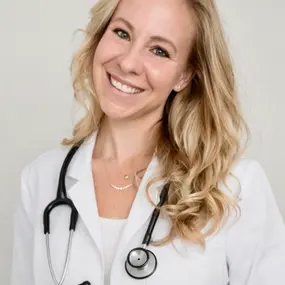
Physician, Founder of The Marigold Survivorship Medical Clinic
Dr. Caroline Cook, DO, is a triple-positive breast cancer survivor who was diagnosed at age 37. Her personal experience with an unexpected breast cancer diagnosis, navigating chemotherapy and recoveries, seeking surgical options, and abrupt premature menopause with all the associated concerns shaped the vision for The Marigold Clinic.
She is a Menopause Society certified practitioner, board certified in lifestyle medicine, and a practicing board certified emergency physician. Through both her medical training and personal experience, she recognized that many young women with breast cancer are left navigating menopause symptoms, long-term health risks, and lifestyle changes without adequate guidance or support. Throughout her own care she did not know where to find the care she wanted, so she decided to create it herself.
Caroline strongly believes that lifestyle medicine and traditional medical therapies work best together — and that when both are used thoughtfully, women can feel dramatically better and improve their long-term health and quality of life.
Most simply, her goal is to help women live well after breast cancer.
Outside of medicine, she enjoys cooking, reading, hiking, biking, skiing, yoga, traveling, coffee, time with friends and her husband, and sleep. She also helps lead a young adult breast cancer social group in her local community.


