
Grief, Guilt, and Identity After Cancer with Natasha Ewa, MSW, LCSW, C-MBT
Survivor’s guilt is a common and not often talked about emotional experience after cancer. Dr. Leah Sherman sits down with returning guest Natasha Ewa, licensed clinical social worker and founder of I Thrive Therapy and Wellness, for an honest conversation about what survivor’s guilt actually looks like, why body image after cancer is so personal, and what healing can feel like on the other side.


Leave a message and let us know what you liked about the episode!
Survivor’s guilt is a common and not often talked about emotional experience after cancer. Dr. Leah Sherman sits down with returning guest Natasha Ewa, licensed clinical social worker and founder of I Thrive Therapy and Wellness, for an honest conversation about what survivor’s guilt actually looks like, why body image after cancer is so personal, and what healing can feel like on the other side.
The conversation widens to cover grief over pre-cancer identity, hypervigilance, reconstruction decisions, and Natasha’s documentation of her own DIEP flap experience and complications.
Whether you’re navigating survivorship yourself or supporting someone who is, this one meets you where you are.
Visit the I Thrive Therapy and Wellness website
Follow Natasha on Instagram
Become a member of The Cancer Pod Community! Gain access to live Q&As, exclusive content, and so much more! Join us today on Buy Me a Coffee or on Patreon!
Check out our website! Looking for more information? We have blogs, merch, and all of our episodes listed by season and category.
Shop our favorite reads! We've joined with Bookshop.org to offer some of our fave books!
Buy our merch! Whether it’s a cozy hoody or a handy water bottle, we have something for everybody.
Have a comment or suggestion? Email us at info (at) thecancerpod (dot) com
Follow us wherever you browse. We're always @TheCancerPod:
THANK YOU!!
Become a premium member.
Join the #cancerinsiders. Membership includes:
-
A monthly (or so) newsletter packed with links to new episodes, compelling research, seasonal recipes, and practical health tips you’ll actually use
-
Behind-the-scenes updates
-
Bonus content from the podcast
-
Yoga videos to support your body and mind
-
Downloadable cheat sheets for quick reference
Join today!
Natasha Ewa: [00:00:00] just because the person to your left is experiencing survivor's guilt doesn't mean that you're going to or meant to if it happens, it happens. If it doesn't, it doesn't. I really want to stress that survivor's guilt is not a standard of survivorship.
It doesn't make you any. Less than if you don't experience it.
[Funkorama Music]
Welcome to The Cancer Pod
Leah - The Cancer Pod: a cancer diagnosis doesn't just change your body. It can shatter your sense of who you are, leaving you grieving a version of yourself that no longer exists, and for some survival itself brings an unexpected burden, guilt. Today we welcome back psychotherapist. Natasha Ewa, a licensed clinical social worker who brings over a decade of clinical experience to her practice, I Thrive Therapy and Wellness, but Natasha's insight runs deeper than her training. She founded her practice in 2019, right after completing her own treatment for breast cancer. Now she works with people navigating diagnosis, active treatment, and life after cancer, helping them to process the complex emotions that can arise when everything changes.
Welcome back to The Cancer Pod, Natasha
Natasha Ewa: Thank you. Thank you. Thank you for having me again.
Leah - The Cancer Pod: Yeah. Last time, that you were a guest, we talked about PTSD. Grief. And then we even delved into talking about death.
And this time I had approached you because someone approached me about having an episode, talking about survivor's guilt. And I was like, I definitely need an expert for this.
And so you were the first person I thought of. I would love for us to start off talking about that and then maybe shift into talking about grief that we feel about ourselves and maybe our, our bodies being different. So, what is survivor's guilt?
Natasha Ewa: What is survivor's guilt? Um, so essentially, and for all the listeners, I am sick at the moment, so I sound pretty nasally. Survivor's guilt. exactly as it sounds. It is the overwhelming guilty feeling or feelings of guilt that overwhelm a person who has survived. And survivor's guilt is something that a person can feel. Whether they have survived cancer, whether they have survived a horrific car accident, or anything in between. Knowing that there are other people in this world who have had the same or similar experience who did not survive. The overwhelming feeling is typically categorized by kind of that bargaining and asking questions, why me? It should have been me. this person didn't deserve it. Maybe I deserve to [00:03:00] no longer be here. And so there's that internal bargaining that happens for some individuals that bargain and happens with their higher power. It happens with asking God. Why, you know, why did you have to take them instead of taking me or, you know, some individuals, um, there are folks that I have worked with who in the past did not feel like they were, they were a good person, which is why they ended up in therapy and then they were diagnosed with cancer.
So their belief system is that it should have been them. They are the ones. Should have succumbed to breast cancer because I was never a good person anyway. And so their survivor's guilt is attached to that, that experience that came even before cancer. and so again, it's, it's someone who has survived something horrific, something traumatic, They have thoughts. Sometimes those thoughts are pervasive, meaning they basically sit there at all times and sometimes the thoughts are [00:04:00] fleeting. It's triggered by watching something in a movie or it's triggered by someone that you know, passing away from cancer, whichever it is. It's an overwhelming feeling of guilt that you are questioning why the other person succumbed to this and sometimes why it wasn't you.
Leah - The Cancer Pod: Is this something common amongst cancer survivors? Do you find.
Natasha Ewa: Yeah. Survivor's guilt is, is something that is common amongst those who have been touched by cancer. I say it's twofold. It's common kind of generally speaking because. Most cancer survivors are going to feel it at some point here and there, survivor's guilt isn't necessarily something for all cancer survivors that is pervasive.
So in other words, it's not something that they're always going to feel. It's not something that they're gonna feel at the onset of their diagnosis all the way through to being done with active treatment. Some individuals might start to [00:05:00] feel survivor's guilt years later. Down the line, some may experience survivor's guilt for two weeks whilst someone else experiences survivor's guilt for two to five years, and they just can't shake that feeling. Um, so a lot of individuals will experience survivor's guilt. Some individuals will, experience it pervasively, others will experience it very fleeting. And then some individuals honestly don't experience survivor's guilt at all. And it doesn't mean that they. Don't care. doesn't mean that they don't feel something.
For those who have succumbeded to breast cancer, um. But I do want to add that, you know, one of the things that I have learned and discovered over the years, both in my personal life as well as in my practice, is that those who have been touched by cancer are often under the impression that they are supposed to experience survivor's guilt.
And so what will happen with those individuals is they will kind of attach that. [00:06:00] that feeling, that way of thinking, they'll attach it to their story and they will tell themselves that they're experiencing survivor's guilt when maybe they actually are not, but they are afraid to be seen or be perceived as someone who. Is almost too ecstatic that they survived while someone else did not. And that doesn't seem to feel right. It doesn't really settle right for some individuals. And so I need to feel some sort of guilt, right? 'cause I'm still hearing someone else isn't. And so again, then they attach that, they attach that feeling or that experience to their story.
Leah - The Cancer Pod: I had shared with you before we started recording that. I don't think that I experienced survivor's guilt. Um, again, I worked throughout my treatment and for several years after at a cancer center with cancer patients. I don't feel like I am any less compassionate because of it.
It was just something that like, I never even. Thought of until I started reading more [00:07:00] people posting about it. so this is why I am really curious about not only, you know, like what it is, why it develops, but also like what can people do. Obviously seeing a therapist could be helpful for someone if it's lasting for a long period of time.
Like, so when, like when would somebody know that? Maybe you should go talk to somebody about what you're feeling.
Natasha Ewa: Yeah, that's a great question. so survivor's guilt is not problematic. Um, just like. Having trauma responses are not problematic. Just like getting angry isn't problematic. It becomes problematic when it starts to impair your ability to do day-to-day things, right?
Or your ability to connect. So I will, I, I would say that it's time to go and see someone. If your survivor's guilt is telling you that you are less than and that you shouldn't be here, you don't deserve to be here. There is no reason for [00:08:00] you to be here. It, it intercepts it, it gets in the way of you being able to kind of rediscover yourself after cancer. It gets in the way of you being able to look in a mirror and say, I'm here and I'm okay with that. now. When a person is actively in the midst of feeling that survivor's guilt, questions are going to be asked. But if you're carrying it into the next day, if you're carrying it into bed with you, if you're carrying it to the grocery store, then at that point probably should talk to someone.
'cause that means that you are not able to separate the fact that you feel guilty. Versus you are actually telling yourself it should be you and you're believing it, that makes sense. Um, again, going back to. A pers some individuals, it's a pervasive thing. That's when you probably should, you should be talking to someone versus it's fleeting.
It comes and goes and it's triggered by watching someone or learning of, you know, a fellow breastie passing [00:09:00] it. You feel it for whether it's a few minutes to a few hours, to maybe even a few days. not feeling it for months on end consistently. That's when you know if that's what someone is feeling.
You should have, you should be speaking with someone and talk therapy. Psychotherapy is wonderful, but I would also encourage, in addition to that, doing something physical, somatic work, dancing, swimming, something. In addition to the talking, 'cause a lot of times the, the guilt that we feel is just embedded into our physical space, into our physical being, not just our thoughts.
Um, and so making sure that you have a little bit of both is going to be helpful.
Leah - The Cancer Pod: So survivor's guilt is a natural response then. And so anyone who experiences it, you're going through Instagram and you follow, cancer people and you see that someone who you've maybe messaged back and forth or commented on their post that they've passed. If you are experiencing survivor's guilt, learning of their passing, and then it goes away [00:10:00] after a few hours, a couple days,
Natasha Ewa: Mm-hmm.
Leah - The Cancer Pod: that's okay.
That's a normal response.
Natasha Ewa: Absolutely.
Leah - The Cancer Pod: Okay.
Natasha Ewa: Uh, absolutely. Um, granted it's different. I liken it to, you know, imagine getting into a car accident and you, somehow you break a bone, you break a femur, you're supposed to be. Upset to a degree, maybe a little bit afraid. Maybe it's scared that you might need surgery. you're supposed to go through all of these motions or emotions, and some emotions are gonna be stronger than others. Some are going to last a little bit longer than others. it becomes an interference is even post-surgery or after life has kind of continued to move on. You are still in that space.
And now we might be looking at PTSD where it's this recurring feeling of that fear and that guilt with and without triggers and so you are unable to [00:11:00] separate, right. Those experiences. But in short, absolutely. It's a very natural response. I mean, we're all humans first, first and foremost. And what makes us human is that we have feelings, right?
And even, and it's, you know, it's a totally different conversation, but even if we're talking about individuals who have been studied to have very limited feelings, there's still some sort of response that occurs. It just may not be appropriate, but there's still some sort of response that occurs. And so, yes, it is an absolutely natural. response to have.
Leah - The Cancer Pod: And what I think. Is unusual and special with at least the breast cancer community, is that we do establish friendships with complete strangers
Natasha Ewa: Yeah.
Leah - The Cancer Pod: this common diagnosis. And I'm sure it happens with other cancer groups. You know, people with colon cancer or stomach cancer, they're all bonding. We're bonding with these complete strangers with this common thread,
Natasha Ewa: Yeah.
Leah - The Cancer Pod: so we form these connections with people [00:12:00] that we may never meet in person.
Natasha Ewa: Mm-hmm.
Leah - The Cancer Pod: And so does that play a part perhaps that having this relationship with someone, and it's not a total stranger, it's not like it's a celebrity, somebody that's untouchable, you know, you've, you've communicated, you've identified with this other person, but you're not able to be there physically for someone.
In perhaps a time when they might need people around them? I mean, would that play a part as well, or am I just kind of going off in another direction?
Natasha Ewa: No, it absolutely can. It absolutely can. Proximity is not something that, has to be present for survivor's guilt, right? It doesn't have to be someone that you've known for 20 years. It can be someone that you've literally known honestly for two hours. The guilt ensues because you are looking at them and then you are comparing their story to yours. That's where the guilt comes in. so you know, you, like you said, and I think it's, it's such a beautiful thing [00:13:00] that we are able to connect and build these communities in the way that we do. Um, but what also can come with that is the frequency of having survivor's guilt can increase because you are a part of the community. And so I imagine after my breast cancer diagnosis, if I intentionally chose to just stay out of all breast cancer communities, I'm less likely to see and hear and face the stories of breasties passing away. I'm gonna know that it's happening, but it's not gonna be on the forefront. It's not gonna be something that's right there.
I'm not gonna. Someone's not gonna message me that news, um, or it'll be quite infrequent. so when you become a part of a community that is specific to the very thing that you are feeling, you are going to feel that very thing more frequently. It's almost like it's in your home. It's a part of your home now. And so are you likely to [00:14:00] open that door? Is it likely to come knocking? Whichever it is, the frequency is a lot higher than if you were not a part of such community.
I would, you know, I would love to add that, and, and we touched on this a little bit, but I want to stress that if someone doesn't experience guilt, it's okay. It's not something you have to push or force or go looking for. Guilt is something that we are going to feel for various reasons throughout our lives. But it doesn't have to be associated with cancer. just because the person to your left is experiencing survivor's guilt doesn't mean that you're going to or meant to it. It's, it's, if it happens, it happens. If it doesn't, it doesn't. Um, I just like, I really want to stress that survivor's guilt is not a standard of survivorship.
It doesn't make you any. Less than if you don't experience it. Um, and I, and I want [00:15:00] to stress that again because one of the patterns I've seen with clients that I've worked with and I, I've worked with clients who have had breast cancer, who have brain cancer, who have had stomach cancer, who have had skin cancer, who have.
Had multiple types of cancer and I have a very particular client that I'm thinking of right now and she's like, Nope, I don't feel guilty. So-and-so passed away. from stomach cancer 48 hours ago. No, I don't feel anything. And she is able, she's gotten to the place where she can say, I'm sad. don't feel guilty. And I think sometimes we enmesh those two things much as they can go hand in hand, they also can be very separate. Your sadness for someone passing on doesn't have to equate to feeling guilt, whereas at times it can, but it's not like a prerequisite, you know, to being like this bomb-ass cancer survivor, or anything like that. It's just a thing that you may feel or you may not.
Leah - The Cancer Pod: I wanna talk also about, [00:16:00] body image after diagnosis.
Natasha Ewa: Uh, body image.
Leah - The Cancer Pod: I shared with you that right before, we logged on, I was watching one of your Instagram videos. I love your Instagram account and for anyone listening who is not following Natasha, it's @natashaaftercancer. She's on Instagram and TikTok, and first of all, your, your videos are beautiful. Your social media manager is doing a fabulous job.
Natasha Ewa: That's me.
Leah - The Cancer Pod: I know. That's why I said that truly like your videos are gorgeous and everything. It's like so beautifully put together and then the information that you're giving is so great and you documented your, your experience with a DIEP flap. And the video that I watched today, you were talking about how like you finally felt.
Natasha Ewa: Good. Yeah,
Leah - The Cancer Pod: Like you're in your own body,
Natasha Ewa: yeah. Yeah. It feels amazing. It feels amazing. [00:17:00] Um, body image after breast cancer, it's a journey. an extremely layered one. It's a very sensi… body image in general is very sensitive.
Leah - The Cancer Pod: right?
Natasha Ewa: So then to add the layer of. What I refer to as health trauma, where you had a health experience that led to a series of traumatic feel, you know, moments. Um, whether it's multiple surgeries, chemotherapy, so it's not, you know, cancer isn't this thing where you have cancer and it's that one traumatic moment. The news is traumatic. the treatment is traumatic and then the surgeries are traumatic and like many of us have spoken about, a lot of times, for many of us, it's after all of that, that all of a sudden you really feel the fear, because earlier on you are blanketed by all these doctor's appointments.
You were blanketed by, um. Actively working on getting rid of the [00:18:00] cancer you're told kind of go on and live your life and instead of seeing you once a week, I'll see you every three months, or I'll see you every six months. And that's when for many of us, it really settles in like, oh, look the way that I once did. I don't feel the way, like I've, I know that I don't feel the way I once did, but now I really know and I actually have to deal with it because I'm not. Occupied by all of the other moving parts to having had cancer. Um, and our body image, for many of us, I'm, and I'm, I can't say all because everyone's different, and there are some women out there that I've spoken to who actually feel better. than they did before, because the surgeries that they have had, the opportunities to have, have made them feel better than what they felt pre-cancer. now obviously they wouldn't choose to go through cancer in order to feel that way, but they can [00:19:00] acknowledge that I like what I see in the mirror today, whereas maybe 15 years ago I did not. Unfortunately, cancer is what got me to this point, but I can acknowledge that. I do, I do like what I see in a mirror. but it's, it is, it's, it's very layered. It's very sensitive. It's, it's hard. It's hard 'cause you look in the mirror and, and. Let me know if it, if I'm, if this is, you know, too raw or too much, but you look in a mirror and I used to say one of my nipples was in a North Pole and the other one was in South Africa. Just two completely different directions and that, that's just what it was because. They remove as much breast tissue as they can. They do all these things to help preserve your life, and you're grateful, but you also don't really love what you see, and you try to love it, and you do certain things to appreciate it. but it's hard. It, it is, it can be very, very difficult, very [00:20:00] difficult.
Leah - The Cancer Pod: And there's that period. I don't know if you experienced this, but when I was in treatment, I felt like time stood still and it didn't, time kept moving, but you're in treatment. Even when I was on Tamoxifen, I just felt like I. My world was just kind of holding still. And then one day I looked in the mirror and granted I finished treatment in 2015, so I am 11 years out.
Natasha Ewa: Which is.
Leah - The Cancer Pod: thank you. Thanks. But I looked in the mirror and I was like, oh my God, I'm old. But I was diagnosed at 47. So yeah, I mean, it's good. I'm glad I'm old, but I just feel like it. For the 10 years on Tamoxifen, my time was standing still, but I just kept aging. And then, you know, you feel old because perhaps you feel old with arthritis from the estrogen being gone and you have scars and then you know those, that lack of estrogen affects collagen and all of that.[00:21:00]
And yeah, looking in the mirror and being like, I don't know this person. This isn't the person that I was before cancer. Which is true, I'm not, but. It's just a, for me, a weird feeling. I'm like, I feel like I lost 10 years of my life,
Natasha Ewa: Wow.
Leah - The Cancer Pod: so, and we're not here to analyze me, but I don't know if anyone else, maybe someone else feels that way too, but I just feel like, how did I get so old so fast and I, I blame the cancer because when in doubt, blame the cancer,
Natasha Ewa: we'll use the card. Hey,
Leah - The Cancer Pod: you know? But yeah, I do. I. And I started looking at older pictures of myself, and I was just like, what happened to that person?
Where did they go?
Natasha Ewa: The interesting thing is you may have been saying the same thing even without cancer. I think what. Adds to that component or that dynamic is Is, is it's, it's very real. It was part of your experience, and so it becomes [00:22:00] the, the thing that helped to accelerate you becoming hypervigilant to the fact that you feel and look different. And hopefully that makes sense
Leah - The Cancer Pod: It does.
Natasha Ewa: we age, it's natural, it's going to happen, it's supposed to happen. It's a beautiful thing that happens. Aging. and as we're talking about, not everyone gets the opportunity to age, what cancer will often do is make you so hypervigilant because we're think we're all those cracks and you know, the arthritis. Lower pain back and the headaches were so hypervigilant to everything that we feel. So you also become super hypervigilant to what you see as well. Like before cancer, I wasn't looking at my skin for potential skin cancer. I wasn't looking at moles in that way. After cancer, I'm looking at everything. Everything. It could be a paper cut and I'm. Analyzing it. Like, is this something to be concerned about? [00:23:00] And then you see that paper cut and you're like, it looks like the wrinkle up here. And you just become super hypervigilant. So A, you could be saying the same thing even if you hadn't experienced cancer. B, I just wanna validate that cancer really, what it does is it highlights, it underlines it, italic sizes it, and becomes this bright factor in why you feel that way.
Leah - The Cancer Pod: We do have a saying in my house, um, it's cancer until prove it otherwise,
Natasha Ewa: I know that's right.
Leah - The Cancer Pod: you know, and it could be, it could be a paper cut, maybe you didn't remember cutting your finger and you're like, what is this pain in my finger? Or. Why do I have this bruise? Like everything becomes,
Natasha Ewa: Everything.
Leah - The Cancer Pod: it's like you said, it's pervasive.
so
I don't wanna use the word normal, but it's normal to grieve one's past life, pre-cancer life.
Natasha Ewa: For sure. Oh, yeah. Oh yeah. And, and see the thing about grief, right? And I, [00:24:00] I, I, I understand that as human beings, when we grieve something, One of the characteristics of that is the idea that a part of you is no longer accessible. You're grieving it. So when people think grief, we automatically just think complete loss. Someone has passed on, you no longer have access, physical access to them. Or if we're grieving a part of who we are, I no longer have access to who that person was or the resources that that version of me once had. I can't go back and be her or be him. but honestly, grief can also be that there was a side of you. That you actually did not love or like back then, but you are grieving that you, the way in which you are no longer that person was by way of cancer and not necessarily because of something that you did to work on no longer being that person. So in other words, a person can say to me, Natasha, I used to think that I was a really bad person. I had [00:25:00] very little compassion. I was mean, I was rude, I would be condescending, and then I got cancer. I don't grieve who I used to be. Like, I don't want to be that person. I'm actually very compassionate now, but I grieve the fact that it wasn't a choice in how I became this person. 'cause I, I would not have chosen cancer in order to become compassionate. So I'm grieving that there was a process I didn't get to have to become this version that I currently am. So we can also grieve how we got here. As well, as much as grieving who we once were or sometimes we grieve who we thought we were going to become, but cancer took us in a completely different direction as well.
Leah - The Cancer Pod: Yeah. Yeah, for sure. so are there things that people. Can do. Are there practices? You said even, um, movement dance. I mean, are there specific resources for people who [00:26:00] perhaps want to work on body image or, you know, the acceptance of who they are after cancer?
Natasha Ewa: That's, that's a great question. I'm, I'm gonna be honest and say that it's actually very limited when it comes to body image. that is because body image is, it's something that's extremely individualized. And, and I say that because how we perceive. Ourselves is often not just based on what we see in the mirror, it's also based on culture, right?
It's also based on what we were taught growing up. So someone might come from a home where they are taught that being very slender is. How you should look. That's, that's what healthy looks like. Whereas someone else grows up in a home where they were told, you're supposed to be thicker, right? You're supposed to have thighs and you're supposed to have, you know, rounded hips.
That's what healthy looks like. And so you end up with cancer and maybe you were en route and then cancer calls a complete [00:27:00] switch, and now you're no longer looking like what you were taught you're supposed to look like. So you have to grieve that. You may never meet those standards. And then you have to learn to like what you see, knowing that you'll never potentially meet those standards of the anti-estrogen medications and chemotherapy and radiation and all of those different things.
So you almost have to redefine for yourself, which is not the easiest thing to do, but redefine what beauty is for you, and you have to tune out everyone else's version. Because everyone else's version probably would've landed a lot differently pre-cancer. Whereas post-cancer, it has a completely different effect. if I was told that having big breasts was the thing to have, I was not gonna meet that beauty standard post-cancer to implants. Maybe from [00:28:00] appearance wise on the outside looking in. meet that, internally I don't because I know why I look that way. My breasts are big. 'cause I have implants, but I have implants because I had breast cancer and I chose reconstruction. And so having to work through all of those layers will play a role in how we perceive what we see, you know, in the mirror. And then honestly, a and I, maybe you, you experienced this as well. I have learned that most of us just have lower tolerance. certain things, maybe before cancer, we wanted to strive to present a very particular way. And after cancer, you're like, this is how I look and I'm trying to learn to love it, and I'm not gonna strive. I'm not going to, you know, bend over backwards or try and myself trying to look a certain way when I survived. And I'm just still trying to wrap my head around the fact that I survived something like cancer.
Leah - The Cancer Pod: And we kind of have earned the right to look the way that we, we [00:29:00] wanna look,
Natasha Ewa: 100%.
Leah - The Cancer Pod: you know?
Natasha Ewa: 100%. Oh yeah. Oh yeah. don't recall. Where I heard this, but it's one of another breastie whose page that I follow and I, I, I know she had reconstruction to implants and I think she had another reconstruction to implants very recently, kind of around the time that I had my DIEP flap. And she made a comment that really stuck with me, and I'm not gonna say it verbatim 'cause I don't recall exactly what she said, but essentially the message was I went through way too much to try and humble myself. And not want to feel better in my body if I, if my breasts are, have been amputated and someone says, there is an option and I hope that you feel okay, and you look and you feel like you look good enough or you feel like you look okay in that option and we have it for you. She said, I'm going to take it. And she's like, and I took the biggest set of implants I could [00:30:00] get.
Leah - The Cancer Pod: Well, I love, like I said, I love that you share your experience with the DIEP flap and you have been brutally honest about what you went through. And it was not easy.
Natasha Ewa: it was not easy at all. It was not easy. It was exhausting. It was painful. Um, I never questioned if I'd be okay. I knew that I would be, but in the midst of it, I was exhausted. I, I was, my body was. Responding in like 30 different ways at the same time, from developing blood clots in my lungs, blood clots in my legs, having stomach issues, having, um, gastro issues, needing blood transfusions. And it was all happening simultaneously I was so exhausted. but thankfully things died down. [00:31:00] Um, and I'm, I'm so, so much better. But, um. Yeah, and I, and I want it to be real and raw because, and which is a, it's just me naturally who I am as a person. I like to be very honest. my philosophy is there are going to be individuals that will share their story softly, and then there are going to be individuals that share their story very raw. And then you let people choose. Which one they need help them make the decision they need to make.
Leah - The Cancer Pod: And so all of this, like I said, is documented on your Instagram.
Natasha Ewa: Yes.
Leah - The Cancer Pod: You've gone back and watched some of those earlier videos when you, I mean, I remember when you, I, I reached out to you when you found out about the blood clots, and I remember, again, we've never met in person, but. I've interviewed you and we message each other and I remember [00:32:00] gasping and like, oh my gosh, like this happened and reaching out to you, like, how's everything going?
Natasha Ewa: I was like, I think I even told my husband, and he's like, who are you talking about? Like, you know, like, oh my gosh. It was, you know. So when you go back and look at this, how does that make you feel? I'm so glad it's behind me. I'm so, so glad it's behind me. you know, in, in one regard, I was so, so exhausted with everything that was going on, that actually when I learned about the blood clots, I didn't say anything. I just laid there. I just laid there. 'cause I, I did, I had no energy. I, I just had nothing in me. Um, and so when they came in and my surgeon was shocked. He was just like, I don't know how this happened. I can't believe this happened. I'm so sorry it happened. And I'm thinking, I mean, you didn't put the blood clots in me, right? This, this is a risk of surgery. This is no matter what surgery you have, this is something that can happen.
So I wasn. I wasn't upset, it was more [00:33:00] of, That's another thing, if anything, um, and similar to what I was saying before, I don't think it really set in that I had the pulmonary embolism until I started feeling better. And then I was like, oh my God, I've gotta check if I'm breathing, okay, I've, and this is weeks later, I've gotta make sure that like, I'm not feeling certain things and I, I have to be super hypervigilant.
So. Um, it was, it was rough. It was exhausting. but when I look back and I've, I've looked back on a couple of the videos once and I kind of giggle 'cause I'm, I'm like, wow. I did go through all of that, and it wasn't even that long ago, but in some ways it feels like it was a while.
Leah - The Cancer Pod: Without having surgery, without having a pulmonary embolism, just keeping up with social media and keeping your brand going is hard enough and you're doing it while you're going through all of this. I mean, the videos of [00:34:00] you trying to walk after surgery and you, you know, you were, you were moving and you documented.
You're walking kind of hunched over, and then as you slowly started to stand upright, um, it's like I said, I love your account
Natasha Ewa: Thank you.
Leah - The Cancer Pod: because you, you did, you are going through all of this and documenting it, and editing it and doing all of it so you could share it with everybody.
Natasha Ewa: I'm very type A. Um, and so the way that my brain works is if I have my mindset on something, I have a hard time stopping until it's complete. And that's something I've been working on. My husband's been helping me with that, that it's, it's okay to pause in the middle of something sometimes. So, yeah, I get asked that a lot. Like how do I keep up and then having two little boys and, I do a lot of things at night. I do a lot of things at night.
Leah - The Cancer Pod: After they're in bed.
Natasha Ewa: Yes.
Leah - The Cancer Pod: I [00:35:00] love that you did, like you didn't sugarcoat it and you kept it real. And it's a great resource for anyone who does wanna explore, getting a DIEP flap.
Thank you so much again for joining me.
Natasha Ewa: Absolutely.
Leah - The Cancer Pod: and I'm totally gonna pick your brain off camera about your surgery 'cause it is something that I have considered. Um, so, um, yeah,
Natasha Ewa: Okay.
Leah - The Cancer Pod: I guess, um, hopefully I said this last time and it did come true. But hopefully we'll have you again on the podcast and yeah, I wish you the best.
Natasha Ewa: Thank you so much. Likewise.
Thanks for listening to The Cancer Pod. Remember to subscribe, review, and rate us wherever you listen to podcasts. Join our membership on Patreon for bonus content. Follow us on social media for updates, and as always, this is not medical advice, these are our opinions. Talk to your doctor before changing anything related to your treatment plan.
The Cancer Pod is hosted by me, Dr. Leah Sherman, and by Dr. Tina Kaczor. Music is by Kevin MacLeod. See you next time!
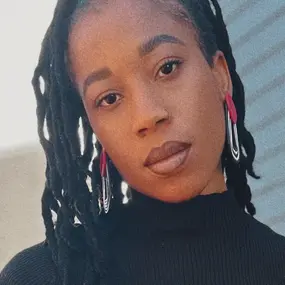
CEO/Mom/Author/Photographer
Natasha Ewa is a 36 year old mother, wife, psychotherapist and owner of I-Thrive Therapy and Wellness, author and photographer who is slowly learning how to play the guitar.
Natasha was diagnosed with Er+ Her2-, stage2, grade 3 invasive ductal carcinoma breast cancer at the age of 29.
Since receiving her diagnosis, Natasha has gone on to have a bilateral mastectomy to expanders and eventually exchanged for implants. Natasha completed 5+ months of chemotherapy (AC + T) and has had 3 revision related surgeries. Post chemotherapy, Natasha was induced into menopause and has been on the medication regimen Lupron (every 3 months) and Exemestane 25mg (daily).
In 2021 Natasha gave birth to her SONshine whom she did not learn she was pregnant with until almost 16 weeks after a vaginal ultrasound that was ordered due to symptoms possibly related to concerns of metastisis.
Natasha will be 7years of living in remission at the end of Aug 2024 and finds joy in what she believes is her second chance at life. Her second chance at navigating the world she is in. A second chance at gratitude and a second chance to LIVE.
Death is inevitable, it will come. But until then, this second chance Natasha has been granted will be used differently. To (find a reason to) enjoy what she can control and find peace in what she cannot.


