
Cancer and Intimacy with Claire Rumore
In this episode, Dr. Leah Sherman speaks with intimacy coach and cancer survivor Claire Rumore about the often-overlooked intimacy challenges that come with cancer diagnosis and treatment.


What happens to desire after a cancer diagnosis? In this episode, Dr. Leah Sherman speaks with intimacy coach and cancer survivor Claire Rumore about the often-overlooked intimacy challenges that come with cancer diagnosis and treatment. Claire shares how cancer may reshape desire, body image, and relationship dynamics—and why clinical care frequently misses these impacts. They explore practical approaches like redefining intimacy beyond intercourse, using nervous system regulation and consent-based touch to rebuild safety, and the Erotic Blueprints framework for understanding desire. Claire also introduces resources from her site cancerandintimacy.com designed to support patients, survivors, and their partners through this deeply personal aspect of cancer care.
Coupon Code: CAI20
Free resource kit: Reclaiming Intimacy During and After Cancer, The Sensual Wardrobe Reset
Claire's Bio and social media links
Become a member of The Cancer Pod Community! Gain access to live Q&As, exclusive content, and so much more! Join us today!
Check out our website! Looking for more information? We have blogs, merch, and all of our episodes listed by season and category.
Shop our favorite reads! We've joined with Bookshop.org to offer some of our fave books!
Buy our merch! Whether it’s a cozy hoody or a handy water bottle, we have something for everybody.
Have a comment or suggestion? Email us at thecancerpod@gmail.com
Follow us wherever you browse. We're always @TheCancerPod:
THANK YOU!!
Become a premium member.
Join the #cancerinsiders. Membership includes:
-
A monthly (or so) newsletter packed with links to new episodes, compelling research, seasonal recipes, and practical health tips you’ll actually use
-
Behind-the-scenes updates
-
Bonus content from the podcast
-
Yoga videos to support your body and mind
-
Downloadable cheat sheets for quick reference
Join today!
Claire Rumore: [00:00:00] Some people like to start really slow and soft and gentle. Other people are turned on by fast and furious and passionate and intense. It really depends on someone's nervous system amongst many other factors.
Leah Sherman, ND: What happens to desire after a cancer diagnosis that. Felt sense of being a sexual being in a body after it has been through something.
So life changing. [00:01:00] Claire Rumore has spent over 20 years helping people find their way back to intimacy connection and what she calls personal sovereignty. Then in 2022, she was diagnosed with cancer herself and suddenly found she was on the other side of a conversation.
She'd spent her whole career having the resource she desperately needed didn't exist, so she built it. Claire is the founder of cancer and intimacy.com, where she combines somatic coaching, sexological research, and evidence-informed tools to help people reclaim their sensual and sexual selves during and after illness.
Welcome to the Cancer Pod, Claire.
Claire Rumore: Well, thank you. Thank you so much for having me.
Leah Sherman, ND: So the first question I'm gonna ask is sexilogical research. What's that?
Claire Rumore: Yeah, so it's based in sexology So sexology is the ology the science of sexuality sex the motivations for sex our wiring, our anatomy, our physiology, but in particular the psychosocial, [00:02:00] even psychosexual So our feelings about the sex we're having…or not having in some cases. Looking at it through a social science lens instead of just a medical lens.
Leah Sherman, ND: And so you've been doing this practice for, like I said, well over 20 years.
Claire Rumore: Mm-hmm.
Leah Sherman, ND: What brought you to it in the first place?
Claire Rumore: So originally I was planning to be an architect. That's what I'd wanted to do from the age of four, go into architecture and design. I even worked for architecture firms in high school, got scholarships for architecture school, for university, started in architecture college, and within one year, the first year.
But I realized, oh, this is not going to make me happy, but I sure am loving my liberal arts requirement, required classes. And so I began exploring the liberal arts. And, uh, from there. From there, the way it worked was I gave up [00:03:00] architecture, not knowing what another plan would be, but just knowing I couldn't drop out of college. Then sociology found me, and through that the studies of sexuality, gender, and identity became my concentration. And I thought, well, on the other side of this i'll of my, my college career, I'll be completely unemployable with my liberal arts degrees, but I will have had a great time in college. And so did I know I was gonna be using my degree, uh, every single day of my life.
When shortly after college, I moved to California, and that's been about 20 years ago. my career has had different iterations in the sexuality, sexology, sexological realms, including working for a sex toy company for some years when I first got here. Being an intimacy coach for about 15 plus years now. And, uh, exploring the erotic blueprints as a framework and becoming an erotic blueprint coach uh, a number of other things, [00:04:00] including a pro dom and other. explorations in sexuality, but really aiming to understand people's motivations, their, their, their connection to their own desires and turn ons. So that's how I got my start.
Leah Sherman, ND: And then you were diagnosed with cancer, and that wasn't that long ago.
Claire Rumore: No, so we're in 2026 now. That was 20, the very end of 2022, so November, 2022. For a few months
Months leading up,
that point, I knew that something was off, I knew that my vitality was just starting to diminish. Sleep was becoming harder. thought I was stressed out, burnt out, that type of thing. but I, uh,
I, uh.
my back and it just wasn't getting better.
I had lift lifted something heavy, and, uh, and then a, a kind of a lump showed up in my hip crease that I
Leah Sherman, ND: That I thought.
Claire Rumore: um, from the, uh, the lifting of the bottle. [00:05:00] And, uh, but again, things just felt off. So I went to the emergency room to get checked out. A friend recommended that, and then scans and tests from being there. that I had, um, pancreatitis and I had inflammation in my colon, but I also, unbeknownst to me, had two mysterious masses in those same places. And they kept me for a few days, did biopsies, and then determined that indeed the tumors were cancerous. And then another round of biopsies, uh, determined that the origin was actually pancreatic. And that actually what I had going on was a stage four pancreatic cancer. So that was the diagnosis that is on my medical record now. we dove right into healing, into treatment, obviously, so.
Leah Sherman, ND: And so it was pancreatic cancer, metastatic to your colon,
Claire Rumore: Yeah. [00:06:00] Yep. So it had spread downward, which is very unusual.
Leah Sherman, ND: and you went through KE chemotherapy
Claire Rumore: Yeah,
Leah Sherman, ND: and SUR surgery.
Claire Rumore: Surgery happened, but it was unplanned. It was
Leah Sherman, ND: Okay.
Claire Rumore: So we started me right away in, chemo treatments for combination, for colon cancer and pancreatic because my case was an unusual one. And they, they sent it to tumor board to get other opinions and other ideas. 'cause I was not the poster child, you know, I was in
Leah Sherman, ND: Sure.
Claire Rumore: early-ish forties at the time. And, um, yeah, so I was an unusual case. I didn't care about diagnosis, I didn't care about staging. Had no interest in that information at all. I just knew my vitality. My essence, my sense of wellbeing was not what I was used to. Something was really going on and needed to get to start healing, and it felt really important to me to do an allopathic, so like western medicine, oncology [00:07:00] but to also compliment it with not so much other treatments that were consumables because I didn't want anything.
We didn't, my care team didn't want anything competing with the chemo. as much therapy, as much emotional processing, as much spiritual practice as much, just my own personal inquiry as much of, you know, medical qigong and acupuncture. As much of that as I wanted my oncologist was, was a green light for, and so I really partnered the, the west of the east together
Leah Sherman, ND: Sure.
Claire Rumore: my experience.
Mm-hmm.
Leah Sherman, ND: And how are you doing now?
Claire Rumore: So my, I'm doing
I'm doing
Leah Sherman, ND: great.
Claire Rumore: long story short, that was 2022 and I dove full-time into my healing very committed to coming out the other side. And just felt like, wow, this is an adventure and I need to give [00:08:00] this the meaning that I wanna give it. Not take personally or take on the looks of concern or what I've heard about other people's experiences with cancer in this particular type of cancer and staging and yada yada.
I just did my best to tune all of that out and stay very true to the outcome I wanted for myself. And as part of that. I also befriended the tumors that were in my body. Got to know them, have conversations with them, coach them, and eventually say, okay, I'm done with being a sick person. I've learned so much.
I thank you so much, and now I'm asking you to go live your best lives somewhere else. And then that was, um, in February, January, 2023. And then in February, 2023, I actually landed in the hospital because my colon perforated.
Leah Sherman, ND: Oh my.
Claire Rumore: though this seems like a terrible turn of events and oh gosh, now 10 steps backwards. This was actually the turning point, moving everything forward [00:09:00] because it was in that procedure. So that was the surgery that was unplanned and it was in that procedure they found that all, um, evidence of tumors, all the tumors were gone and all evidence of cancer was had left my body. So that was February, 2023 and we're now in late February, 2026. So it's been three years. Uh. I've been, uh, cancer free and living in a different a different experience. Uh, focus very much on health and wellbeing.
Leah Sherman, ND: So prior to your diagnosis, were you working with cancer patients in your intimacy? I.
Claire Rumore: I had no connection to cancer patients. No experience with cancer patients. Really no one in my immediate realm with cancer. This was not part of my world at all.
Leah Sherman, ND: so how did your going through your treatment and having this cancer experience change your practice? Because now this is a part of your practice. It's you have a separate page on your website. You have, [00:10:00] um, resources, resource kits for people to download. And so what, what made that shift?
Claire Rumore: So what made that shift? I really must attribute all of that to my social worker who was part of my care team when I was going through my journey. had a little bit of an idea of my professional background, and we probably talked about it at some point, and there was one day she pulled me aside and you know, I'm technically with a stage four diagnosis and no real guarantees I'm gonna survive other than just my
My
to it. But she
thought her.
out to me this gap that I don't know, uh, all the different ways I would've noticed, because my journey was so unique. I didn't have breast cancer or a gynecological cancer, where the effect is gonna be very front and center. so when she pointed that out, noting to me, highlighting for me that the gap. for cancer patients, even cancer survivors, and the [00:11:00] need for support and education as it relates to intimacy, specifically changes to intimacy during a cancer journey. Uh, she said that that gap is so huge. She herself, you know, doesn't feel equipped, doesn't feel confident, would love to, wants to, just doesn't know where to start. And, uh, if I would ever consider taking it on the need's so big that basically. I and whomever else would join, would, uh, never run out of work. so I, I give her all the credit for a lot of this. And, um, yeah, so I dove into investigating, well, how could I bring my expertise, my skillset, my knowledge bases to this world. And I spent much of 20, 24 and all of 2025, uh, diving into that and building out cancer and intimacy.com. Which is a website almost exclusively for patients, survivors and their partners. But that's just the first of my, my ecosystem for this [00:12:00] journey, this mission.
Leah Sherman, ND: I, as many people who work in cancer care as well as cancer patients and survivors will completely agree that this is something that is completely overlooked. And from my own personal cancer experience. You know, when you go in for your appointment and you're given like the little iPad and you fill in your, you know, all your side effects, and then you answer the question about sexuality, you know, like sexual side effects or whatever.
That doesn't always get addressed in your appointment and you know, you kind of feel like, hello, you know
Claire Rumore: Didn't you
Leah Sherman, ND: what,
Claire Rumore: it, yeah.
Leah Sherman, ND: and you know, I've had a, you know, male oncologist who I love him, I respect him. Um, but. He was of very little help and I was practicing at the [00:13:00] same place where I was being treated.
And I would have patients come up to me and say, like, they would open up to me and the other naturopathic doctors about what do I do about this, or how do I manage that? And is. It's so challenging and I came up with a cer few certain things. Um, the first thing was, especially with my patients who are going through treatment for prostate cancer, I began to realize, 'cause they don't teach you this in school, that a male perspective of intimacy is so much different than a female perspective.
So how do you work with your patients? Because if somebody is in a partnership with, you know, let's say a woman is in a, you know, committed relationship with
Claire Rumore: Mm-hmm.
Leah Sherman, ND: they're trying to explain that what they want from intimacy might not be the same thing that their partner wants. Like how do you help [00:14:00] bridge that?
Understanding.
Claire Rumore: Right. So in large part, the way that's bridged is not too different than how it's bridged in traditional sex therapy for folks who aren't even affected by illness. Because often we will find mismatched libidos, differing orientations, changes in life stage and life phase, especially menopause andropause. These phases and stages of life will bring about the need for a similar conversation and similar, uh, and support measures. so it really depends on the partners, on the couple. the quality, I guess I could say of their relationship, like how intact, what has the conversation around sexuality already been? Is that even a topic that has been present in their relationship even before [00:15:00] cancer? So my work in this world is quite new. I don't have a, a large. Case study load to pull from at the moment, but I'll tell you what I'm planning for and developing this purpose. And a big part of it is reframing for people because our cultural conditioning so negatively impactful to all of us many, many number of reasons. My challenges growing up apart from anything related to illness, were being raised in the, uh. The southern part of the United States. So there's a certain cultural expectation of gender, of sexuality and intimacy, and also having been raised Catholic. I spent a lot of my early adult life working through the impacts of these cultural influences.
So every single human is gonna have their own stuff that they're bringing into relationship and all. And [00:16:00] shifting the, the orientation around sexuality and giving someone back their sovereignty around choice is a big part of what my work is focused on my patients and survivors in the cancer world, but also my clients of affected by, uh, illness. And I'm noticing people really need is permission. And is a list of possibilities like an opening to seeing possibilities that in a narrower view that they were given through their conditioning. other possibilities were never made known. And so as I'm helping people redefine what intimacy means to them, what sex means to them, also, what are their motivations for having sex?
Let's not take for granted that we even know what those are. Even if it seems like an obvious question, and also understanding any sort of emotional impact. [00:17:00] When we have a narrow definition and we're putting obligation and expectation on ourselves as it relates to sex and sex with our partners, is causing a lot of stress. So in cancer work, it's super important for the patient to know that he, she, they can press the brakes. that they're not being pressured by a partner to show up as they used to show up or have historically been able to show up. 'cause that's not guaranteed. That's not fair, that's not always available. at the same time, the partner needs support managing expectations and understanding how to hold the experience of their partner as their partner is going through a life threatening, certainly life altering. Diagnosis and treatment experience. So there's a lot of handholding terms of these concepts you know, let's pause.
Let's go [00:18:00] really slow. Let's give agency to the patient. Let's support the partner to understand that their needs are important. Their needs might need to be adjusted for a period of time or, and really we're expanding the aperture of what intimacy means, how it's expressed, and then what, how it can feed us. So it's a, there's a lot of angles to come at this from, but first is the redefining and the offering permission to feel what we're feeling and to need what we need, and then possibilities for what that can look like when a couple is navigating cancer.
Leah Sherman, ND: And the communication part, what you're saying, you know, like reframing intimacy, but then that's usually not a conversation that.
Claire Rumore: Mm-hmm. Exactly.
Leah Sherman, ND: People have in the first place. And so when, like you're saying, when you have this life altering experience, this body altering [00:19:00] experience, this hormone altering experience, all of that, um, you know, there is pain, perhaps not just with, um, the sexual experience, but
there's often pain associated with, with the cancer. Um, there's fatigue, there's just feeling like crap. I mean
Claire Rumore: Those are just the physical symptoms. Then we add in the emotional symptoms, the psychological, the existential. There's a lot going on
Leah Sherman, ND: There.
Claire Rumore: involved.
Leah Sherman, ND: Exactly. Exactly. And. Even if the patient does have some sort of conversation with their care team, then it's often the partner who's left out
Claire Rumore: In the
in the current
Yeah, exactly.
Leah Sherman, ND: Yes. In, in the model that, that we might have in a cancer,
Claire Rumore: model.
Leah Sherman, ND: the unofficial model.
Claire Rumore: Yeah.
Leah Sherman, ND: Let's, let's talk, let's go back to intimacy. [00:20:00] So how would you define intimacy beyond sexual intercourse?
Claire Rumore: Well, first off, I would point out that intercourse is usually the experience and the definition that culturally land on and we. Combine unnecessarily, we limit ourselves unnecessarily by doing so, and we do it blindly, unconsciously. We don't even realize that's the air we're breathing in, the water we're swimming in. So first thing is pointing that out and that kind of loosens, you know, loosens the, the clutching to the, to the idea. And then, uh, instead of me coming, coming, uh, to the session and saying, now how you should be approaching or viewing intimacy as is this, this, this, this, and this also offer
Offer the question.
to the patient, the partner, and have them start to think of ways, [00:21:00] that intimacy can be expanded in its definition.
What other activities. Could be included in intimacy and also maybe even more importantly, what's the purpose of intimacy? Really? What, why are we even interested in intimacy?
Leah Sherman, ND: Mm-hmm.
Claire Rumore: a biological imperative. There's something else motivating us, so let's reconnect with that. And often that gives us new definitions and new expansions.
Leah Sherman, ND: one of my favorite recommendations for my patients with, prostate cancer was when we would talk about intimacy. And again, I did not have any training in my schooling. This is stuff I was just trying to like.
Claire Rumore: Totally.
Leah Sherman, ND: grasp at, I would recommend that they take their partner and do dance lessons
Claire Rumore: Exactly.
Leah Sherman, ND: and they would look at me like, what? And then usually their partner, wife, girlfriend would just look and be like,
Claire Rumore: Yes.
Leah Sherman, ND: yes. [00:22:00] And. It was always a big surprise that something, you know, I wasn't asking them to do, you know, do a massage or you know, which again is, you know, touch would be a big part of intimacy, but also having the touch be something that you can do in public, you know,
Claire Rumore: exactly.
Leah Sherman, ND: have that experience.
So what are examples of things that you would talk to your patients about for exploring? What intimacy means to them?
Claire Rumore: Mm-hmm. One of the most important frameworks that I bring into the conversation with, clients who are cancer patients, as
Conversation.
Non illness impacted clients of mine is the, the five erotic blueprints, framework and methodology, and I'm not sure if you've heard of them. They were created by a sexologist named Jaya. And uh, I just found them to be so
So powerful. I've
diving
diving into them for past
10 or
10 or 11 years [00:23:00] to
Help me understand myself and now to help other people their selves. And so the five erotic blueprints, if you can imagine that there are five distinct pathways, access points to pleasure to turn on, because not everyone is turned on. By the same things. Some people like to start really slow and soft and gentle. Other people are turned on by fast and furious and passionate and intense. It really depends on someone's nervous system amongst many other factors. But how is someone's nervous system wired to receive sensation, intention, and. Therefore, which, which types of activities become that person's pathway to pleasure? So these five include, give you the names of them in a very brief description that they're the energetic blueprint. So this would be someone who, amongst many other things, is turned on by. [00:24:00] Slowness by breathing together, by eye contact, by emotional connection, by deep conversations, by vulnerability, by a touch that's more hovering than intense and grabby. Uh, someone who needs, a very particular type of foreplay as well as a significant amount of foreplay just going very slow, full of anticipation, a lot of expectation. So that's the energetic. Then we have the sensuals who might be considered more of the traditional romantics. They like to have all of their senses engaged and stimulated.
So that could be someone who's enjoying massage or a hot bath or smells, delicious foods, glorious music. a blanket or a type of, sweater with a certain texture, fabric, these types of things. Really, or like having their neck kissed, you know, like the slow lead in, lots of foreplay, whatever that means to speci a specific person. But again, this [00:25:00] arc of anticipation. So that's the sensual. Then we have the sexual blueprint. These are folks who don't need foreplay. no interest in that. They go from zero to 60 right away. They love the intensities, the passion, they, um, love orgasm and naked bodies and genitals. that everyone have an orgasm and multiple orgasms.
They just really love sex. And I would say that's kind of the prototype, even the archetype that our culture in the United States likes to promote, to cisgender heterosexual men. then, uh, that's what we see show up in our porn, which is often what's teaching. Younger men these days, what to, how to view sex and what to expect from sex. And women are very much objectified in those contexts and expected to be the sexual blueprint. But on the receiving side. And, uh, when often many cis hetero women are not that at all. And also many cis hetero men are not [00:26:00] that at all, are not oriented towards this an intense sexual direct. I want what I want give it to be. That's not their natural orientation, but that's a conditioning that in a, a personification they take on a lot of times 'cause they don't know there are other options. Now the fourth blueprint is what we call the kinky erotic blueprint, but that doesn't necessarily mean and chains and 50 shades of gray.
What that's really pointing to is somebody who is turned on, who accesses pleasure via something that would they consider taboo. So for some people, vanilla sex, traditional vanilla sex is taboo?
and that would make that person kinky. So we can't just. Limit, kinky to, likes to be tied up, likes to have power exchange likes, domination, submission.
Sure.
Sure. All of that.
for whomever is turned on by that. But the element, key element is taboo. What's taboo for that [00:27:00] person. And then
blueprint is what's called the shapeshifter, which is somebody who is legitimately fed, legitimately desires. All something from the other four. So they love variety they, um, like of, a lot, you know, they just really enjoy all the different expressions and mixtures and it's not that they can shapeshift to please someone else. It's that today I'm in the mood for this next week. I might be in the mood for that. Last week I was in the mood for this, or day to day, hour to hour changes. You know, it's just someone who's really fed by all of the other blueprints. And so, um, each of these has superpowers. Each of these have shadows, and often it's one blueprint that is somebody's what I call the key to their front door of turn on. And once they're in the house of turn on, then they might start exploring the others. But what's the element that they really need to feel at ease and in pleasure, and that they're enjoying themselves and truly expressing [00:28:00] their authentic erotic self. So that's the blueprints in a nutshell. And I like to offer that framing help partners understand each other, understand their selves, first off.
'cause maybe they don't inherently, like, oh wow, given my druthers, I actually do need something taboo. That is where my turn on is. I didn't know that about myself. Or someone else might realize they're more subtle and energetic and soft, and they start to see where they overlap and where they don't. uh, and then they can start to expand the understanding of each other's pathways to turn on. And that provides much more, um, a, a broader list of possibilities. So the different activities that might turn each of those blueprints on can then go into the repertoire of the couple to use, to explore beyond just penetrative sex.
Leah Sherman, ND: And you can see where the pre-cancer self can [00:29:00] fit into
Claire Rumore: Mm-hmm.
Leah Sherman, ND: one of those blueprints. But then after everything that happens, then it shifts, and then again, having that conversation with the partner.
Claire Rumore: Exactly. Exactly. And that happened for me in a lot of ways. Now I will
I'll say I
the
the relationship
in, uh, shortly after diagnosis. 'cause I realized I cannot show up as the partner that this person has been accustomed to me showing up as I just can't do relationship. So we need to not go on this ride together. so I was very grateful that I did that. And then my sexual drive paused for quite a while because I lost a lot of weight. And so my, and also the treatments were really strong. So that just put me on a, a pause. my hormones turned off, not medically, but just 'cause I lost so much weight. My period stopped and my sex drive went away. but I have very, [00:30:00] I'm blessed with very affectionate friends, and I was already oriented as a sensual blueprint and an energetic blueprint. So I was already in that, like the emotional connection really feeds me. massage really feeds me. It doesn't have to be erotic for it to be pleasurable and full of intimacy and closeness and connection um, you know, just spending quality time. friends really, really fed me. So I didn't miss being in relationship. I felt I was in many relationships, you know, just being really well cared for by a number of people. And so I was
already.
sensual blueprint, energetic blueprint, but on the other side of my cancer journey, after three surgeries, lots of scarring, weight loss, you know, just a really frail body for a period of time. became in need of like much softer, much more subtle, much gentler type of interactions as my sex drive started to turn back on. And also I had my own body shame from scars [00:31:00] and my body had changed when I'd lost so much weight and then started to plump back up and I cut all my hair off. And, you know, it just took some time to reorient to this new body, this new identity. And, It was really fascinating to see how I had shifted my blueprint, even though it was still in the same domain. It had gone really to a, um, a bit of an extreme for a while in a good way, just in a different way, and I actually coined the term for as a sexologist, you know, a researcher infinitely interested in these things.
I actually coined the term for a new sexual orientation that's not dependent on genitals, but I call it, subtle sexual and subtle sexuality. And that's how I began to identify. And that's really someone who needs slow, soft, subtle, a lot of emotional connection and care, uh, both receiving, but of course giving also.
And then just needing to be gentle, go just quite mindfully, even like the arc. And to starting the new relationship that I [00:32:00] started, it took us very deliberately, four months before we even brought in intercourse. Because we were exploring so many other dimensions of subtle sexuality and ways to be intimate, kept pace with my nervous system. Yeah.
Leah Sherman, ND: the nervous system component is so fascinating because it. You know, hearing you talk about it, it makes absolute sense. I mean, you go through your, your body, your mind, your spirit goes through the shock of a diagnosis and the treatment. And so, you know, there's an element of PTSD and you're used to being handled in a certain way in a doctor's office.
Claire Rumore: right.
Leah Sherman, ND: Um, yeah, so the nervous system part is really interesting. I find, Are there any, I don't know, would it be like working with breath work? Like what are different ways that somebody, I guess it could be, I mean, apart from the sexual and intimacy, it's just [00:33:00] trying to rebalance that nervous system
Claire Rumore: Exactly, and there's a number of ways. And, and as it pertains to a solo practice, there's applying one's hands to the body in a safe, an area that's not so tender. Just feeling the weight and the warmth of one's own hands, and knowing that one has agency that they can at any point, move the hand to another area. Nothing's expected. Nothing needs to happen. They're just feeling the hand rise and fall with the breath, and they're staying very present and in the moment with their own breath. Noticing. Oh wow, I'm
I'm.
this particular emotion come up or this emotional quality, or I am feeling really relaxed right now.
Or you know, just staying very present with their self helps us return to called our window of tolerance we're in our parasympathetic nervous system and we're not leaving our experience or shutting down 'cause we're [00:34:00] overwhelmed. So that's just a very basic solo practice and then how that can work with partners. 'cause a lot of times, like you were saying, layo with the handling and the medical where you're just a body that's poked and prodded and know, people do that with care, uh, medical professionals, but also they got a job to do. They need to get in and out. They're not there to offer bedside manner. And so, um. You know, our bodies, mine certainly went into flinch mode. I didn't have a lot of buffer, a lot of armors because I was, so, I was dropped down to 74 pounds. So, you know, I was very,
Leah Sherman, ND: Oh wow.
Claire Rumore: and just, eh, eh, even though people were being nice, I was not being threatened, but my nervous system, you
Leah Sherman, ND: Yeah.
Claire Rumore: have a lot of buffer and didn't know the difference. and so one thing that can help partners reconnect and can help the partner who's either the patient or the survivor. Return to that baseline of calm and parasympathetic nervous system is that they're receiving touch that’s not [00:35:00] moving all over their body really fast. That's not going for an erogenous zone and hanging out there. That's just, they get to ask for the touch and have it applied in the place they want it exactly as they want it, and nothing else is going to happen. until they ask for something else or until a timer that's set for two minutes goes off, you know, and the, that person gets to feel the trust return to their body, and also the trust return with the
Leah Sherman, ND: partner
Claire Rumore: an an outside stimulation. And so that's something that I recommend. 'cause often we just need to start with the basics, like the early, basic, simple, simple things. And that's where the most impact is for returning to intimacy and connecting and feeling what we're feeling.
Leah Sherman, ND: And you brought up trust, and that's something that I, I felt myself as well as I've, I've heard from my patients is you don't trust your body anymore. There was that.
Claire Rumore: definitely feel that way.
Leah Sherman, ND: You know, there was a, [00:36:00] a betrayal in some way. You know, like, you tried to kill me. I've been good to you all these years. You know? And so I love the idea of you know, placing your hands on your body yourself
Claire Rumore: Yeah.
Leah Sherman, ND: introducing your partner into that.
Because I know, again, with myself, like I couldn't look at my. My post mastectomy body
Claire Rumore: Yeah.
Leah Sherman, ND: for a long time,
Claire Rumore: Mm-hmm.
Leah Sherman, ND: and so why would I want anyone else to look at it,
Claire Rumore: Oh, absolutely.
Leah Sherman, ND: you know?
Claire Rumore: me, I didn't have mastectomy 'cause I had different types of
Leah Sherman, ND: Mm-hmm.
Claire Rumore: but I had Three abdominal surgeries. That left me with huge scarring and di I always forget how to pronounce this, uh, diastasis or diastasis recite. So
Leah Sherman, ND: Yes.
Claire Rumore: got stretched,
Leah Sherman, ND: Mm-hmm.
Claire Rumore: extended, and I looked like a five month pregnant person from the side, which was not in the look I was going for, you know, also tiny, but with this big belly sticking [00:37:00] out. And I was just so self-conscious, you know, just wearing big clothes and for the longest time, didn't wanna reveal my body. If I did, it was in the pitch black, you know, all dark.
Also, I covered
mirrors for months when I was ill. 'cause it was just so hard to even see, you know, basically skeletal, you know?
And not deliberately, it's just like, body, what's going on? I can't look at this because I can't join in. With the fear of how I'm gonna react and the meaning I'm gonna give to this. So I'm gonna just not look at this at this time. So I covered my mirrors. But yeah, it takes a while for someone to reconnect with that body comfort and this new expression of self.
Leah Sherman, ND: So when there is physical pain involved, how does one, I don't wanna say work around it, but like how does one maintain that intimacy? How
Claire Rumore: Yeah. Well,
are
we
defining.
intimacy? [00:38:00] because to force oneself out of a sense of obligation for me is. Not contributing to intimacy.
What, what was kind of. Driving that question is just hearing from patients where they would say, oh, well my oncologist told me, use it or lose it. You know, and that's kind of going away. But at,
hear what
Leah Sherman, ND: you know,
Claire Rumore: Yeah.
Leah Sherman, ND: that is something that was being told to patients. You know, I think about my patients who had radiation for like cervical cancer
Claire Rumore: Yeah.
Leah Sherman, ND: you know, there are.
Resources for them with using, dilators and, you know, and going gently and sizing up and all of that. But I have heard or had patients tell me that what they heard from the oncologist was, when you're going through radiation, keep having intercourse
Claire Rumore: Mm.
Leah Sherman, ND: because use it or lose it.
Claire Rumore: Intense.
Leah Sherman, ND: Intense. Intense. I mean, that just [00:39:00] sounds,
Well, I'll
I.
Claire Rumore: you this 'cause I have, some, clients. They're a couple. They've been married for 35 years. She had all of her reproductive organs removed. Uh, and she's doing well, and I think it was metastatic. So this might, you know, her treatment might be ongoing, but she's now in a stabilized place where she can return to intimacy in a more formal way. And she's had the dilators and has used them, but the, the pain has just too much or has been just too much, so much that intercourse has not been possible partner. And so what we worked on in the weeks that we worked together, the three of us. Was redefining intimacy, kind of understanding our motivations, what their motivations were for them.
Also identifying their erotic blueprints and ways to expand and, uh, learn about each other's blueprints, to have more activities that aren't, just use it or lose it. Pv, you know, penis, vagina, sex, or [00:40:00] nothing. And, um, they were finding all kinds of beautiful ways to connect, be froy and flirty, you know, and they're in their sixties.
This is so wonderful to see. They've gone camping trips and, you know, kind of be like teenagers exploring their bodies and using hands and tongue and mouth, you know, so there was a lot of closeness and a lot of pleasure and a lot of satisfaction. It just wasn't looking the way, uh, part, part of what they were accustomed to to was not available, but we were aiming to, create a broader repertoire of activities and possibilities that that wasn't missed like it was locked for, but it didn't feel like a deficit to the relationship because they did the work of expanding their personal understandings of desire and intimacy.
Leah Sherman, ND: I love that.
Claire Rumore: Yeah. Yeah. So
Leah Sherman, ND: So
Claire Rumore: practicing. You know, we were like maybe just the head of the penis right at the opening and [00:41:00] gently, you know, and even just, even that was just too much at this time. But we haven't given up on it. We've just said, go at your own pace and then really put front and center all these other expressions of intimacy that are so nourishing and really connect the two of you in the ways that are important to you.
Leah Sherman, ND: do you recommend, um. Things like the O nut for your clients.
Claire Rumore: Presently, I don't do a lot of recommending of products. You know, it
Leah Sherman, ND: Okay,
Claire Rumore: and I, I don't, also, don't discourage, I say you explore on your terms, what works for you and your body. That's my, you know, mantra. Like what works for you.
Leah Sherman, ND: with you, it's more on that, like the psychosocial level
Claire Rumore: It is, and
and.
told, my aim starting in this realm and uh, and igniting this mission is not to so much work one-on-one with cancer patients because there are just too many, and I'm one person, you know, so my impact as a a. Private [00:42:00] practice practitioner would only be so much so from the beginning. My focus has really been on training the staff training, staff at nonprofits that work with cancer patients, train the staff at clinics to be prepared to have these conversations, make these recommendations and offer referral pathways. But before I started that, I realized cancer patients and survivors and their partners need something today. 25 years ago, you know, so that's when I built cancer and intimacy.com. And I have as a placeholder, limited coaching with me at this time for people who might want that. But that was not my aim to build a private practice.
My aim is to train other practitioners staff. Yes. And then there will come a point when I get to train folks who are in like. Neuropathy and acupuncture and marriage and family therapy and all these adjacent, uh, professions that complement cancer care so well. provide tools and resources [00:43:00] and education for the private practitioners to be able to offer this to their clients who are being affected by cancer directly or indirectly. I'm developing an institute for that and so there will come a time when through the institute I'll be able to make recommendations of products and whatnots. But right now I'm developing all the frameworks and all of the handouts on the entire websites. So I haven't done the deep dive to really know what, or have a clearer idea of what would be helpful.
Leah Sherman, ND: You do have a lot of resources on your website, and I didn't, I didn't download, I was gonna do the free download and then I forgot, and then I was reviewing it. But, but there, there's that resource kit. But the, there was one thing that I don't believe is part of the resource kit, but there were cards,
Claire Rumore: Mm-hmm.
Leah Sherman, ND: the PDF of.
Claire Rumore: Yep.
Leah Sherman, ND: Yeah. Yeah. And so talk about the cards. 'cause I thought those looked fascinating.
Claire Rumore: Yeah.
Yeah.
a little moment ago, you and I were talking about how often the. [00:44:00] Often the conversation around intimacy might not even be a part of a couple's coupling. You know, they're relating even before cancer showed up. And, That's the case for many, many people. So I thought, well, one thing that could be really helpful, 'cause sometimes we don't know how to start a conversation about Tinder topics.
Sometimes we don't know what to say. So the idea came to create a collection of prompts different categories that are very empowering and affirming and appreciative, that help a couple have a conversation. Together exploring these tender realms. So something similar to, you know, like what would you like me to know about your experience that I presently don't understand? You know, something like that. And then a patient could share with their partner. I experience a lot of pain when we do this activity and I just don't wanna disappoint you 'cause I love our sex life. [00:45:00] And I wanna give to it. And I, my body's just in a different place right now and I don't want you to be upset with me because of that.
You know, like that creates intimacy when there's that vulnerability and that softness and that, um, you know, just sharing our authentic selves. For me, that's the actual definition of intimacy. And then sexual activities compliment that they aren't that at the end of the day.
Leah Sherman, ND: And I think that, I mean, that definitely is a big part of it, like you said. I mean, I think it's like, start with reframing intimacy and I think those cards, like, to me it's almost like that, um, not like a trivia game, but like one of those like.
Claire Rumore: Yeah.
Leah Sherman, ND: It's, it's a game, right? I mean, it's like, you know, a truth.
It's a
Claire Rumore: a card, like
Leah Sherman, ND: it, yeah. It's, it's truth or dare without the dare, you know? It's just, it's just the truth and truth game. And it, it is, it seems like it's such a great conversation starter, for a subject that isn't something [00:46:00] that necessarily
Claire Rumore: Let's just name it. It's awkward,
Leah Sherman, ND: it,
Claire Rumore: It
Leah Sherman, ND: whether you're.
Claire Rumore: it could go sideways so fast. You know that. No wonder we're all afraid
Leah Sherman, ND: Yeah, whether you're talking to your doctor or your partner, like it's, it's, it's a very, awkward, awkward conversation.
Claire Rumore: a hundred percent.
Leah Sherman, ND: So,
Claire Rumore: So I wanted to provide something that could help lubricate those conversations, if you will. And,
and, um.
item is in my shop, so many other items and most of the site is completely free to download. Uh, I'm excited to provide y'all with a coupon code for your listeners so they can go into the shop page and get 20% discount on any of the items in the shop, including the conversation cards.
Leah Sherman, ND: Oh, I love that. I love that. Thank you. and we could put that in the show notes along with the website and, is there anything else that. Do you wanna add that maybe we didn't touch on in the conversation? [00:47:00] Yeah.
Claire Rumore: So part of a framework I'm working on and, and this can be found in the shop, is this notion, twofold notion of before we can move into what else is possible with our arrows, with our intimacy. Especially when we're in illness or coming out of illness, engaging a process that I'm calling erotic grief and really honoring what is it that I've lost in the context of my sex life in the context of intimacy, in the context of my eros that I really miss. That I wish was still available, that I'm longing for, that I feel stuck because I, I keep yearning for my old self, but that's not who's here. You know, all these ways that we get stuck in grief and grief at the loss of a loved one, or a job, or a relationship or a house, you know, that's a certain type of grief.
That erotic grief is a whole other type of grief It's not really [00:48:00] talked about at all. And so it's an honoring the past. And I've created an ebook about erotic grief. It's really a workbook guiding people through, uh, explorations of how erotic grief might be showing up for them as a patient, as a survivor, and as a partner.
'cause those are three distinct pathways reclaiming self in the context of erotic grief. And then what follows that is what I'm calling the libido journal, which is, or libido listening specifically. is once we bring everything current, you know, we bring everything present 'cause we've honored the past, that's not here. from this place of being here, now I can start to listen to my body very quiet signals. It might be giving me kind of like knocking on the door, saying like, I'm starting to be open again to being touched. I think I might like this type of experience, you know, and it could be gentle. It doesn't have to be intense sexual activity.
It can be just like a gentle, and then growing in or expanding [00:49:00] into other expressions of libido. And also we're defining, well, what does libido even mean to you? How does your libido. Express or speak to you. So I have a libido journal that I've created that's in the shop that can guide people through this journey of, um, starting to listen and hear what the signals their body's giving them related to intimacy. And so I'm really loving these two pieces together. 'cause we're bypassing all
a lot of times, trying to get back to how we were or what we think sex should look like, even despite the health circumstances that
of.
It's like, no, no, no. Let's really look at this holistically and honor as many dimensions of self as we can.
Leah Sherman, ND: Well, I wanna thank you so much for reaching out through LinkedIn and I'm so glad that we were able to connect
Claire Rumore: Oh, me too.
Leah Sherman, ND: and I really encourage our listeners to, to seek out your website and like I said, all the resources [00:50:00] I'll put in, the show notes and yeah, it was so nice meeting you.
Claire Rumore: Oh, thank you. You too. And this is such a big conversation. I'm so grateful for
Grateful for
we got to
all.
touch in on today.
Leah Sherman, ND: Yeah, we, I mean, this could, this is its own podcast. I don't know if you, you have explored that, but this really is its own, you know, its own show. So, um, yeah, hopefully we didn't jump all over the place, but yeah. And I know there's a lot more that we could explore as well. But, yeah, again, thank you so much for taking the time to, to speak with me.
Claire Rumore: It's my pleasure.
[00:51:00]
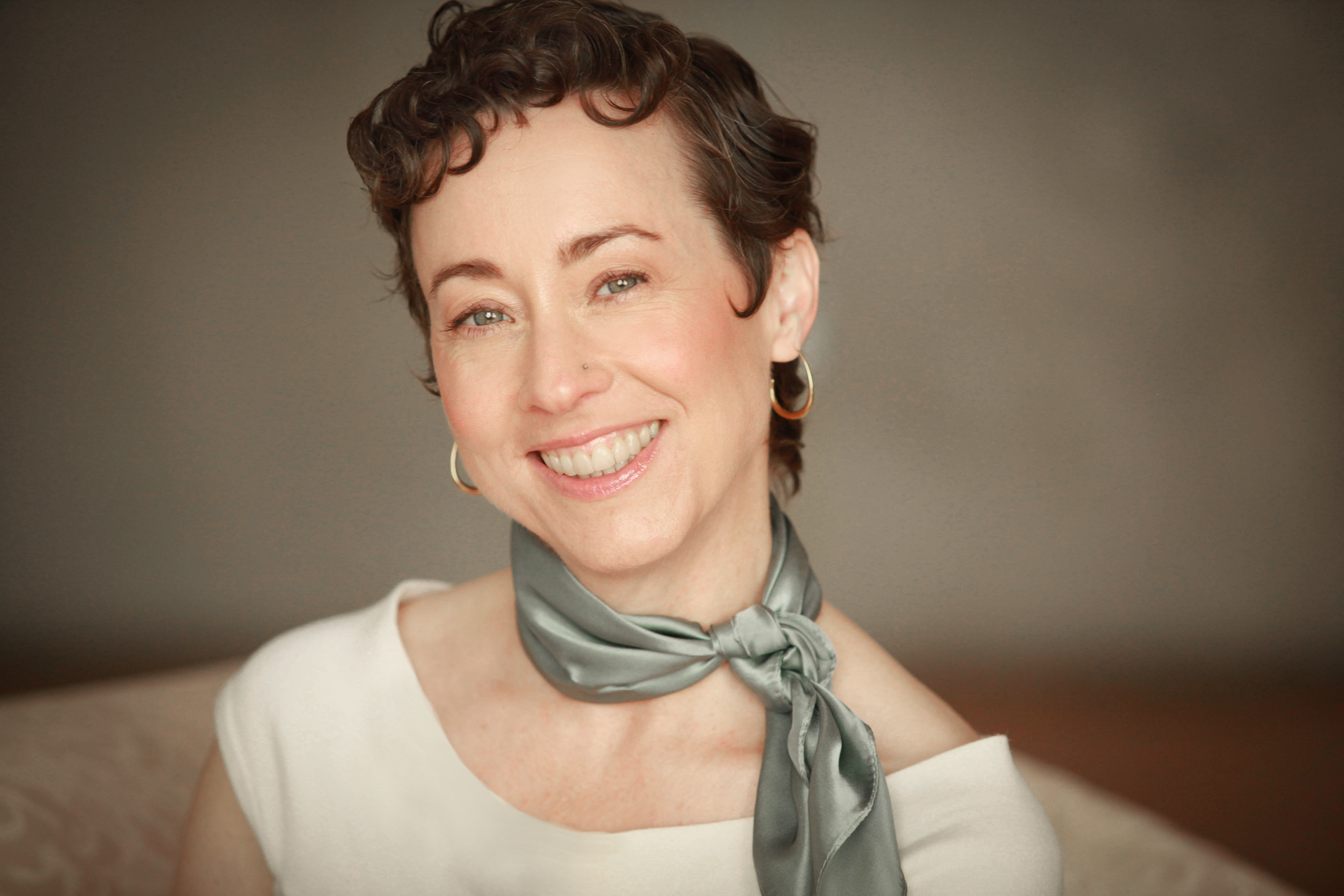
Founder, Cancer and Intimacy LLC
Claire Rumore is an intimacy educator and founder of Cancer and Intimacy, a platform dedicated to redefining survivorship through whole-person care. After navigating colon and pancreatic cancer, she began advocating for intimacy-informed cancer care — addressing sexuality, body image, grief, and connection as essential components of healing. Her work bridges patient support, clinician education, and systems change.


