


Navigating Cancer Care with Chad Levitt, MD
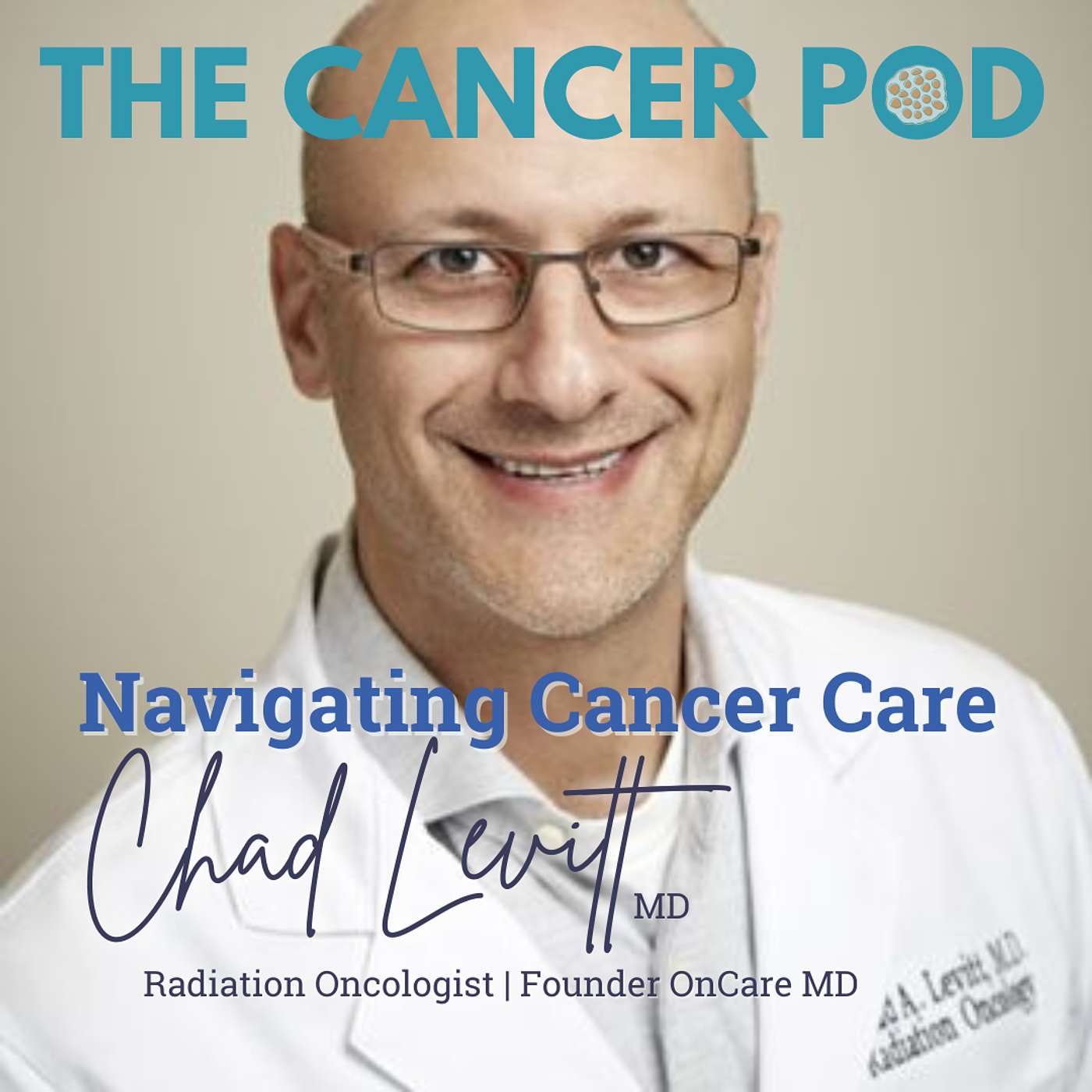


Dr. Kaczor speaks with Dr. Chad Levitt, a board-certified radiation oncologist with over 25 years of experience and founder of ONCARE MD. Levitt discusses how patients are, in effect, consumers of a product called "medical care." As consumers, they are in charge and must navigate the often fragmented healthcare landscape. He talks about the need to have your questions answered fully, to seek second opinions, and to ensure that your care team communicates clearly. The discussion covers what fully informed consent looks like, the limits of the NCCN guidelines, and the need for integrative oncology (including nutrition, stress, and supportive care). His company, OncCareMD, provides unbiased, membership-based advice for optimal treatments with frequent touch points to ensure treatment goes smoothly.
Dr. Chad Levitt's bio and links
Become a member of The Cancer Pod Community! Gain access to live Q&As, exclusive content, and so much more! Join us today!
Check out our website! Looking for more information? We have blogs, merch, and all of our episodes listed by season and category.
Shop our favorite reads! We've joined with Bookshop.org to offer some of our fave books!
Buy our merch! Whether it’s a cozy hoody or a handy water bottle, we have something for everybody.
Have a comment or suggestion? Email us at thecancerpod@gmail.com
Follow us wherever you browse. We're always @TheCancerPod:
THANK YOU!!
[00:00:00] Tina …find out if, when this person is given a diagnosis, do they wanna be in the driver's seat?
Do they wanna be in the passenger seat? Navigating, but not driving necessarily or do they wanna be in the back seat? like hand it off. Literally hand it off to someone they trust and love, to digest all of the information and help them navigate. But they really don't wanna know much detail. They're just like, just tell me what to do and where to show up and I'll do that.
[00:00:20] Tina (2): I'm Dr. Tina Kaczor, and as Leah likes to say, I'm the science y one.
[00:00:25] Leah: And I'm Dr. Leia Sherman, and I'm the cancer insider.
[00:00:29] Tina (2): And we're two naturopathic doctors who practice integrative cancer care.
[00:00:33] Leah: But we're not your doctors.
[00:00:35] Tina (2): This is for education, entertainment, and informational purposes only.
[00:00:39] Leah: Do not apply any of this information without first speaking to your doctor.
[00:00:44] Tina (2): The views and opinions expressed on this podcast by the hosts and their guests are solely their own.
[00:00:50] Leah: Welcome to the Cancer Pod.
[00:00:58] Tina I am here today with Dr. Chad Levitt. Dr. Levitt is a board certified radiation oncologist with over 25 years of experience in cancer treatment. He studied existential philosophy and creative writing as an undergraduate Before attending Emory University for medical school and residency training, Dr.
Levit is recognized nationally for his experience in cancer care with numerous speaking engagements and published research in oncology journals. Dr. Levitt has also served on national advisory boards and as a principal investigator for clinical research trials staying at the forefront of cancer treatment innovation.
After decades of practicing oncology, Dr. Levitt realized the existing gaps in the current systems and the need for a truly patient-centered approach to cancer care. To address the often fragmented care between multiple providers, incentivized by multiple interests. Dr. Levitt founded on Care MD to put the patient's back at the center of their cancer care, having already made a difference in countless lives.
his passion is to provide you and your family with the personalized and dedicated professional guidance you deserve. Dr. Levitt, thank you so much for joining me.
[00:02:02] Chad Thank you. Happy to be here.
[00:02:04] Tina when we were chatting a little bit before the. The official, uh, video and, audio got recorded.
You were sharing with me your current passion and kind of going off the bio that I just read. tell me a little bit more about how to put the patient at the center of the process of their oncology treatment. I guess that's the, that is much of what our audience is searching for. So, do we even begin?
[00:02:26] Chad Right. basically OncCareMD and my current, interest on this topic specifically, from what most of us oncologists do routinely anyways. Once or twice a month, we get a call from a Ferrin family member talking about somebody who's encountered a new cancer diagnosis and, uh. We often help them throughout the whole process, the right, help 'em design the right questions to ask, how to speak the language about the, the diagnosis and all the medical terms. how to prioritize the stresses and the anxieties and the fear and all the emotions that come along with the cancer diagnosis. not to mention how to make sure all your doctors are speaking to one another and speaking the same language in a consistent way with you at the center. it makes a huge difference and so it's not easy, but the biggest take home message is that where healthcare, most of the modern Western healthcare has, evolved to today. It's created a landscape that's not too different than any other. Corporate or institutional, um, entity. And if you think about it that way, as a patient wanting to get the best care and be involved and engaged in your treatment choices about what type of treatment you might flow to do or how to integrate different therapies
It really requires, thinking about yourself as needing to be an informed consumer of healthcare not any really different than, How you would go about buying a car or a TV or a pair of shoes. those situations, you speak the
[00:04:01] Tina Mm-hmm.
[00:04:01] Chad You, you at least are somewhat familiar with the process and the, the options. But cancer and disease, they're, they're hopefully once in a lifetime type of experiences and most people aren't taught or familiar with how to interact or deal with it. They, they need somebody who's not necessarily incentivized by ordering this test or this treatment, or guiding them towards this or that, especially with cancer where we haven't cured all the, the disease.
[00:04:31] Tina Mm-hmm.
[00:04:31] Chad so, we don't have, nor should we pretend to have all of the right answers for every situation. is a team effort and it should be, and a patient should feel entitled to consider themselves as really the captain of the ship. They just might not have gone to, maritime school to learn how to sail the ship.
And that's our job as professionals too. Guide patients where they want to go, inform them about what their options are, the pros, the cons, the risks, the benefits, and then help them to get there as long as it's reasonable and safe and responsible.
So informed consent is critical, but that's often, uh, the glossed over portion of what, a patient's interactions with the healthcare team. it consists of.
[00:05:18] Tina Yeah, I think, I think what you're bridging in my mind as I listen to you is you're, you're bridging the gap between what is ideal, like what you're describing is an ideal scenario for every patient, every time going through treatment, having to choose the treatment, choose their medical care team, choose how they're gonna go about.
After they get the diagnosis, how they're gonna go about treatment? Idealistically, yes. They're in the center and they've got a lot of people around them who are experts in whatever field they are, but I would say that is a minority of patients.
[00:05:51] Chad Yeah. That doesn't really exist in the, in the common experience.
[00:05:57] Tina Yeah.
[00:05:58] Chad and so the biggest thing that. and people helping, patients through a diagnosis like this is not to be shy about asking questions and asking for what you'd like. can kick the tires on a lot of, uh, teams and doctors because the relationship is critical. And other than a. More unique circumstances. Cancer treatments are often not an emergency. Now, if they are, you gotta get taken care of so you can, um, thrive and heal and, and then consider longer term options. But, paying attention to, do you feel like. provider, the doctor, the team that you're working with is listening to you, is answering your questions in a way that you understand, is explaining things to you to help you make decisions that are informed. you shouldn't be afraid to ask questions if you
[00:06:50] Tina Yeah.
[00:06:51] Chad something. We know that once someone tells somebody that they have a cancer diagnosis, They only hear maybe half of what we say after that.
[00:06:59] Tina Right.
[00:06:59] Chad is, the kind of trauma and the PTSD that comes with just hearing the word cancer is real.
[00:07:05] Tina Yeah.
[00:07:05] Chad know it happens. And so that's never a time you wanna make the huge decisions and so I guess the first thing is I would tell most people is, put the brakes on for a minute. Make sure you have a support team that can be an extra set of ears for you. Take notes. Kick the tires on the doctors and, and people that you're working with does it feel like they have a foot out the door before they've even finished the visit?
And, and that's just a reality. it's not realistic
[00:07:33] Tina Mm-hmm.
[00:07:33] Chad today to think that a, routine oncologist, has the time to do a great and extensive detail oriented workup during the diagnostic portion to make sure that all the great new science and advances that are out there that help us better personalize and direct treatment and integrate care for patients, um, are looked at and, and thought about.
[00:07:58] Tina Mm-hmm.
[00:07:58] Chad And that's sort of the first phase in my mind. The second phase is a really detailed and comprehensive informed consent in a language and in a way that the patient and their team and their family, can understand and you weigh for them. option A, B, and C. Here are the pros and cons of each. Let's get to know you and what's important to you is to help you make a decision. And then also thirdly. Be excellent at delivering that treatment. Is it surgery or chemotherapy
[00:08:28] Tina Right.
[00:08:29] Chad or, nutritional analysis or, mind body medicine or energy work, any of these things.
So to be great at all those things, isn't realistic anymore.
[00:08:40] Tina Right.
[00:08:41] Chad up to the patients to consider themselves as part of the team, if not the captain of the team. And want to understand all of these details so that they can make an informed decision and not look back,
[00:08:51] Tina Mm-hmm.
[00:08:52] Chad the future holds and wish they either had done more or less or, or done more research. So
[00:08:57] Tina Yeah.
[00:08:58] Chad that leads to the idea of second opinions are a good thing,
[00:09:00] Tina Yeah. And we've, we've often talked about here at the Cancer Pod, about how finding loved ones who are really good at advocacy can also help, because sometimes it's just exhausting the treatment itself, the processing, the decision making, the, the, the gravity of the situation. Sometimes you, you just need.
Other people. And so it's really, I mean, that's sometimes a hurdle for folks, right? Like to ask others to help them go with them to the visit. Or maybe, you know, the best person isn't your partner or your spouse. Maybe the best person is your best friend or your sister or your brother. And making sure that that person becomes the closest advocate when it comes to, to digesting a lot of information, really.
And, and organizing it in a, in a way.
[00:09:47] Chad the spouse often isn't the best person to, to deal with all that. Now when people find out that you're dealing with a cancer diagnosis, whether it's an early stage, very curable one or something, more advanced, it seems like, people come out of the woodwork wanting to help you.
[00:10:05] Tina Mm-hmm.
[00:10:07] Chad this gets into some, philosophical, psychological things where. How do you help somebody when you don't know what it is that they need? there's a selfish aspect to wanting to say, look, my friend or I went to this person and did this and this and this, and you really need to look at this. What most of us don't realize that a patient may be getting that from 20 different sources
[00:10:33] Tina Right.
[00:10:34] Chad and, and it's from people who care about them. And there's this weird sort of guilt that can sometimes occur, which is normal and it's often healthy to hear that this is a normal experience. 'cause more people dealing with a cancer diagnosis uh, experience something like this than not, that they feel guilty, that they can't look at every single thing that everybody's telling them to go do, it stresses them out.
They have
[00:10:56] Tina Mm-hmm.
[00:10:56] Chad expert on how to look at this treatment or this clinic, or this doctor, or this procedure. So one of the aspects of having an advocate that's a loved one, a friend or, or someone like that, is sort of to set up, um, protective layer for that patient.
[00:11:16] Tina Mm-hmm.
[00:11:16] Chad To help manage all the people who want to help and support them, but protect them from feeling that's yet another duty that they as a patient have to do. A lot of my messaging is how can we offload the majority of the logistic? And, information type of stressors that come with the diagnosis that you're trying to navigate so that a patient and their family member can really just focus on the healing
[00:11:42] Tina Yeah.
[00:11:43] Chad supportive care and the minimization of side effects and, and looking towards the future, whether it's living with cancer or without cancer in spite of it.
Um, the, that, that's, a lot of the logistics. Um. The reality is, is probably the worst. One of the worst things about a cancer diagnosis is it's just a slap in the face about our human condition and how frail life is anyways, and you could wake up every morning thinking about that. Just by on the TV or reading, you know, classic novels or anything.
It's, uh, you know, but you're not gonna get up outta bed and go be productive if you're constantly thinking about how short and frail and precious life is like you, you're, you can't live just in the moment. But a cancer diagnosis sort of you to think about those aspects of life more than you ever had in the past.
And it makes it, it, it. It, it exponentially amplifies the, the seeming importance of every decision.
[00:12:49] Tina Mm-hmm.
[00:12:50] Chad do you prioritize those is also something that, that we all need help with.
[00:12:55] Tina Yeah.
[00:12:55] Chad um, information, some people, uh. Are calmed by more information. Some people are overwhelmed by it. So there's a real personalization that comes to it that is important for patients to express to the
[00:13:08] Tina Yes,
[00:13:09] Chad team that they're working with.
[00:13:10] Tina yes.
[00:13:11] Chad I'm wired. This is what works for me. you're telling me there's a 3% chance of this treatment benefiting me, there's a 12 or 25% chance of me having, insomnia, Isn't it up to me as a patient to decide if I want to include
[00:13:29] Tina Right, right,
[00:13:29] Chad of the care and, you know,
[00:13:31] Tina right.
[00:13:31] Chad but that's just not the routine conversation.
It's more this is the best way to treat you and it, removes the individual a little bit.
[00:13:41] Tina Yeah. Generally people are told what they might be given a choice between A and B, but not like all the pros and cons of a and all the pros and cons of B. When you were mentioning knowing whether you are one of those people who wants all the information. And I went to a lecture years ago.
I wish I remember who gave it, um, to give them credit for this, but I always, it always stuck in my mind. They talked about as a clinician, and I'm sure this is true for just in general as a good kind of thing to run through your head, find out if, when person, when this person is given a diagnosis, do they wanna be in the driver's seat?
Do they wanna be in the passenger seat? Navigating, but not driving necessarily or do they wanna be in the back seat? like hand it off. Literally hand it off to someone they trust and love, um, to digest all of the information and help them navigate.
But they really don't wanna know much detail. They're just like, just tell me what to do and where to show up and I'll do that. and defining who that person is is so important. and I've always used this with loved ones as well as patients.
There is one of those three seats that people wanna be in, and they're very clear about it if you listen closely. Um, yeah. And some of those people who are just like, just don't give me any details, are they're, they wanna be in the backseat, and honestly, all of them work. There's no right way or wrong way.
It's just whoever you are as a person, it's who you bring into that diagnosis and into the room when you're a patient.
[00:14:55] Chad When you gotta remember that we don't, you know, they don't really teach you in medical school. How to be a good communicator or, or an empath you either come to the table with the other skills or you learn them or you don't. historically, many doctors come from a science background and they're really good at absorbing huge amounts of information and regurgitating it and assimilating it. But, no, we don't get a lot of. Hands on training. It's changed as
[00:15:25] Tina Yes.
[00:15:26] Chad have changed. but you know, different diagnoses come with, patterns related to what you're talking about. I, gender identity is much different today, but historically, a prostate cancer is diagnosed by a urologist. And historically, most urologists are male. The urologist is the first line of recommendations as far as what the treatments are also. So I diagnosed you. Now I'm gonna talk to you about the treatment options.
Oh, and by the way, I also do a lot of those treatments. There's books written about this, but the male, the, the traditional male psychology alright, you're telling me I've got a problem, I'm going to grin and bear it and just take care of it. What do I gotta do? Fix it
[00:16:16] Tina Mm-hmm.
[00:16:17] Chad tell me, and I'm gonna, I'm gonna get it done.
And they, and they jump to reflexive decisions. Uh, when it comes to prostate cancer, it's a huge dilemma 'cause there are a lot of different
[00:16:27] Tina Yeah.
[00:16:27] Chad for prostate cancer, all of which have the same exact cure rate, but are very different.
[00:16:32] Tina Mm-hmm.
[00:16:32] Chad do a big surgery on someone, you can use radiation, some situations you can use medicines.
it's a mind bending array of options
[00:16:40] Tina Mm-hmm.
[00:16:41] Chad and it's very easy with a few select words. a person giving you the information to say, look, here's a problem. I've got a good fix. I happen to have some time in the OR next week, we can take it out, it'll be over and done with, and let's get it done with, uh, most guys sign up for that if they weren't more well informed.
[00:17:03] Tina Mm-hmm.
[00:17:03] Chad it's not infrequent that some of those men end up. diapers without
[00:17:09] Tina Yeah.
[00:17:10] Chad to hold their urine, losing their erectile functions or other issues. Most are fine, but the ones who aren't often look back and say, gosh, I didn't even know there were other options. I wish I had taken my time. It wasn't an emergency. as a society, we're all. Recognizing this more now than we ever did in the past. but you know, not all prostate cancer needs to be treated
[00:17:32] Tina Right.
[00:17:33] Chad uh, nor even diagnosed. And so when you look at statistics like the diagnoses are going up or they're going down, it's are we making the diagnosis?
[00:17:41] Tina Right.
[00:17:42] Chad doing the blood tests?
Uh, living longer because of treatment? Or just because they'd been diagnosed earlier and they didn't have one that even needed, to be treated,
[00:17:53] Tina Yeah.
[00:17:54] Chad not dissimilar in the female world. The, the difference with most historically traditional females is that from a very young age. They're used to going to the doctor. They have a close annual relationship. There's a comfort level in this is not a big deal. I don't need to be scared. This is like not something I have to rush to. They can often have a much more informed conversation with their doctor because they just are coming at it from a place where there's a, better comfort.
[00:18:23] Tina Mm-hmm.
[00:18:23] Chad for many years we were doing mastectomies unnecessarily. Probably a good decade. 15 years more than we needed to after the data. But adoption and, and treatment Deescalation is, um, a long time to penetrate into the culture.
[00:18:39] Tina Yeah. Yeah. that whole idea of laying out all of the possibilities and then explaining to the patient why you are choosing the one that you think is best for that person would be the ideal scenario. As you mentioned, that doesn't happen often in most. Oncologists don't have the time for it.
I did notice that the NCCN guidelines, which for our listeners is the, the NCCN guidelines are what your oncologists are actually using to look at various, updates on the standard of care for the given treatment. The they, there is a patient version of that that I would encourage anyone who's listening to at least look at that because that will lay out.
Options and you can see what you're not getting, as you go through. And it's also good for side effects and stuff, but,
[00:19:25] Chad Yeah.
[00:19:26] Tina but I think to myself, 'cause when, when they switch from mastectomy to, lumpectomy plus radiation, for example, I mean, I've been doing this 25 years, so, you know, yeah. So I've been here, I've been here long enough to see the, the wave switch over and, you know, total, lymph node removal versus partial lymph nodes, all of that.
Interestingly, I'm a naturopath, so there's a certain selective certain select patients wanna see a naturopath in the first place. Well, let's just say that it's not the average person off the street. So some of them, um, didn't realize they had it in their head that they were going to refuse radiation because they had a left sided cancer.
They don't want radiation on their left side. They don't want it near their heart. Um, and they, and I would. Every single time say, you need to talk to your surgeon about this. You need to know whether that's a good idea or not. Because you know, the first data that came out right was mastectomy, equals lumpectomy plus radiation as far as outcomes.
It didn't say. So these women were like, they're, I was like, no, you're refusing part of the treatment that way. You need to know that. It's like, should you get a mastectomy if you don't want radiation? If you are philosophically opposed to radiation on your body, and that's what you wanna do, that is your prerogative.
But you need to know that a mastectomy may be more appropriate for you then to get the same results you would've otherwise gotten. So it goes back to your point of like being fully informed and looking at the information.
[00:20:55] Chad Yeah, and, and, and you know, semantics matter unfortunately when it comes, like specifically when it comes to radiation, that's scary sounding stuff.
[00:21:05] Tina It is.
[00:21:05] Chad don't know what we're talking about it. I mean, I had to get a master's in nuclear physics to understand.
[00:21:13] Tina Mm-hmm.
[00:21:14] Chad Quantum level even of, is it, you know, it's, we're past it in a little bit now, but is it a photon?
Is it a particle? Is it a wave?
and you hear about radiation. You think Chernobyl, you Hiroshima and horrible things.
[00:21:26] Tina Mm-hmm.
[00:21:28] Chad It's really probably one of the most effective and safe, options for certain patients today. And, and in breast cancer, we're getting even away from that now, which is great with just lumpectomies and no radiation for some patients. knowing what the studies show are, the benefits is appropriate, but it's also important to understand what the modern. Options of these treatments are when it comes to safety
[00:21:56] Tina Mm-hmm.
[00:21:57] Chad how important and safe some of these things are, because, it used to be go for, from a breast cancer, you get a lumpectomy.
It was like six weeks of x-ray treatments every day. Still relatively safe. But today, many patients, many women could go for five treatments, one a day, 30 minutes a day, five times. You drop the recurrence rate in most patients by 50%.
[00:22:25] Tina Hmm.
[00:22:26] Chad when we're talking about chemotherapies and drugs, we're talking about five and not even 10% benefits in survival and cure rates in a lot of patients. So when you have something like that's a slam dunk and also very safe. For instance, the example you brought up compared to a mastectomy, which is a big surgery with a lot of healing and a lot of potential risks compared to something that honestly can be over and done with in a couple of weeks. You, you do have to be informed, but how do you know how to ask those questions.
[00:22:59] Tina Right.
[00:23:00] Chad It's so NCCN. I have some, uh, I, I have a, not a unique, but I, my point of view on guidelines is kind of my point of view on statistics. We need 'em, but the patients aren't statistics guidelines. Are the, the lowest common denominator, which is what standard of care really is.
[00:23:27] Tina Mm-hmm.
[00:23:27] Chad Standard of care is what should you be able to get?
If you go to most places around the country, what's available, what's appropriate, what do we know? But when it comes to personalized medicine and individualized care. The guidelines are really the most common foundation of where you should be starting, not the end of the conversation. And it's up to us as, healthcare professionals to, to inform patients and also to inform patients about what it is we do know
as well as what it is we don't know. So that's where this integrative oncology, integrative medicine. field or idea is just critical and it's not new. It's just finally being much more talked about and
embraced. I, I get a lot of patients now after they've seen their first oncologist because they'll go to an oncologist and say, okay, well here's the regimen.
We're gonna do surgery, we're gonna do chemotherapy. And then the patient says, okay, doc, well, what kind of food, what kind of diet should I be eating? The doctor's like, oh, just don't lose a lot of weight. You know, eat whatever you want. And someone who's in tune with, there's more than just the hospital based medicine is.
It knows that that probably isn't the
[00:24:41] Tina Yeah.
[00:24:42] Chad we all kind of know that.
[00:24:43] Tina You know what's interesting is that's, that's actually eating away at the trust with, with that oncologist at that point, when the oncologist says something. So old school you, you kind of, now you're like doubting their intelligence and their ability to give you the best treatment possible.
[00:24:57] Chad Which is such a critical
[00:24:59] Tina Mm-hmm.
[00:25:00] Chad of getting through all this with
[00:25:02] Tina Yeah.
[00:25:02] Chad possible outcome,
[00:25:04] Tina Mm-hmm.
[00:25:04] Chad you as an individual. So, There's a generational thing happening in Western medicine, I had a junior partner that, had trained and, and in many of our meetings and many of our tumor boards and even to patients, he kept quoting the guidelines
[00:25:18] Tina Mm-hmm.
[00:25:19] Chad like, you know, we're not, AI that can go read the guidelines and spit 'em out.
We're here. To talk about what we know and where we think things are going for this
[00:25:29] Tina Yeah.
[00:25:29] Chad individual patient. And
[00:25:30] Tina Yeah.
[00:25:30] Chad of referring doctors who said, I wish he'd just stopped quoting the guidelines. We all know the guidelines
[00:25:35] Tina Right.
[00:25:36] Chad here to practice and to help. cancer's a sisyphean, endeavor.
Meaning like, the myth of pushing a boulder up a hill that you can't ever quite get to the top. oncologists are a rare breed in that we're comfortable without knowing all the right answers, but we were that kind of student who really thrived in studying and knowing everything.
So you have to be wired in a way that you can. Be aware of what you don't know, and then reach out to people who do
[00:26:06] Tina Mm-hmm.
[00:26:07] Chad nutrition, on energy work, on MINDBODY medicine, on spirituality, uh, in faith, or whatever
[00:26:15] Tina Mm-hmm.
[00:26:15] Chad might round out integrative care.
[00:26:18] Tina Yeah. it takes being present. I don't care what degree or what letters come after someone's name when they're a clinician or practitioner of any kind. If they're present and they're listening, they can often be very helpful and part of a healing team. I think that, I think what unfortunately, the time Crunch has created in a lot of clinics is the inability to be present.
You're thinking about where you just came from. You're thinking about where we need to be, but you're not present. I hear that as a complaint from patients. Um, but I also just feel like some of this is just such logic and human nature, and I think people would, would be better clinicians if they had enough time.
[00:27:01] Chad Absolutely.
[00:27:02] Tina think the time crunch is, is, it's not that they're a bad person. It's not that their heart's not in the right place. It's not that they chose the wrong profession, it's just that the system has basically rung every piece of juice out of them. So they've gotta see 25 patients a day, and in order to do that, you gotta average 15 minutes.
That's a light day. Yeah. Which is a crazy concept. That's that's not care, that's that's being a technician. So,
[00:27:26] Chad Yeah, it's a provider.
[00:27:27] Tina yeah.
[00:27:28] Chad so I had great, brilliant oncologic colleagues.. When I was starting OncCAREMD and I, I always believed that it was true for the most part, that if you put the patient at the center of all your decisions and work and energy, and you focus on what's best to help them, everything else will fall into place.
The business, the research, our, our understanding, your fulfillment. I'm like, so really we work for our patients. so a few years ago when I founded OncCareMD we were having this conversation. He goes, you know, I used to think that too. He goes, the reality is, we work for systems and on behalf of these systems, we take care of patients.
[00:28:08] Tina Hmm.
[00:28:09] Chad And it's, you're not allowed to really say that out
[00:28:11] Tina Right. But
[00:28:13] Chad called in into the HR department or something, med staff office sometimes. But, um, but anyway, so OnCARE MD for me was, freeing and fulfilling because I, I stepped away from treating the patients. That come with that, with taking insurance, with worrying about referral patterns, with being employed by a corporate environment. There's a lot of strings attached to what,
kind of exposure and liability you have. and if you really do want to be present and spend time with patients the way you'd want to be cared for, It stinks. You sort of have to step outside of the current landscape and, it's disruptive to spreadsheets and the corporate overflow of coding and billing and reimbursement and all of the stuff
[00:28:59] Tina Yeah.
[00:28:59] Chad hears about big pharma and insurance and hospital settings, and Medicare and, uh, these programs, I think they're all looking to. Serve a needed
[00:29:10] Tina Mm-hmm.
[00:29:12] Chad but we've reached a place, I mean, society has reached a place of scale that is probably not what most of us would've intended. it's nobody's fault. but we're talking about how to individuals navigate things on their own terms. And if you have to think about it that way, then you wanna realize the landscape we're, we're living in. And it is a large industrial corporate, technologically fast and money driven.
Landscape and that's the, those are the wheels that make things work.
[00:29:40] Tina Yeah.
[00:29:40] Chad to be an individual, you do need to advocate for yourself,
[00:29:43] Tina Right.
[00:29:43] Chad people to help you do that and,
[00:29:45] Tina Right.
[00:29:46] Chad To balance all of these things.
[00:29:47] Tina It's, it's an interesting line because you have to acknowledge that reality and yet not become a cynic.
[00:29:53] Chad Yes,
[00:29:53] Tina And that's, that's a fine line, right? before you just reject the entire system and say, I'm not doing any of it. And, and I think that's to people's detriment too. So there
[00:30:02] Chad absolutely. Yeah.
[00:30:04] Tina to hold, to hold that space for the reality that exists.
And yet. navigate the current system in such a way that you get the best care possible. It's challenging 'cause you do have to acknowledge all of that and the machinery of the moneymaking machine that is oncology today
and somehow use bits and pieces of it for the best treatment. While you deny other pieces of it and I kind of think of your service now that I'm, I'm hearing kind of what you do and understanding it better.
You know, in a lot of centers that are more progressive, at least they have patient navigators. And a patient navigator is like a smidgen of what you do because they are usually somebody who's either a lay person or an RN maybe, who helps the patient understand what's going on in that particular facility.
You know, that's Dr. So and so, and then the patient has one contact and it kind of, it smooths out the, the communication.
[00:30:56] Chad who employs those navigators too?
[00:30:58] Tina Right. I was gonna say, it's not a perfect system
[00:31:00] Chad the navigators mean well, but
[00:31:02] Tina Yes.
[00:31:03] Chad an a menu of services to provide, and that menu usually doesn't include their competing hospitals
[00:31:12] Tina Right? Yes.
[00:31:14] Chad It usually is oriented to, got everything you need right here,
[00:31:19] Tina Yes.
[00:31:19] Chad and so navigation. Advocacy.
um, the semantics have already been established in a way that's different than how I am using them.
[00:31:29] Tina Right.
[00:31:30] Chad so our, our value propositions are that we're experienced oncologists with decades of practice in these landscapes. We have no incentives other than, I mean, we're a membership
[00:31:43] Tina Mm-hmm.
[00:31:44] Chad we don't take insurance. and so we had to do that to remove all this bias and allow us to really focus
[00:31:51] Tina Mm-hmm.
[00:31:51] Chad a timely way. I started this right, right out of COVID, I was gonna do house calls and sit down with patients in their room and their, their family home with their supportive team and, Dive into this without a time limit in the comfort of their own home
[00:32:05] Tina Mm-hmm.
[00:32:06] Chad way that we could learn about each other and what makes them tick. but nobody really wanted that. After COVID, everybody wanted telemedicine, which I think is great,
[00:32:15] Tina Oh sure.
[00:32:16] Chad and it works great, but I spend more time with patients now than I ever was able to when I was the treating physician in the clinic.
[00:32:23] Tina Yeah.
[00:32:24] Chad I miss some of those technical aspects, but, reality is treatment today. Is the easiest part.
[00:32:31] Tina Hmm.
[00:32:31] Chad it's easy to figure out what dose of this drug or that radiation to give somebody and to point the machine in the right place. it's easy to go do most of the surgeries that are routine in common. then hand the patient's recovery and care and adjuvant treatment onto the someone else. the hard part is the intangibles that we're talking about.
[00:32:53] Tina Yeah.
[00:32:54] Chad and it really all comes down
what you were mentioning too, about this being present and mindful.
[00:32:58] Tina And it seems to always return back to just listening and understanding the patient for who they are as a person. I have a distinct memory of a lovely patient I had who had metastatic ovarian cancer, And, um. Strangely enough, when she was in my waiting room, her gynecologist came through who happened to have his own cancer, and he, he turned to her and he knew who she was and, and, and said something about fighting the good fight or something like that.
And she stopped him and corrected him right on the spot, which I thought was like brave of her because most people don't talk back to their doctors, and especially of her age group, she was older. And she said, I don't think of it as a battle. I don't, I don't use those terms. And she just, just like, basically.
Hmm, that's yours. That's not me. And it was, it was really like, I took inspiration from that. And, and I also listen very closely because I never use those words myself. If, if a patient does, that's fine. but I try to avoid them myself because I don't think of it that way either.
[00:33:54] Chad It's, it's a chapter in life. disease, chronic disease exists living with cancer and dying of something else. And today we're at a place where there are many treatments out there that you take a pill for therapy. Even in stage four breast cancer, you can have an expectation of living a decade or more, right from diagnosis today.
And that was never heard of in the early nineties or
[00:34:24] Tina Right.
[00:34:25] Chad Um,
life is.
[00:34:27] Tina Yeah.
[00:34:27] Chad Precious and you can't constantly be in the moment wallowing and how amazing it is. You have to have the ups and the downs. You have to have the cycle of experiencing time the way we do to look back and reflect and to be prepared for the future, but hope for the best.
Um, yeah,
[00:34:48] Tina Yeah.
[00:34:49] Chad comes with the, with the cancer diagnosis. So a patient really should feel empowered. To value or priority on whichever aspects of these types of, uh, things that we're talking about that come with a cancer diagnosis that are important to them,
[00:35:08] Tina Yeah.
[00:35:09] Chad And, uh, some patients are gonna say, look, I get it. You wouldn't do what I'm gonna do, but. Is my journey. I appreciate you educating me and I'm making a decision that's right for me.
[00:35:21] Tina Exactly. Mm-hmm.
[00:35:23] Chad honestly, that's what most of us should hope for.
[00:35:26] Tina Yes.
[00:35:26] Chad uh, we're getting there. I think there's a change in, the, overall consciousness of, of doctors recognizing they, they don't know everything and, But it's, it's really like we, I think before we started recording, we were talking about, to care for someone, to truly care for someone, you have to be self-aware and you have to be humble and check your ego at the door as much as we're able to,
[00:35:52] Tina Yes.
[00:35:53] Chad to learn and listen the person you're, you're there for.
[00:35:57] Tina Exactly. Exactly. And hopefully my hope is that through discussions like this and through the podcast and through other kind of more integrative oncology, that an awareness out there, people have more self-agency and they do realize that the doctor is always working for them. They might get their paycheck from the hospital, but ultimately they're working for you when you're the patient and you have the authority.
To make a change if you don't like it and if it's causing you any stress or you.
[00:36:27] Chad initial process, I mean, the best thing that can happen is the doctor, shows you some ugly, true colors that they just are burnt out, they're exhausted, they don't have a lot of patience.. They might be good at treating you, but. They're not gonna be your warm, fuzzy partner along the way. You'd rather know that earlier in the journey than not,
[00:36:51] Tina Mm-hmm.
[00:36:51] Chad it gives you an opportunity to find a better fit,
[00:36:54] Tina Yep.
[00:36:55] Chad But I think the biggest message is, is, um, there is no one size fits all. Integrative medicine is probably the best thing that's ever happened in the conversation piece. We've got such amazing cutting edge science happening right now. diagnostics.
[00:37:12] Tina and therapy
[00:37:13] Chad and harnessing the power of the immune system. These are expensive resource, heavy studies and, and treatments from a, let's say a hospital or a clinic delivery system. But on the other side of the coin, what I think is also super cutting edge is this conversation about. our understanding of the importance of nutrition and the inflammatory state of the
body
[00:37:36] Tina Yeah.
[00:37:37] Chad and the cortisol levels and stress, and that's just in the language that we can talk about. So you've got. Amazing things happening on both sides of, traditions of care
[00:37:49] Tina Mm-hmm.
[00:37:49] Chad want to work together and the providers
[00:37:52] Tina Mm-hmm.
[00:37:52] Chad Um, but it is a really crowded space. There's a lot of semantics as just in this talk we've used the terms differently. you do have to be careful, but really the only way to do that is to be inquisitive and
[00:38:05] Tina Yeah.
[00:38:06] Chad works for you
[00:38:07] Tina Yeah.
[00:38:08] Chad And don't just okay with your eyes glossed over when someone's telling you a whole bunch of things with terms you don't understand,
[00:38:15] Tina Right.
[00:38:16] Chad and ask 'em what do they mean by that? And if they can't, if they don't have the time right now to explain it to you, could they point you in a direction of some resources that could help you better understand it so you could work together as the team?
[00:38:27] Tina Absolutely. Absolutely. So if people wanted to find your services as far as, um, helping them navigate the whole system and find the best possible treatment out there, how would they find you?
[00:38:38] Chad I'm medically licensed in most states around the country. oncaremd.com is, is our website. I'm the founder and chief medical officer. We keep a limited number of patients in our practice so that everybody really feels like. They're the only one, and we have plenty of time. we are not just a second opinion point of view.
It's a membership we found because I could point people in the right direction, but really the execution of
[00:39:05] Tina Hmm.
[00:39:06] Chad treatment plan and strategy is where a lot of miscommunications, mistakes and all those kinds of things happen. So we have an annual membership, we also have a short term engagement for things that just need to get pointed in the right direction. there's so many different aspects. We really customize to the patient and their team what they are looking for. Before every doctor's visit, before every treatment, before every test, we touch base. We help them bullet point their questions to, these are the things we're trying to answer.
Here's our contingency plans. If this scan shows this, or this, we've got a plan for each. We debrief with them after each of those visits. So it's really a lot of touch points to make sure that everybody's on the same page and working together. ultimately the oncologist, 'cause a lot of people say, well, what's my oncologist gonna think about another oncologist? We're not looking over their shoulders in a critical way. We're like liasons to the treatment team
[00:39:57] Tina Right.
[00:39:58] Chad to the treatment
[00:39:59] Tina Mm-hmm.
[00:40:00] Chad And the doctors, most of the time, they end up appreciating us more than they ever knew because our patients and the people we're working with. more informed
[00:40:10] Tina Right.
[00:40:11] Chad make the most efficient use of the limited time and resources and energy that the doctors or the or the healthcare professionals have so they can get down and dirty and they don't have to have yet another conversation about, well, an IV is a tube that goes in your arm and we put it in with a needle. Okay? We
[00:40:26] Tina Right,
[00:40:27] Chad that. We
[00:40:27] Tina right,
[00:40:28] Chad is, we get what immunotherapy is. Let's talk about this type versus that type. And then the
[00:40:34] Tina right.
[00:40:34] Chad are like invigorated
and they say, gosh. Is great. We're all, 'cause they're there for the right reasons. It's definitely a hate the game, not the player's landscape.
And that's, uh, that's unfortunate for us all. And
[00:40:49] Tina Yeah.
[00:40:49] Chad things when I get older, like another 10 years. I hope, hope things are at least as good as they are now, if not better.
[00:40:55] Tina Yeah. Yeah. Well, thank you so much. I know you're a very busy person, so I really appreciate you carving out some time and, talking to me today. And I, and I hope folks can. Follow up and check your services out. We will put a link of course, in our episode notes and you will have a page, a guest page on our website as well so people can check you out there
So thanks again for being here.
[00:41:17] Chad Yeah. Thanks for having these kind of conversations. I think it's, uh, it's, it's definitely in the right space.
[00:41:22] Tina Yeah, yeah. Here's to better care every day for folks.
[00:41:26] Chad Appreciate that.